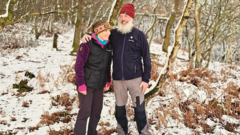
Chris and Jet, a couple whose names have become synonymous with the grueling 7,000-mile odyssey around the UK’s coastline, are once again tightening their laces. After a hiatus that would have broken the spirit of most casual hikers, they are returning to the edge of the map. This is not a holiday. It is a calculated confrontation with the elements, the self, and a national geography that is literally falling into the sea. Their journey represents a growing subculture of "slow travel" extremists who are documenting a British coastline in the throes of a terminal identity crisis.
To understand why a couple would choose to live out of backpacks for years, one must look past the glossy Instagram filters of sunset cliffs. The British coast is a brutal environment. It is a jagged, 11,000-mile labyrinth of salt spray, crumbling shale, and restrictive land laws. Most people who attempt a "round-Britain" walk fail within the first three months. The psychological toll of constant motion, combined with the physical degradation of joints and skin, creates a barrier to entry that only the truly obsessed can breach. Chris and Jet are not just walking; they are witnessing.
The Economics of the Infinite Hike
Setting off on a multi-year trek requires a financial and social divorce from the traditional grid. The "why" is often framed as a search for freedom, but the "how" is a matter of ruthless logistics. Taking a sabbatical is one thing; abandoning a fixed address to become a permanent pedestrian is another.
Most long-distance trekkers rely on a mix of modest savings, crowdfunding, and the radical hospitality of strangers. In the UK, this is complicated by the fact that wild camping laws are a patchwork of confusion. While Scotland offers the Right to Access, the English and Welsh legs of a coastal journey are a minefield of "No Trespassing" signs and high-priced holiday parks.
The financial burden of such a trip is often underestimated. Even with zero rent, the costs of high-calorie nutrition, gear replacement, and emergency accommodation during Atlantic storms can exceed the monthly expenses of a small apartment. A pair of high-end trekking boots will last roughly 500 to 800 miles. On a 7,000-mile walk, that is nearly ten pairs of boots per person. This isn't just a walk. It is a rolling logistical nightmare that requires the precision of a military operation.
A Geography in Retreat
What Chris and Jet are walking through is not the same coastline that existed twenty years ago. The UK is losing land at an alarming rate, particularly along the East Coast in counties like Norfolk and East Riding of Yorkshire. Here, the "coastal path" is often a suggestion rather than a reality.
The Erosion Crisis
In some areas, the cliff edge moves inland by several meters every year. Trekkers often find that the official trail they intended to follow has slipped into the North Sea, forcing them onto dangerous A-roads or deep into private farmland.
- Soft Rock Vulnerability: Areas composed of glacial till and clay are retreating faster than any other part of Europe.
- The Squeeze: As sea levels rise, the habitat between the water and human development—the "coastal squeeze"—disappears, leaving walkers with nowhere to plant a tent.
- Infrastructure Decay: Small coastal bridges and stairways are frequently out of commission due to storm damage, adding miles of inland detours to an already exhausting day.
This shifting terrain turns a physical challenge into a navigational puzzle. You cannot simply trust a map printed three years ago. You have to read the tides and the soil.
The Mental Game of the Long Haul
The romanticized image of the lone wanderer ignores the reality of "trail fatigue." This is a documented psychological state where the novelty of new scenery is replaced by a crushing boredom and a fixation on physical pain. For a couple, this pressure is doubled.
Living in a two-person tent through a British winter tests the foundations of any relationship. There is no "away." There is only the trail, the rain, and the person walking ten paces ahead of you. Successful coastal couples develop a communication style that is almost telepathic, born from thousands of hours of shared silence and the shared trauma of a 40-mile day in a headwind.
The isolation is also a factor. While the UK is a densely populated island, the coastal fringe can be remarkably lonely. Outside of the summer tourist season, many seaside towns become ghost settlements. The "closed for winter" signs on cafes and campsites are a recurring gut-punch to a hiker who has been dreaming of a warm meal for twenty miles.
The Politics of the Path
The England Coast Path, once completed, will be one of the longest continuous walking routes in the world. However, the project has been plagued by delays, funding cuts, and legal challenges from landowners who value their privacy over public access.
Investigating the progress of this path reveals a stark divide between the northern and southern halves of the country. In the north, rugged terrain and industrial history create a different set of obstacles compared to the manicured, tourist-heavy paths of Cornwall or Dorset. To walk the whole thing is to see the raw inequality of the British Isles. You move from the extreme wealth of Sandbanks to the deep-seated deprivation of former fishing ports that have been left to rot.
The couple’s return to the trail is a reminder that the coastline is our most democratic space, yet it is also our most contested. Every mile they walk is a tiny victory for public access.
Logistics of a Modern Odyssey
How does one actually survive a 7,000-mile walk in the 2020s? It isn't just about grit; it's about technology.
- Power Management: Relying on solar chargers in a country famous for grey skies is a gamble. Trekkers must scout for "utility points"—libraries, pubs, and public toilets—where they can poach a few watts for their GPS units.
- Water Scarcity: Surprisingly, finding clean drinking water on the coast can be difficult. Saltwater is everywhere, but tap access often requires the bravery to knock on a stranger's door.
- Caloric Deficit: A hiker carrying a 15kg pack burns between 4,000 and 6,000 calories a day. Maintaining this intake on a budget usually involves a diet heavy in peanut butter, trail mix, and whatever discounted carbohydrates can be found in a village shop.
The physical transformation of long-distance walkers is profound. Body fat vanishes. Muscles become ropey and efficient. The "hiker hobble"—the stiff-legged gait adopted every morning until the joints warm up—becomes a permanent part of their movement.
Why the Return Matters
Many wondered if Chris and Jet would ever come back after their break. The momentum of a long walk is a fragile thing. Once you stop, once you feel the luxury of a mattress and a roof that doesn't flap in the wind, the motivation to return to the mud is hard to find.
Their decision to restart is an act of defiance against the comfort of the modern world. It is also a race against time. The cliffs they will walk this year might be gone by the time the next generation of trekkers arrives. They are documenting a disappearing world, one footstep at a time.
This isn't just travel. This is an endurance performance that highlights the fragility of our borders—not the political ones, but the physical edge where the land meets the rising tide. As they head back out, they aren't just looking for a view. They are looking for the truth of what remains of Britain's edge.
Go to the nearest coastline this weekend. Walk three miles in one direction, then turn around. Now imagine doing that every single day for the next three years. That is the scale of the commitment. That is the weight of the boots.
Check your local weather forecast and tide times before attempting even a segment of the coastal path.


