A merchant sailor stands on the deck of a container ship near the Bab el-Mandeb Strait, squinting against the glare of the Red Sea. He isn't looking for dolphins. He is looking for the low, fast profile of a drone or the sudden wake of a missile. This single, nervous individual, thousands of miles from Washington or Tehran, is the pulse point of a global fever. When we ask why the United States is engaging in military strikes against Iranian-backed groups, we are really asking how a series of invisible lines—economic, political, and historical—suddenly turned into tripwires.
The headlines often paint this as a sudden flare-up. It isn't. It is a slow-motion collision between two powers that have been circling one another in the dark for forty-five years.
The Geography of a Chokepoint
Consider the world’s economy as a human body. If the massive cargo ships carrying oil and consumer goods are the blood cells, then the narrow waterways of the Middle East are the jugular veins.
The Houthi movement in Yemen, an ally of Iran, began launching attacks on commercial shipping in late 2023. They claimed it was a response to the war in Gaza. But for the U.S., the motive mattered less than the math. When insurance rates for shipping triple overnight, when ships are forced to detour around the entire continent of Africa, the cost of a toaster in Iowa or gasoline in Berlin starts to climb.
The U.S. strikes in Yemen and Iraq are, at their most basic level, an attempt to keep the veins open. It is a violent form of traffic control. If the U.S. allows these waterways to become "no-go zones," the global "just-in-time" delivery system collapses. That is the first pillar of the conflict: the cold, hard necessity of keeping the gears of capitalism turning.
The Proxy Chessboard
Imagine two grandmasters playing chess, but instead of sitting across from each other, they are in different rooms, moving pieces through intermediaries. This is the "Axis of Resistance." Iran rarely fights the U.S. directly. Instead, it supports a network of groups: Hezbollah in Lebanon, various militias in Iraq and Syria, and the Houthis in Yemen.
This strategy allows Tehran to exert massive influence while maintaining "plausible deniability." If a militia in Iraq launches a drone at a U.S. base, Iran can shrug and claim it was an independent act of local frustration.
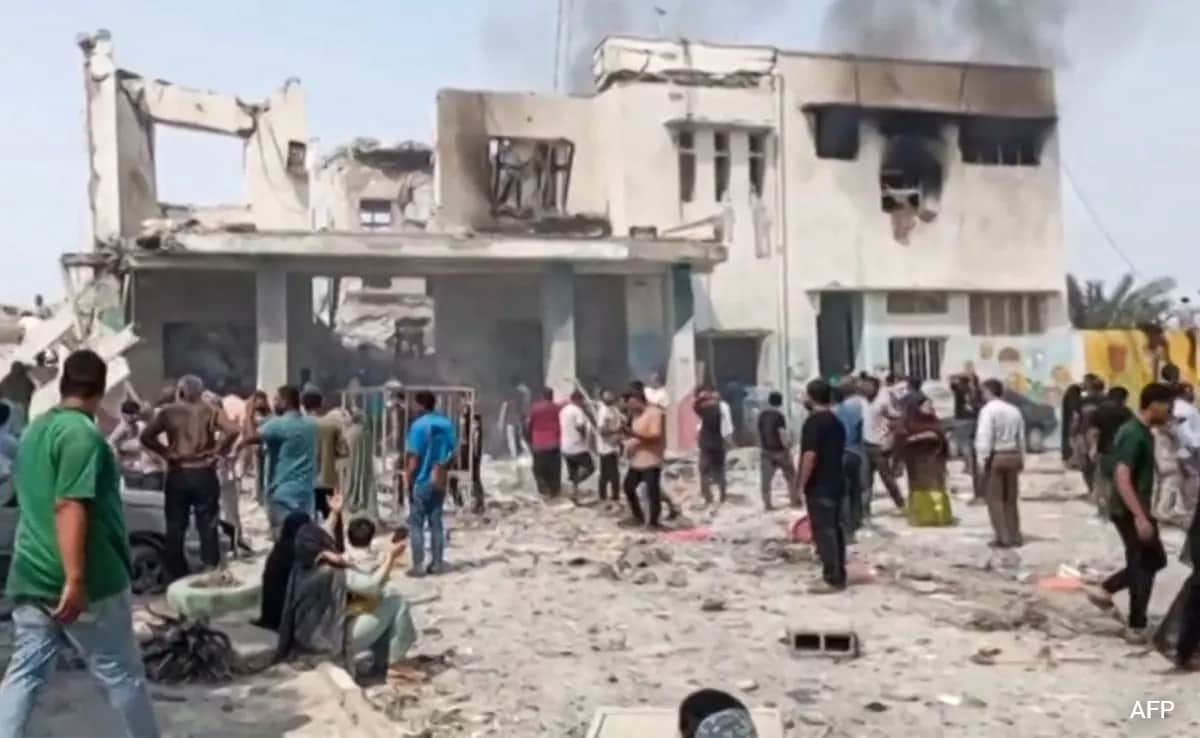
For the United States, the challenge is how to punch back without starting a Third World War. If the U.S. ignores the attacks, it looks weak and loses its influence in the region. If it hits Iran directly, it risks a regional conflagration that could draw in nuclear powers. So, the U.S. attacks the "proxies." It hits the warehouses, the launch sites, and the command centers of the groups Iran supports.
It is a bloody, rhythmic dance. An attack happens. A retaliation follows. Both sides try to calibrate the violence just enough to send a message, but not so much that the roof caves in on everyone.
The Shadow of 1979
To understand the animosity, you have to look past the current news cycle and into the ghosts of the past. The relationship between the U.S. and Iran is defined by two traumas. For the Iranians, it is the 1953 coup backed by the CIA that overthrew their democratically elected prime minister. For the Americans, it is the 1979 hostage crisis, where fifty-two diplomats were held for 444 days.
These aren't just history book entries. They are the founding myths of the current regimes. The Iranian leadership views the U.S. as an "Arrogant Power" determined to dominate the Middle East. The U.S. security establishment views Iran as a revolutionary state that exports terror as its primary product.
When a U.S. pilot presses a button to release a laser-guided bomb over an ammunition depot in Syria, that pilot is flying in the draft of forty-five years of mutual suspicion. The facts of the current strikes—the number of missiles, the names of the targets—are just the newest layers of paint on a very old, very rusted fence.
The Nuclear Clock
Beneath the surface of every drone strike and every naval skirmish is the ticking of the nuclear clock. Iran has steadily increased its uranium enrichment since the U.S. withdrew from the nuclear deal in 2018. They are closer to a "breakout capacity"—the ability to produce enough material for a weapon—than ever before.
The U.S. military presence in the region acts as a giant "Do Not Enter" sign. By attacking Iranian-linked groups, the U.S. is signaling that its patience has limits. It is a game of high-stakes signaling. The U.S. wants Iran to believe that if they cross the nuclear threshold, the current "limited" strikes will look like a firecracker compared to what comes next.
Iran, conversely, uses its proxies to show the U.S. that it can cause chaos at any time. It’s a message: If you squeeze our economy or threaten our nuclear program, we can make the Red Sea burn.
The Human Toll in the Middle
We speak in terms of "assets," "surgical strikes," and "strategic interests." But there is a hypothetical family in Baghdad or a fisherman in Yemen who doesn't care about the Strait of Hormuz. They care about the fact that the sky hums with the sound of engines they cannot see.
When the U.S. retaliates for the death of its service members—as it did after the Tower 22 attack in Jordan—it enters a cycle where "proportionality" is the only rule. But proportionality is subjective. What looks like a measured response in Washington looks like an act of war in Tehran or Baghdad.
The real danger isn't a planned war. It’s a mistake. A stray missile hits a crowded apartment building. A nervous sailor on a destroyer shoots down a civilian aircraft by accident. A militia leader decides to go rogue and kill hundreds of Americans in one go.
Fear.
That is the primary export of this conflict. It’s the fear that the "rules of the game" will fail.
The Strategy of No Good Options
Why is the U.S. attacking? Because the alternatives are perceived as worse.
If the U.S. leaves the region, it leaves a vacuum that Iran (and Russia and China) would happily fill. If it stays and does nothing, its soldiers become sitting ducks for militia target practice. If it goes to full-scale war, it spends trillions of dollars and tens of thousands of lives on a conflict that likely has no "victory" condition.
So, we are left with the current reality: "Kinetic Diplomacy."
It is the use of violence to communicate where words have failed. It is a gritty, dangerous, and deeply unsatisfying middle ground. It is the sound of an explosion in the desert meant to be heard in a boardroom in Tehran.
The sailor on the deck of the container ship watches the horizon. He knows that his safety depends on a delicate balance of terror maintained by people he will never meet, for reasons that are buried under decades of blood and oil. He watches the water, waiting to see if the balance holds for one more day.
The sun sets over the Red Sea, casting long, dark shadows that stretch far beyond the coast, reaching all the way to the halls of power, where the next move is already being calculated.