The air in the briefing room usually smells of stale coffee and the electric hum of too many monitors. But when the talk turns to Tehran, the atmosphere changes. It gets heavy. You can almost feel the weight of decades—the 1979 embassy posters, the grainy footage of tankers in the Strait of Hormuz, the whispered fears of a nuclear dawn. For those of us who have spent years tracking the movements of Iranian centrifuges and the rhetoric of American presidents, the news of "progress" isn't just a headline. It is a sharp intake of breath.
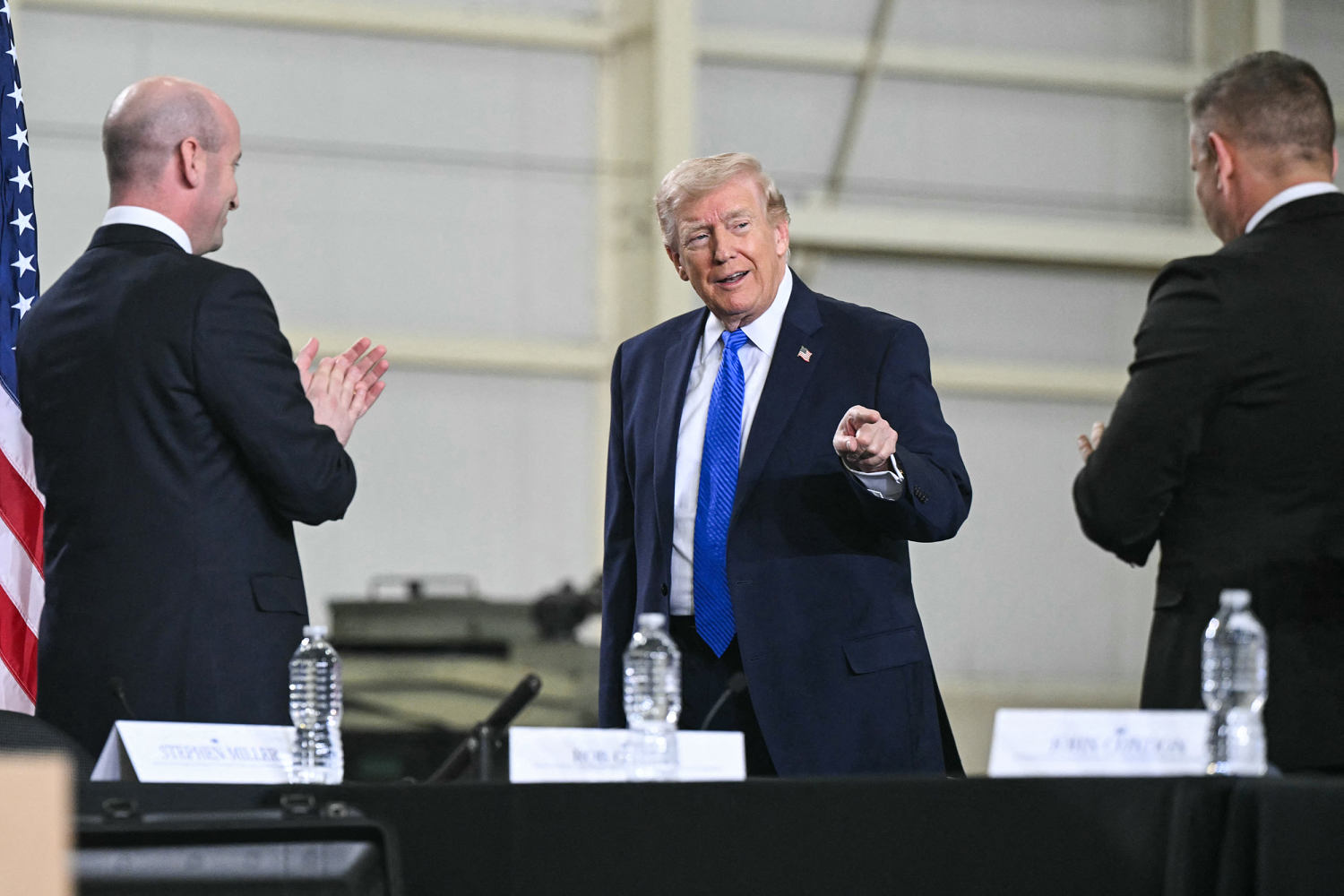
Donald Trump stood before the cameras recently and did what he does best: he sold a vision of a deal. He spoke of meetings, of a changing tide, of an Iran that is ready to talk because it simply has no other choice. To the casual observer, it might sound like another campaign boast. But look closer at the mechanics of the pressure. Look at the empty storefronts in Isfahan and the rising cost of bread in the suburbs of Tehran. The "progress" being touted isn't just about diplomatic cables. It is about the crushing reality of a world that has slowly, methodically, closed its doors to one of the oldest civilizations on earth.
Consider a man named Reza. He is a hypothetical shopkeeper in a winding alley of the Grand Bazaar, but his struggle is documented in every economic report coming out of the region. Reza doesn’t care about "maximum pressure" as a political slogan. He cares that the price of the imported parts he needs to fix refrigerators has tripled in six months. He cares that his daughter’s medicine is suddenly a luxury. When a President talks about progress in talks, Reza doesn't see a victory for one side or the other. He sees the faint, flickering hope that the suffocating grip of sanctions might loosen just enough for him to breathe.
The strategy is brutal in its simplicity. By walking away from the 2015 nuclear deal and piling on layers of financial restrictions, the administration bet everything on a single outcome: that the Iranian leadership would eventually find the status quo more dangerous than a compromise. It is a high-stakes game of chicken played with the global economy as the backdrop. Critics argue it’s a recipe for conflict. Supporters point to the fact that the Iranian rial has plummeted, losing significant value against the dollar, forcing the hand of a regime that once seemed immovable.
But what does progress actually look like in a room where neither side trusts the other to hold a pen, let alone a promise?
It looks like small, almost invisible concessions. It’s the silence where there used to be threats. It’s the back-channel messages sent through neutral intermediaries in Oman or Switzerland. The core facts remain: Iran wants its frozen assets—billions of dollars sitting in foreign banks—released. They want to sell their oil on the open market without the threat of their tankers being seized. The U.S. wants a permanent end to the nuclear program, a stop to ballistic missile testing, and an end to the funding of proxy groups across the Middle East.
The gap between those two positions is a canyon.
Yet, the rhetoric has shifted. The fire and brimstone of previous years have been replaced by a transactional tone. This is the art of the squeeze. When you hear that "talks are progressing," it often means that the pain has finally outweighed the pride. It suggests that the technical experts are finally sitting down to figure out the math of a retreat. How many centrifuges stay? How much oil flows? Who blinks first?
The invisible stakes are found in the oil fields of the Khuzestan province. There, the infrastructure is aging. Without Western investment and technology, the very lifeblood of the Iranian state is drying up. This isn't just about bombs; it’s about the survival of a nation’s industry. If the talks fail, the region remains a tinderbox. If they succeed, the geopolitical map of the 21st century gets redrawn in a single afternoon.
We often think of international diplomacy as a series of grand gestures—signing ceremonies and handshakes on manicured lawns. In reality, it is a grind. It is thousands of hours of arguments over the definition of a "limit" or the timeline of an "inspection." It is a grueling, unglamorous process of trying to prevent the worst-case scenario.
The danger, of course, is the illusion of movement. History is littered with "breakthroughs" that turned out to be nothing more than a pause for breath. The Iranian leadership is a master of the long game, having survived a decade-long war with Iraq and forty years of isolation. They are not easily rattled. But even the most hardened revolutionary has to answer to a population that is tired of being poor.
Behind the podium, the President project confidence because confidence is his primary currency. He wants the world to believe that the "Maximum Pressure" campaign has brought the adversary to the brink. And in many ways, the data supports him. Inflation in Iran has hovered at staggering levels, and the middle class is being systematically erased.
But a cornered opponent is a dangerous one.
The real progress isn't found in the tweets or the soundbites. It’s found in the quiet realization that neither side can afford the alternative. A war in the Persian Gulf would send oil prices into a tailspin, shattering the global recovery. It would drag the United States into another "forever war" just as it tries to pivot its attention toward the Pacific. For Iran, a full-scale conflict would likely mean the end of the clerical establishment.
So they talk. They posture. They move pieces across a board that spans continents.
If you want to understand the true cost of this stalemate, don't look at the maps of military bases. Look at the shipping lanes. Look at the price of a barrel of crude in Singapore. Look at the anxious faces of families in Los Angeles or London who still have relatives in Tehran, waiting for the day they can send money home without fear of a federal investigation.
The "progress" we hear about today is a fragile thing. It is a bridge made of paper, built over a river of fire. One wrong move, one misinterpreted signal from a drone in the desert, and the whole structure vanishes. But for now, the talk continues. The pressure remains.
The shopkeeper in the bazaar waits for the price of a refrigerator compressor to drop. The President waits for a signature that will define his legacy. And the rest of the world waits for the smoke to clear, hoping that this time, the "progress" is more than just a ghost in the machine.
The silence that follows a great boast is often where the truth hides, waiting for the ink to dry on a page that hasn't been written yet.