The air in Dubai usually carries the scent of desalinated seawater and expensive fuel. But lately, there is a static charge to it. It is the kind of tension you feel in the seconds before a desert thunderstorm breaks—a heavy, expectant silence. In the mirrored glass of the Burj Khalifa, the world looks stable. Below, in the souks and the boardrooms, the conversation has shifted. People are no longer talking about the next skyscraper. They are looking north toward Tehran and west toward Washington, wondering if the floor is about to drop out.
Diplomacy is often described as a game of chess, but that is too clean a metaphor. Chess has rules. This is more like a high-stakes poker game played in a room where the lights keep flickering. On one side, you have an American administration signaling it is time to pack up and go home. On the other, an Iranian leadership that sees every American footstep toward the exit as an invitation to move into the house. You might also find this similar coverage insightful: Strategic Asymmetry and the Kinetic Deconstruction of Iranian Integrated Air Defense.
Consider a merchant in Manama or a tech developer in Riyadh. To them, the "end of the war" isn't just a headline or a campaign promise from Donald Trump. It is a terrifyingly vague concept. If the United States ceases its role as the regional policeman, who fills the vacuum? The answer, written in the trajectory of recent drone strikes and cyber-attacks, is increasingly clear.
The Architecture of Anxiety
Iran has spent decades perfecting the art of the "gray zone." This is the space between peace and total war. It is where you can cripple a shipping lane or set a refinery ablaze without ever having to sign your name to the act. For the Gulf Arab states, this gray zone is where they live every day. They are caught in a geographic vice. As reported in recent coverage by NBC News, the effects are notable.
To the north, Iran’s influence stretches through Iraq and into Syria. To the south, the Houthi rebels in Yemen act as a persistent, jagged thorn. For the leaders in Abu Dhabi and Riyadh, the prospect of the U.S. negotiating a hasty exit from regional conflicts feels less like peace and more like abandonment. They remember 2019, when the Abqaiq–Khurais attack knocked out half of Saudi Arabia’s oil production. The world's economy stuttered. The drones were sophisticated. The response was muted.
The facts are stark. Even as talk of a "deal" dominates the airwaves in Florida and D.C., Tehran has intensified its regional posture. This isn't just about nuclear enrichment. It is about the "Ring of Fire" strategy—a literal encirclement of Israel and the traditional Arab powers with precision-guided munitions and loyal militias.
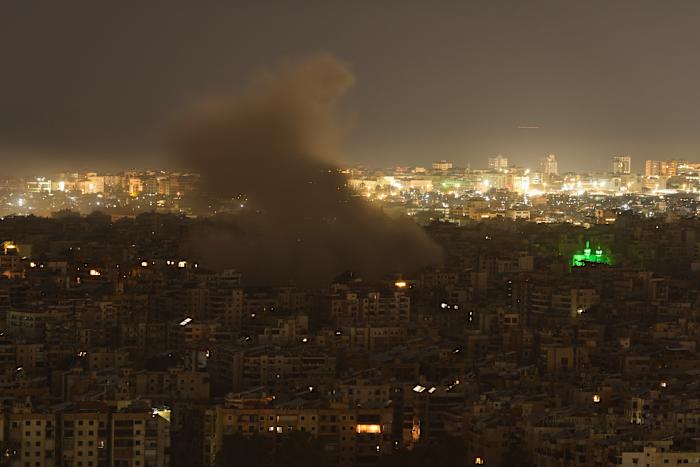
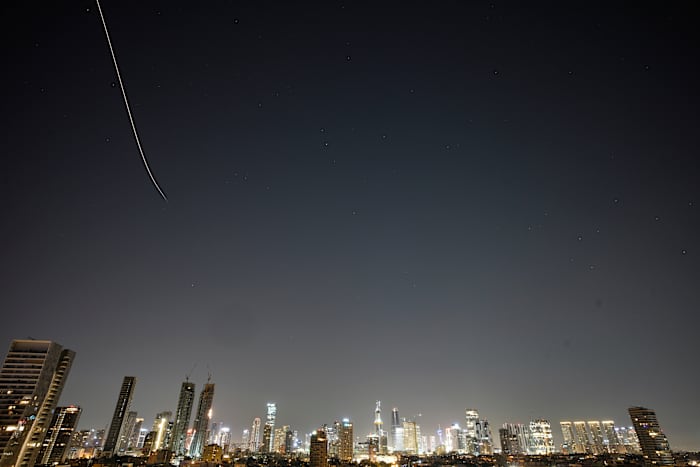
Imagine being a radar operator on a naval vessel in the Strait of Hormuz. You aren't looking for a fleet of battleships. You are looking for a swarm. Small, fast, and expendable. That is the new face of power in the Middle East. It is decentralized. It is deniable. And it is incredibly effective at making even the wealthiest nations feel vulnerable.
The Israel Factor
Israel exists in this narrative as both a partner and a lightning rod. The Abraham Accords were supposed to be the shield—a historic realignment that brought Israel and the Gulf states together against a common Persian threat. It was a marriage of necessity. Israeli security tech and intelligence met Gulf capital and regional depth.
But the shield has cracks.
Iran’s recent direct salvos against Israel—hundreds of missiles and drones launched from Iranian soil—changed the math. It proved that the old taboos are gone. Tehran is willing to step out of the shadows when it feels the "Zionist entity" or its neighbors are getting too comfortable.
For the Gulf states, every Israeli strike on Iranian interests brings a shudder of fear. They know they are the "soft targets." If Iran cannot easily hit Tel Aviv through the Iron Dome, it might just hit a desalination plant in Qatar or a port in Oman. The message is simple: If we burn, you burn with us.
The Trump Paradox
The return of Donald Trump to the center of the global stage introduces a volatile element of unpredictability. During his first term, "Maximum Pressure" was the mantra. He tore up the nuclear deal and squeezed the Iranian economy until it gasped. Yet, now he speaks of ending the war. He speaks of deals.
This creates a dizzying cognitive dissonance for regional players. They want the American security umbrella, but they fear the person holding the umbrella might suddenly decide it’s too heavy and drop it. Trump’s brand of isolationism—"America First"—suggests a nation weary of the sand and the blood.
The Iranian leadership knows this. They are masters of reading the American psyche. They understand that a weary adversary is an opportunity. While the U.S. looks for an "off-ramp," Iran is busy building more on-ramps for its influence.
The Invisible Stakes
We often talk about these issues in terms of "geopolitics," a cold word that strips away the humanity. But look closer.
The stakes are the families in Haifa who spend their nights in bomb shelters. The stakes are the Indian and Filipino workers in Dubai who keep the city running, whose lives depend on the stability of a region that feels increasingly like a powder keg. The stakes are the young Iranians who want a future connected to the world, but are governed by a regime that finds its legitimacy in eternal struggle.
There is a specific kind of exhaustion that comes from living in a state of permanent "almost-war." It erodes the soul. It makes long-term investment feel like a gamble. It turns neighbors into suspects.
The Gulf Arab states are trying to diversify their economies. They want to be the world’s playground, its logistics hub, its future. Saudi Arabia’s "Vision 2030" is a massive, trillion-dollar bet on a post-oil world. But you cannot build a futuristic city like Neom if the sky is filled with the buzz of Shahed drones.
The Illusion of the Exit
There is a dangerous fantasy circulating in Western capitals that you can simply "pivot" away from the Middle East. That if you ignore the fire long enough, it will eventually burn itself out.
It won't.
The Middle East is the world’s central nervous system. A tremor there is felt in the gas stations of Ohio and the factories of Guangdong. Iran knows this better than anyone. They don't need to win a conventional war. They just need to stay relevant, stay dangerous, and keep their neighbors off-balance.
When the U.S. signals it is "in talks to end the war," it sounds like music to the ears of an American voter. But to a diplomat in Riyadh, it sounds like a funeral dirge for the old order. They see a future where they have to make their own peace with Tehran—a peace dictated by the party with the most missiles and the least to lose.
The reality is that there is no clean break. No final curtain.
The shadow cast by the towers in Tehran is long, and it reaches far across the blue waters of the Gulf. As the sun sets over the desert, the lights of the cities flicker on, brilliant and fragile. They are a testament to what has been built in the brief windows of stability. But as the rhetoric of exit grows louder in the West, those lights feel a little less certain, and the dark space between them feels a lot more crowded.
The world is watching the pen, waiting to see what kind of "deal" is signed. But the people on the ground are watching the sky.
Would you like me to analyze the specific military capabilities of the Iranian "Ring of Fire" and how they compare to the defensive systems currently deployed by the Gulf Cooperation Council?