The air inside an NHL locker room after a losing streak doesn't just smell like sweat and expensive laundry detergent. It smells like doubt. It is a heavy, invisible fog that settles into the padding of a goalie’s chest protector and clings to the tape on a winger's stick. For the Montreal Canadiens, that fog had become a permanent resident. They arrived in Los Angeles trailing a string of losses that felt less like a statistical slump and more like a crisis of identity.
When you play for the Habs, you aren't just playing for a paycheck or a playoff spot. You are playing against the ghosts of twenty-four Stanley Cup banners. Every missed assignment in the defensive zone isn't just a mistake; it's a betrayal of a legacy. By the time the puck dropped against the Kings, the weight of those expectations had turned their skates to lead. In other developments, read about: Jasmine Paolini and the Myth of Momentum in Professional Tennis.
The Kings are a team built on suffocating efficiency. They don't beat you with flash; they beat you with math. They clog the neutral zone until you feel like you're trying to skate through waist-deep molasses. For two periods, it looked like the same old story. The Canadiens would push, the Kings would deflect, and the frustration in the Montreal bench would grow until it was visible in the way players slammed the gate after a shift.
The Loneliness of the Crease
Consider Sam Montembeault. Standing in the blue paint, he is the most isolated human being in the building. When the team in front of you can’t find the back of the net, every shot you face feels like a season-defining moment. One bounce, one screened point shot, one unlucky deflection off a teammate’s skate, and the narrative becomes "here we go again." Sky Sports has analyzed this important topic in extensive detail.
He didn't blink. Not when the Kings cycled the puck with the clinical precision of a surgery team. Not when the Staples Center—now the Crypto.com Arena, though the old-timers still struggle with the name—began to roar with the anticipation of a blowout. Montembeault stayed square. He stayed quiet in his movements. In the world of elite goaltending, "quiet" is the highest compliment. It means you aren't chasing the game; you are letting the game come to you.
His performance was the foundation. Without it, the comeback doesn't happen. Without it, the flight to the next city is a silent, miserable wake at thirty thousand feet. But a goalie can only keep the door closed; he can't turn the key.
A Shift in the Internal Weather
Then came the third period. Something shifted. It wasn't a tactical masterstroke or a sudden change in the power play formation. It was a collective decision to stop playing scared.
In sports, we talk about "momentum" as if it’s a physical law, like gravity. It isn't. Momentum is a psychological choice. It’s the moment a young defenseman decides to take the extra hit to make the play. It’s the moment a veteran forward chooses to backcheck with a desperation that defies his age. For Montreal, that choice manifested in a sudden, violent increase in pace.
The goals didn't come from highlight-reel dekes. They came from the "greasy" areas—the blue paint where defensemen cross-check you in the small of the back and the ice is a mess of snow and discarded pride. When the Canadiens finally broke through, the relief was visceral. You could see the shoulders of the players on the bench drop three inches. They weren't just winning a game; they were exhaling for the first time in a week.
The Invisible Stakes of a November Road Trip
To the casual observer, a mid-season win in Los Angeles is a blip on an eighty-two-game radar. But for a rebuilding team, these moments are the literal DNA of their future. If you lose this game, the "culture of losing" that coaches fear like a plague starts to set in. You start to expect the bad bounce. You start to look at the clock and wonder how you’ll blow it this time.
By clawing back, the Canadiens didn't just earn two points in the standings. They earned the right to believe in themselves again. That is the only currency that matters in a locker room.
The Kings didn't go away quietly. They pushed back with the arrogance of a team that knows it’s technically superior. But the Canadiens had found that rare, fleeting "flow state." Blocks were made with shins and elbows. Sticks were lifted at the precise millisecond required to disrupt a scoring chance. It was ugly, desperate, and beautiful.
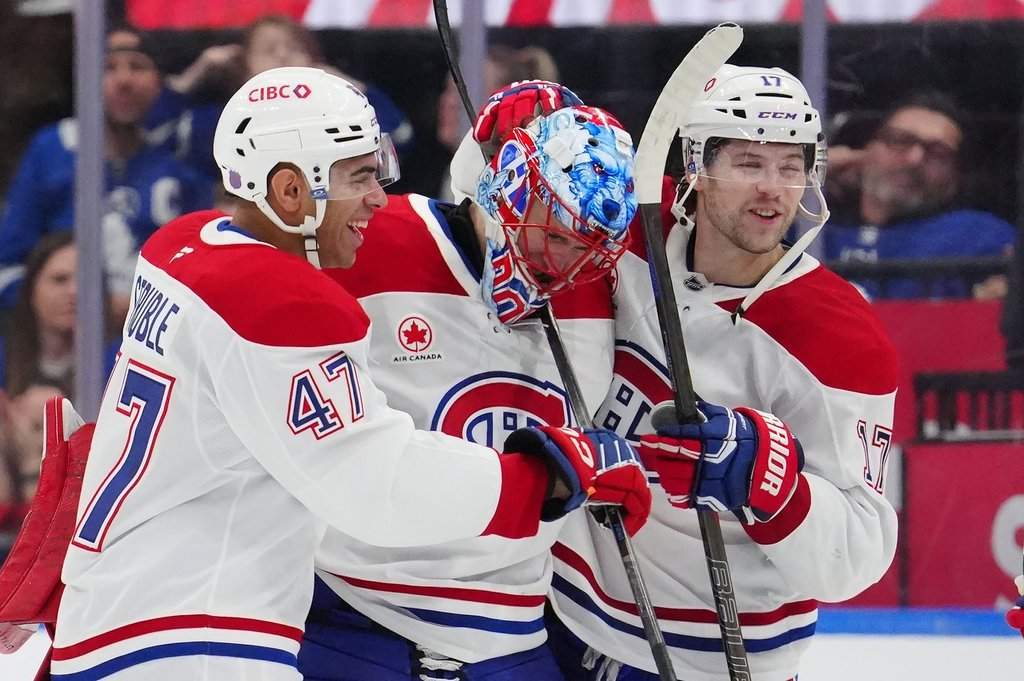
As the final horn sounded, there were no championship celebrations. It was a regular-season game in November. But watch the way the players embraced Montembeault. Look at the way they spoke to each other in the tunnel. The fog had lifted.
The flight to the next city would be different. There would be card games. There would be laughter. There would be the clinking of glass and the easy chatter of men who had stared at a season-altering slide and refused to blink. They weren't just a collection of talent anymore; they were a team that had survived a storm together.
The ghosts in the rafters back in Montreal would have to wait. This group had found a way to write a chapter of their own, one hard-fought inch of ice at a time.
The bus waited outside in the cool California night, the engine idling, ready to carry them toward the next battle, but for the first time in a long time, the weight was gone.