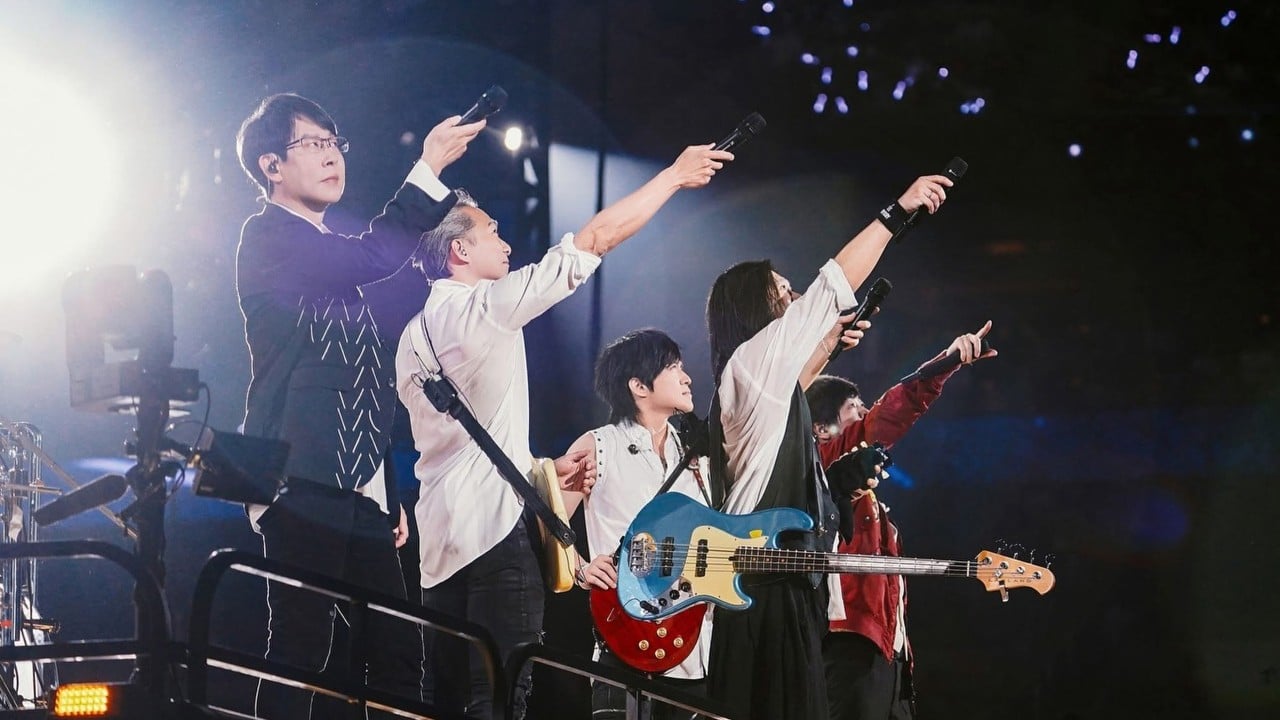
The sudden rescheduling of a stadium-scale performance is rarely a singular event; it is the manifestation of a breakdown in the Event Reliability Triad: logistical feasibility, weather-contingency modeling, and consumer-trust equity. When Taiwanese rock veterans Mayday shifted their Hong Kong performance date, the resulting "sour note" among the fanbase was not merely an emotional reaction to a delay, but a rational response to the sudden devaluation of the fans' sunk costs. In a high-stakes touring environment, the failure to account for the Traveler’s Risk Premium—the additional costs incurred by non-local fans for flights and hotels—transforms a simple date change into a significant financial liability for the consumer base.
The Infrastructure of a Postponement
The decision to move a concert date, particularly one involving an outdoor venue like the Central Harbourfront Event Space, is governed by a strict hierarchy of operational constraints. To understand the friction caused by the Mayday rescheduling, one must first categorize the variables that dictate the feasibility of a live event:
- Safety Thresholds (The Hard Constraint): High winds or electrical storms represent a binary "go/no-go" signal. For a production of Mayday’s scale—which utilizes complex LED arrays and massive structural rigging—the wind-load capacity of the stage is the primary safety metric. If a Red Rainstorm Warning or a T3 Typhoon Signal is active, the physical integrity of the stage becomes a liability.
- The Labor-Time Variable: Rescheduling does not just move a three-hour show; it disrupts the load-in and load-out cycles of hundreds of technical crew members. A single day’s delay ripples through the local labor contracts and the subsequent tour dates, creating a "scheduling debt" that must be repaid through increased overtime costs or reduced setup windows at the next stop.
- Permit and Compliance Windows: In a dense urban environment like Hong Kong, noise permits and public space usage are granted for specific time blocks. Moving a show from a Sunday to a Monday requires navigating the Regulatory Squeeze, where the venue may be available, but the legal right to operate the sound system past 10:00 PM is not guaranteed for a new date.
The Economics of Fan Friction
For a local fan, a date change is an inconvenience; for a non-local fan, it is a financial crisis. In the case of Mayday’s Hong Kong dates, the primary failure of the tour management was a misunderstanding of the Distance-Risk Correlation. The more a fan invests in travel, the less flexibility they have for a schedule shift.
The cost of this shift for the fan can be expressed through the Total Sunk Cost Formula (TSC):
$$TSC = T + A + O + (L \times W)$$
Where:
- T = Ticket price (fixed).
- A = Airfare or long-distance transport (often non-refundable).
- O = Accommodation (lost upon no-show or changed on short notice).
- L = Lost wages or PTO (calculated as an opportunity cost).
- W = Weighting factor for the emotional/experiential value of the event.
When a show is rescheduled, $T$ remains constant, but $A$ and $O$ are typically lost, and $L$ must be doubled to accommodate the new date. This creates a situation where the fan is essentially paying twice for the same three-hour experience. For a band like Mayday, whose fan base—the "Lanhua" or Blue People—is known for traveling across borders, the financial impact of a 24-hour shift is disproportionately high. The tour’s failure to provide a comprehensive Traveler’s Insurance Buffer or immediate compensation for these sunk costs is a direct erosion of the band’s brand equity.
Operational Failures in Communication
The "sour note" mentioned in the initial reports is the result of a Communication Latency Gap. This is the time between the moment a problem is identified by the production crew and the moment it is communicated to the public. In a digital-first environment, this gap should be near-zero. However, the Mayday delay suffered from a legacy-media communication style—vague, delayed, and lacking in specific actionable data.
The failure to communicate the specific technical reason for the delay (e.g., "Wind gusts exceeding 70 km/h necessitated the lowering of the LED backdrops") led to speculation and frustration. A high-trust communication strategy requires three pillars:
- Granular Transparency: Explain exactly why the show cannot go on. Mentioning "unfavorable weather" is insufficient. Providing the specific safety protocol being triggered creates an objective barrier that fans can respect.
- The 2-Hour Rule: The announcement must be made at least two hours before the gates are scheduled to open. This allows fans who are still at their hotels or in transit to pivot their plans. For the Hong Kong show, the announcement came dangerously close to this threshold, trapping thousands of fans in the "transit zone" between their base and the venue.
- Clear Redress Framework: A rescheduling announcement should never exist in a vacuum. It must be paired with immediate, one-click options for a full refund or a guaranteed seat for the new date. By making the refund process opaque, the organizer shifts the cognitive load onto the fan, further damaging the relationship.
The Strategy of the Monday Show
Shifting a weekend show to a Monday creates a Workday Conflict Bottleneck. For the majority of the workforce, a Monday night concert is a logistical nightmare. The tour management likely calculated that a Monday show was the only way to fulfill their contractual obligations with the venue and the ticketing platform, but this calculation ignored the Attendance Attrition Rate.
A Monday show typically sees a 15-25% drop in actual attendance compared to a Saturday or Sunday, even if the tickets are sold out. This is due to professional and academic commitments that cannot be rescheduled on short notice. For the band, this means performing to a thinned crowd, which diminishes the live recording quality and the overall atmosphere—two critical components for a "career-defining" residency like the Mayday Hong Kong series.
The Strategic Play: Implementing a Fan-First Contingency Plan
To avoid a repeat of this scenario, tour organizers and promoters must move beyond reactive damage control and adopt a Proactive Resilience Model. This involves a three-pronged strategy:
- Dynamic Weather Hedging: Large-scale outdoor tours should utilize localized, high-resolution weather forecasting services that provide minute-by-minute updates on wind and precipitation at the specific venue coordinates. This data should be shared with fans via a dedicated app, making them part of the decision-making process.
- Tiered Refund Architecture: Fans who can prove they traveled from out of town (via flight or hotel confirmation) should be eligible for a "Traveler’s Credit" or a partial refund to offset their rescheduling costs. This recognizes the higher financial risk these fans take and builds long-term loyalty.
- The Built-In "Rain Day" Strategy: Rather than booking dates back-to-back, high-risk outdoor residencies should build a "flex day" into the contract. For every three shows, a fourth day is reserved as a potential backup. If the weather is clear, the day is used for crew rest or additional rehearsals. If weather hits, the shift is seamless, pre-announced, and already factored into the fans' travel plans.
The true cost of the Mayday rescheduling isn't the lost ticket revenue—it is the erosion of the "contract" between the artist and the audience. When a fan buys a ticket, they are purchasing a promise of an experience at a specific time and place. Breaking that promise without a sophisticated, data-backed recovery plan is a strategic failure that no amount of musical talent can fully compensate for. The next time a major tour hits the Central Harbourfront, the measure of its success won't be the setlist, but the robustness of its contingency plan.
The final strategic move for any promoter in this situation is to immediately initiate a Public Post-Mortem. By releasing a detailed technical report explaining the decision to reschedule, the organizer can shift the narrative from "incompetence" to "safety-first professionalism," thereby salvaging the brand's reputation for future tours.