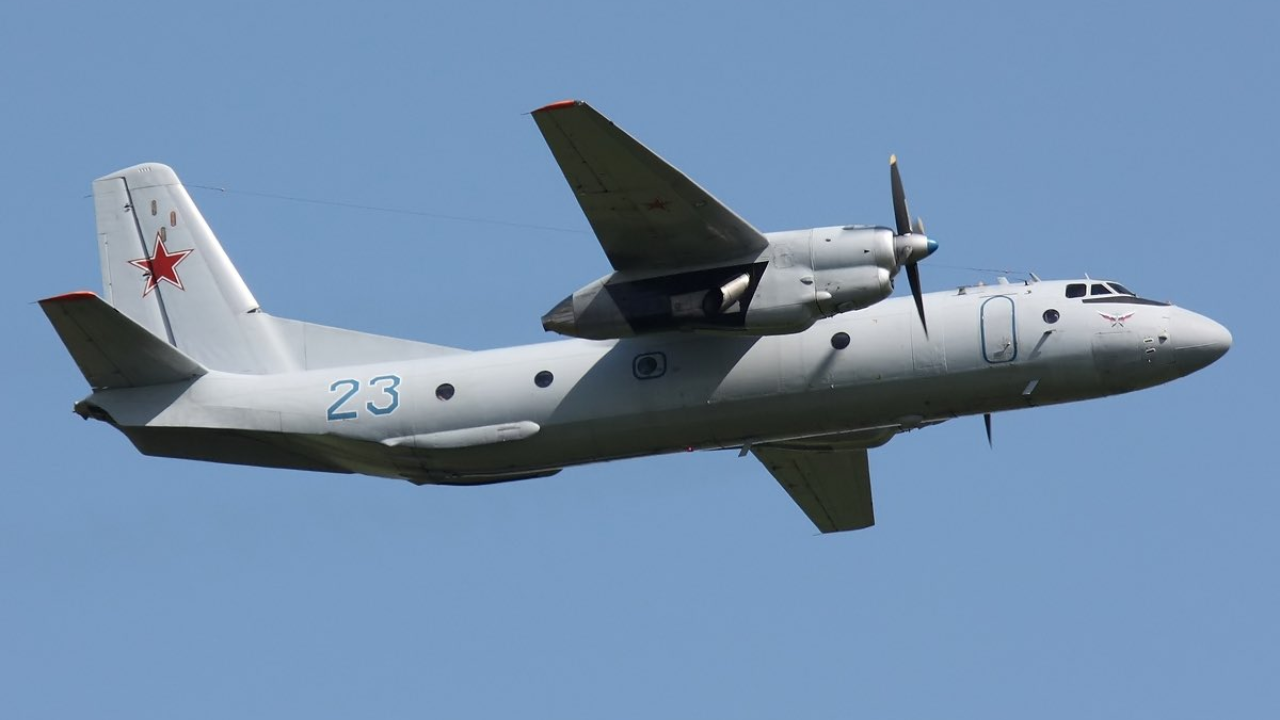
The loss of an Antonov An-26 transport aircraft in Crimea, resulting in 29 fatalities, represents more than a localized tactical failure; it is a measurable data point in the accelerating degradation of Russian military airlift capacity. This incident demonstrates the intersection of aging airframe fatigue, over-extended maintenance cycles, and the high-risk operational environment of a contested logistics hub. To understand the systemic implications of this crash, one must analyze the technical constraints of the An-26 platform and the specific stressors acting upon the Black Sea Fleet’s logistical backbone.
The Technical Lifecycle Constraint
The Antonov An-26, a twin-engine turboprop designed in the 1960s, serves as the workhorse for short-to-medium range tactical transport. Its operational utility relies on a rugged airframe and the ability to operate from unpaved runways. However, the average age of the current fleet exceeds 40 years, placing most active units in the "bathtub curve" of reliability where failure rates increase exponentially due to wear-out phases.
The structural integrity of these aircraft is governed by three primary variables:
- Cyclic Loading Stress: Every takeoff and landing contributes to metal fatigue in the wing-spar junctions and fuselage pressurized skins. In a high-tempo conflict zone like Crimea, these cycles occur at a frequency far exceeding peacetime safety margins.
- Avionics Obsolescence: While the airframe is mechanical, the navigation and flight control systems on older An-26 variants often lack the redundancy found in modern glass cockpits. This creates a higher probability of Controlled Flight Into Terrain (CFIT) during low-visibility approaches or under electronic warfare interference.
- Engine Reliability (AI-24VT): The Ivchenko AI-24VT turboprop engines require precise maintenance intervals. Supply chain disruptions in specialized alloys and turbine blades directly correlate with catastrophic mid-flight failures.
Tactical Stressors in the Crimean Theater
Crimea functions as a high-density operational "bottleneck." For a military transport aircraft, navigating this space involves mitigating risks that are often mutually exclusive. Flight crews must choose between flight paths that minimize exposure to Man-Portable Air Defense Systems (MANPADS) and paths that allow for safe glide slopes in the event of mechanical failure.
The 29 fatalities in this specific incident suggest the aircraft was configured for personnel transport at or near its maximum takeoff weight (MTOW). Operating an aging airframe at MTOW reduces the margin for error during critical flight phases, such as the initial climb-out or the final approach.
Atmospheric and Electronic Interference
The Crimean peninsula presents unique meteorological challenges, including rapid fog formation and shifting sea winds. When combined with the heavy deployment of GPS jamming and electronic countermeasure (ECM) suites in the region, pilots face "sensory decoupling." If the onboard radar or altimeter provides inconsistent data due to local interference, the pilot’s reliance on manual handling increases precisely when the mechanical systems are under the most strain.
The Logistics Attrition Function
The loss of 29 personnel and a strategic transport asset can be quantified through a replacement cost function. This is not merely the cost of a new aircraft—which is no longer in production—but the "opportunity cost of throughput."
- Throughput Reduction: Every An-26 lost forces the redirection of larger, more expensive assets like the Il-76. The Il-76 is inefficient for small-scale tactical hops, leading to higher fuel consumption and increased visibility to satellite tracking.
- Personnel Capital: The loss of experienced flight crews is a non-linear setback. Training a tactical transport pilot to navigate contested airspace requires years of operational experience that cannot be fast-tracked through simulators.
- Maintenance Burden: As the fleet shrinks, the remaining aircraft are flown more frequently. This "cascading fatigue" means that one crash often predicts a shortened lifespan for the remaining units in the same regiment.
Mechanical Failure vs. Kinetic Action
Distinguishing between mechanical failure and hostile action in a crash of this scale requires looking at the debris field geometry. A mechanical failure—such as a localized engine fire or hydraulic loss—typically results in a concentrated debris field, suggesting the pilot attempted to maintain control until impact. Kinetic interference, such as a missile strike, creates a wide-area dispersal of components consistent with mid-air structural disintegration.
Initial indicators in the Crimean incident point toward a failure during the landing transition. This phase is the most demanding on the hydraulic systems that actuate flaps and landing gear. If the hydraulic pressure drops during the "dirty" configuration (gear and flaps down), the aircraft’s drag increases while its lift-to-drag ratio collapses, leading to an irrecoverable stall at low altitude.
Institutional Risk Tolerance
The decision to continue operating the An-26 in high-risk zones reflects an institutional necessity that outweighs safety protocols. The Russian Ministry of Defense faces a "capability gap" where the intended successor, the Il-112V, has suffered significant development delays and its own high-profile crashes. Without a viable replacement, the military is forced into a policy of "extended service life," which is essentially an acceptance of increased attrition rates.
The strategic play moving forward involves a mandatory pivot in logistical doctrine. To prevent further attrition of the tactical transport fleet, the following shifts are inevitable:
- Decentralization of Transport: Shifting personnel movement from air to rail and road to preserve airframe hours, despite the increased transit time and vulnerability to sabotage.
- Cannibalization Cycles: The grounding of 20-30% of the remaining An-26 fleet to serve as a "parts bank" for the remaining 70%, prioritizing reliability over total hull count.
- Strict Operational Ceilings: Limiting An-26 flights to daylight hours and optimal weather conditions to reduce the cognitive load on pilots dealing with aging instrumentation.
The Crimean crash is a signal that the structural limits of Soviet-era logistics have been reached. Continued reliance on this platform without an immediate infusion of modern airframes will result in a "dead-stick" logistics reality, where the transport fleet becomes a liability to the very operations it is meant to sustain. Flight operations must now be triaged based on airframe health rather than mission urgency.