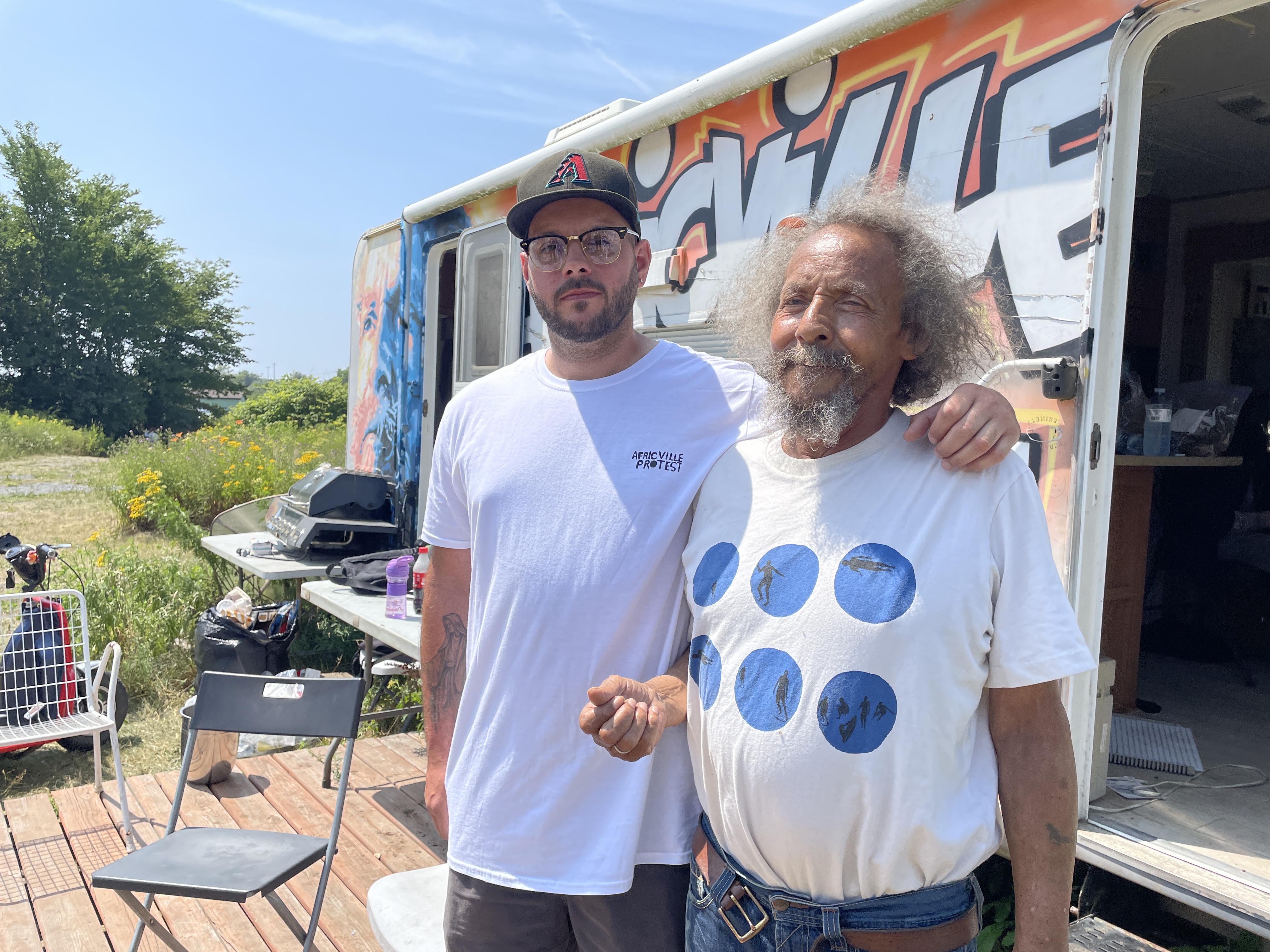
Hundreds of people stood in the rain last week in Halifax. They weren't there for a festival or a political rally of the usual sort. They gathered to honor Eddie Carvery. If you don't know the name, you should. He spent 54 years living in a small trailer on a patch of grass that used to be a thriving Black community. He didn't do it for fun. He did it because the city of Halifax tore down his world, and he refused to let them forget it.
Eddie Carvery passed away recently at 78. His death marks the end of the longest individual civil rights protest in Canadian history. But his passing also forces a hard conversation about what we mean by "reconciliation" and "justice" in a country that still hasn't fully settled its debts with the people of Africville.
The Destruction of a Community Under the Guise of Progress
Africville wasn't just a collection of houses. It was a self-sufficient Black settlement on the shores of the Bedford Basin. For over a century, families built lives, churches, and businesses there. They paid taxes. In return, the city of Halifax gave them nothing. No paved roads. No sewers. No running water.
Then came the 1960s. Under the banner of "urban renewal," the city decided Africville was a slum. They didn't fix the infrastructure they'd neglected for decades. Instead, they moved in with bulldozers. They demolished the Seaview African United Baptist Church in the middle of the night. They hauled people’s belongings away in garbage trucks. It was a calculated, brutal erasure of a community.
Eddie Carvery was a teenager when the wrecking balls arrived. While others were forced into public housing projects, Eddie eventually went back. He pitched a tent, then got a trailer. He stayed. For five decades, he dealt with harassment, elements, and the crushing weight of being a lone sentry on a battlefield where the war was supposedly over.
Why Eddie Carvery Stayed When Everyone Else Left
Most people can't imagine living in a cold trailer for fifty years. It sounds like madness. But for Eddie, the real madness was pretending that what happened to Africville was okay. His protest was a physical manifestation of a refusal to move on.
He wanted three things: an inquiry into the destruction of the community, compensation for the residents, and the right for the people of Africville to return to their land. He didn't get all of those things. In 2010, the city issued an official apology and rebuilt the church as a museum. Many saw that as a victory. Eddie saw it as a starting point, not the finish line.
His presence on that land was an irritant to the city's conscience. Every time a tourist walked through what is now "Seaview Park," they had to see Eddie's trailer. They had to reckon with the fact that the "park" they were enjoying was built on the ruins of stolen homes. He made it impossible to look at the scenery without seeing the history.
The High Cost of Being a Living Reminder
Protesting for half a century takes a toll. Eddie faced more than just bad weather. He dealt with racism, physical threats, and the psychological burden of isolation. His health suffered. His relationships suffered. Yet, he remained the "Hermit of Africville," a title that carries a certain weight but doesn't quite capture the grit required to wake up every morning in a spot where the government told you that you don't belong.
Critics often pointed to his personal struggles to dismiss his message. That's a classic tactic. If you can't argue with the truth of the protest, you attack the protester. But the reality is that the conditions of Eddie's life were a direct result of the systemic violence he was protesting against. You can't break a community and then act surprised when the people from that community are broken.
What Halifax Owes the Carvery Family and Africville
The funeral at the Halifax North Memorial Public Library wasn't just about mourning. It was a call to action. Speakers talked about his "spirit of resistance." That's a nice phrase, but it doesn't pay the bills or return the land.
True justice for Africville isn't a museum or a plaque. It’s about land sovereignty. It’s about recognizing that the relocation wasn't a mistake—it was a theft. There are still active legal battles and discussions about reparations. Eddie’s death shouldn't signal the end of these talks. If anything, it should accelerate them.
The city has spent years trying to "beautify" the area, but the ghosts of the old houses are still there. You can feel them when you walk the grounds. Eddie ensured those ghosts had a voice. Now that he's gone, that responsibility falls on the rest of us.
The Myth of the Gone But Not Forgotten
We love to celebrate protesters after they're dead. It’s safe. Dead protesters don't demand land titles or million-dollar settlements. They don't make uncomfortable scenes at city council meetings.
If we actually want to honor Eddie Carvery, we have to stop treating Africville like a sad chapter in a history book. It’s a current event. The descendants of Africville are still here. The economic disparity caused by the destruction of their generational wealth is still here. The trauma is still here.
Eddie’s brother, Irvine Carvery, has been a tireless advocate for the community. The family continues to push for what is right. They aren't looking for sympathy. They're looking for the deeds to their history.
How to Actually Support the Africville Legacy
Don't just read about Eddie and feel bad. That doesn't change anything. If you're in Halifax, or even if you're not, there are concrete ways to engage with this history that go beyond a social media post.
- Visit the Africville Museum. But don't just look at the photos. Listen to the oral histories. Understand the specific names of the families who were displaced.
- Support the Africville Genealogy Society. They are the ones doing the heavy lifting to keep the community connected and fighting for legal recognition.
- Question "Urban Renewal" in your own backyard. Africville isn't an isolated incident. This happened in Hogan’s Alley in Vancouver. It happened in Little Burgundy in Montreal. It’s happening today through gentrification in cities all over North America.
- Demand more than apologies. When politicians talk about Africville, ask them about land return and reparations. Apologies are free. Justice costs something.
Eddie Carvery spent 54 years waiting for the world to do the right thing. He died before he saw the full realization of his dream, but he died knowing he never blinked. He held the line. The trailer might be gone, but the ground it sat on still remembers his name. Don't let the silence of his absence become an excuse for the city to stop listening. Keep the pressure on the municipal and provincial governments to settle the outstanding claims of the Africville survivors. Education is the first step, but advocacy is the only way to finish the work Eddie started.