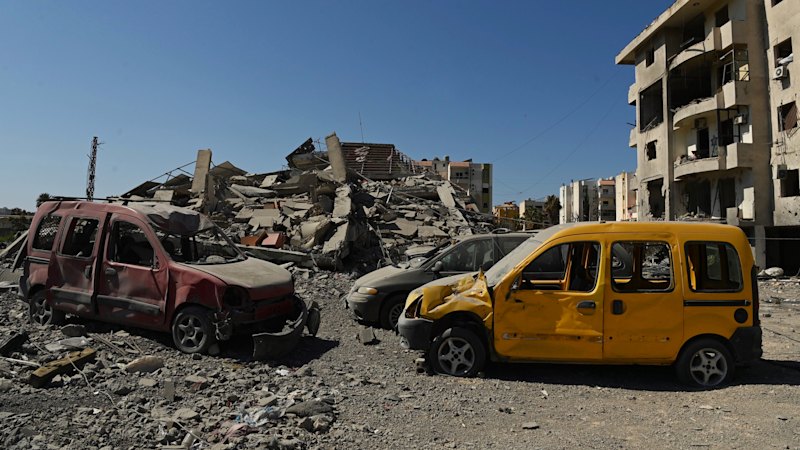
Lebanon is breaking. Again. If you’ve watched the news lately, you’ve seen the orange glows over the Beirut skyline and the dust clouds rising from the south. It’s easy to dismiss this as just another chapter in a never-ending Middle Eastern conflict. But that’s a mistake. What’s happening right now isn't just a military exchange between Israel and Hezbollah. It’s the systematic dismantling of a country that was already gasping for air.
When an Israeli airstrike hits a residential building in Dahieh or a small village in Nabatieh, the explosion doesn't just stop at the blast radius. It ripples through an economy that has lost 95% of its currency value since 2019. It tears at a social fabric already strained by the presence of 1.5 million refugees. The "stranger danger" here isn't just about foreign missiles; it’s about the terrifying reality that Lebanese civilians are being used as a chessboard for regional powers who don't have to live in the wreckage. For a more detailed analysis into similar topics, we suggest: this related article.
The math of misery in Lebanese border towns
Military strategists love to talk about "precision strikes" and "surgical operations." If you’re on the ground in South Lebanon, those words feel like a sick joke. Since October 2023, the scale of destruction has moved far beyond military outposts. We’re talking about the total evaporation of livelihoods.
Agriculture is the backbone of the south. Tens of thousands of olive trees—some hundreds of years old—have been scorched by white phosphorus shells. Farmers can’t reach their land. When they try, they risk being picked off by drones. Human Rights Watch has already documented the use of air-burst white phosphorus in populated areas, which isn't just a tactical choice; it’s an environmental death sentence for the soil. To get more details on this development, extensive analysis can also be found on Al Jazeera.
The numbers are staggering. Over 100,000 people have been displaced from their homes in the south. Most of them are now crammed into overcrowded schools in Sidon or expensive, tiny apartments in Beirut. They aren't just "displaced persons" on a UN spreadsheet. They’re business owners who lost their shops, teachers who can't reach their classrooms, and parents who don't know if their children will have a home to go back to.
Why the invisible costs are the deadliest
Everyone focuses on the immediate body count. That’s natural. But the long-term decay is what actually kills a nation. Lebanon’s infrastructure was a disaster long before this current escalation. The state-run electricity company, Electricité du Liban, barely provides two hours of power a day on a good week.
Now, imagine trying to run a hospital on expensive private generators while airstrikes threaten the supply lines for diesel. When an Israeli strike hits a bridge or a main road, it doesn't just slow down Hezbollah’s logistics. It cuts off the oxygen for the local economy. It means ambulances have to take two-hour detours. It means oxygen tanks for the elderly don't arrive on time.
The psychological toll is a whole other beast. Imagine living in a constant state of "sonic boom" anxiety. Israeli jets regularly break the sound barrier over Beirut at low altitudes. It’s a deliberate tactic. It’s designed to remind every man, woman, and child that their safety is an illusion. You’re sitting in a cafe, trying to pretend life is normal, and then the windows rattle with a thunderclap that sounds like the end of the world. That kind of chronic stress creates a generation of children with PTSD before they even hit puberty.
The myth of the surgical strike
Israel maintains that it only targets Hezbollah infrastructure. But in the dense urban environments of Lebanon, that distinction is basically impossible to maintain. Hezbollah isn't a conventional army with isolated bases in the desert. They’re integrated into the towns and cities.
When a missile levels a six-story apartment building because a "person of interest" was on the third floor, the dozens of families living above and below them are considered "collateral." It’s a cold, clinical term for a horrific reality. We’ve seen entire families wiped out in places like Aitaroun and Houla. This creates a cycle of resentment that no amount of military force can suppress.
The international community keeps calling for "restraint." It’s a hollow word. Restraint doesn't put out the fires in the cedar forests. It doesn't fix the schools that have been turned into shelters. The truth is that Lebanon is being treated as a buffer zone. It’s a convenient arena for a proxy war where the people paying the price have no say in the matter.
The economic collapse meets the war machine
You can't talk about the strikes without talking about the money. Or the lack of it. Before this conflict spiked, Lebanon was already enduring what the World Bank called one of the worst economic depressions globally since the mid-19th century.
When the bombs start falling, the last remains of the tourism industry—the country’s final lifeline—vanished overnight. Airlines canceled flights. Embassies told their citizens to get out while they still could. For a country that relies heavily on the "summer season" and diaspora spending, this is a fatal blow.
- Healthcare on the brink: Many doctors and nurses have already fled the country due to the economic crisis. The ones who stayed are working 20-hour shifts with dwindling supplies.
- Education in limbo: Schools in the south are closed. In the rest of the country, they’re being used to house the homeless. Education isn't a priority when you’re worried about the roof collapsing.
- The Brain Drain: This war is the final straw for the middle class. Anyone with a second passport or a remote job is leaving. Lebanon is losing its brightest minds, and they aren't coming back.
How to actually help instead of just watching
If you’re reading this from a place of safety, it’s easy to feel helpless. But the Lebanese people are famously resilient for a reason. They’ve been through this before, and they have built incredible grassroots networks to survive.
Don't wait for big government promises that never materialize. If you want to make a difference, look toward the local NGOs that are actually on the front lines. Organizations like the Lebanese Red Cross are the only reason the death toll isn't significantly higher. They operate on the ground, often under fire, to rescue the wounded and provide basic necessities to the displaced.
Food security is the next big crisis. Groups like Beit el Baraka or Foodblessed are working to feed families who have lost everything. Supporting these local initiatives is the most direct way to bypass the corruption and the political gridlock that has paralyzed the country.
Stop looking at Lebanon as a headline and start looking at it as a community of people who are exhausted from being everyone else's battlefield. The strikes might be aimed at specific targets, but the entire country is feeling the impact. Demand more than just "restraint" from global leaders. Demand a solution that recognizes the right of Lebanese civilians to live without the constant shadow of a drone overhead.
The next step is simple. Educate yourself on the history of these borders and support the organizations providing medical aid and food to the thousands of families currently sleeping on classroom floors. The pain Lebanon is paying isn't just a cost of war—it's a debt the world owes to a nation that has been pushed to the edge for far too long.