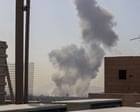
The Middle East has crossed a dangerous threshold today. When reports of explosions first surfaced in Tehran, the initial reaction from seasoned observers was to expect the usual—a limited, tit-for-tat exchange designed to save face while avoiding total war. We were wrong.
What we are witnessing right now is not a minor escalation or a warning shot across the bow. It is a fundamental shift in the conflict between the United States, Israel, and Iran. This is a coordinated, high-intensity campaign. Operation Epic Fury has begun, and it represents the most severe military operation between these powers in nearly half a century.
The Shift From Proxy War To Direct Confrontation
For years, the game in the region was defined by shadows. Israel would strike a facility, Iran would mobilize a proxy in Lebanon or Iraq, and the US would provide diplomatic cover or intelligence. That era of plausible deniability is dead.
Since the 12-day war in June 2025, the strategic calculus changed. Back then, it was about damaging capabilities. Today, the rhetoric coming from the White House and Jerusalem is far more existential. President Trump has framed this not as a tactical response to a specific provocation, but as an attempt to decisively alter the Iranian security apparatus.
The targets this time are not just remote radar sites or minor storage depots. Strikes are hitting key districts in Tehran, including areas adjacent to the offices of the Supreme Leader. This is a direct challenge to the Iranian regime's internal authority. When you target the nerve center of a government, you aren't looking for a ceasefire. You are signaling that the existing order of power is no longer acceptable.
Why Negotiations Failed
Many people are asking why this happened now, especially given the ongoing nuclear talks in Geneva. The reality is that the gap between the US demands and Iranian concessions had become an unbridgeable chasm.
The US reportedly demanded that Iran dismantle key nuclear facilities, surrender its entire stockpile of enriched uranium, and accept a permanent deal without sunset clauses. From Tehran’s perspective, these demands were seen as a surrender of their national sovereignty. When Omani mediation attempts failed to bridge this gap, the diplomatic window slammed shut.
The strikes began shortly after these talks stalled. This timing is crucial. It tells us that the US and Israel had already mapped out these targets weeks in advance. They were not waiting for the talks to succeed; they were waiting for the talks to provide the final justification for military action.
The Regional Spillover
The Iranian response has been rapid and expansive. By targeting US bases in the Gulf, alongside strikes on Israel, Tehran is attempting to force the international community to recognize the cost of this campaign.
We are seeing airspace closures across Jordan, Qatar, the UAE, and Kuwait. This is no longer contained to a border skirmish between two rivals. The entire regional infrastructure—civilian and military—is being dragged into a state of emergency.
Iran’s response strategy seems aimed at creating enough chaos to make the continuation of the US-Israel operation politically and economically untenable for the rest of the world. By hitting Gulf states, they are betting that these nations will pressure the US to de-escalate.
The Reality Of The Military Objective
It is important to look at the "why" behind the specific targets. Military planners are not just firing randomly. They are systematically attacking:
- Ballistic Missile Infrastructure: Reducing Iran's ability to project power across the region.
- Air Defense Systems: Ensuring that subsequent waves of attacks face less resistance.
- Command and Control: Attempting to degrade the regime's ability to coordinate its forces.
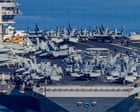
The US military has deployed significant assets to the region to support this operation, including carrier strike groups. This isn't just about Israeli security anymore. The US has fully integrated itself into the campaign, transforming it into a joint operation that dramatically changes the odds of success for the attackers.
What Happens When The Smoke Clears
We are currently in the middle of an active military engagement. The immediate danger is that the situation spirals into a full-scale regional war that neither side can fully control.
Watch the following indicators closely over the next 48 hours:
- The Scale Of Iranian Retaliation: Are the strikes on US bases in the Gulf just symbolic, or are they causing significant casualties? High casualties will almost certainly force the US into a more aggressive posture.
- Internal Stability In Iran: President Trump has called for a popular uprising. If we see widespread unrest inside Iranian cities, the dynamic shifts from a military conflict to a regime-change operation.
- Third-Party Intervention: Look at how other regional powers, like Turkey or Russia, respond. Their silence or condemnation will tell you how much diplomatic isolation Iran is currently facing.
Do not expect this to end with a simple press conference. The objectives announced by the US and Israel are broad and ambitious. Unless there is a rapid change in the regime's stance—which remains highly unlikely given the current escalation—this campaign is designed to continue until the target infrastructure is deemed sufficiently degraded.
Stay alert to official government notifications, specifically those regarding airspace and civilian safety. This is a fast-moving, high-stakes event that will define the political map of the Middle East for the next decade.