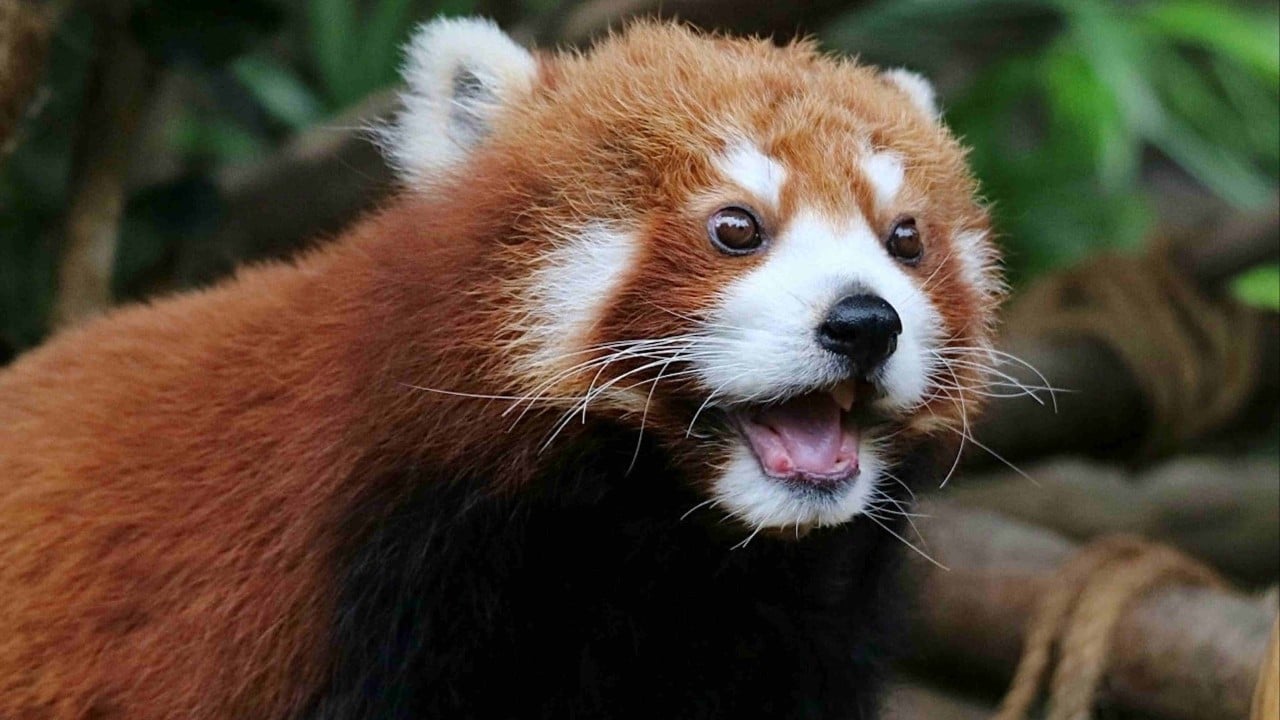
The air inside the veterinary surgery suite at Ocean Park didn't carry the humid, salty scent of the South China Sea. It smelled of antiseptic and heavy, clinical silence. On the table lay a creature that looked like a fallen ember. Rou Rou, a 17-year-old red panda, was no longer the vibrant streak of russet fur that visitors had spent nearly two decades trying to spot through the bamboo thickets. She was tired.
To the casual tourist, a red panda is a living plush toy, a "fire cat" designed for viral videos and souvenir keychains. To the keepers who had spent 6,200 mornings preparing her bamboo, she was a silent companion whose presence defined the rhythm of their lives. When the decision was made to end her life this week, it wasn't a choice made by a cold committee. It was a mercy killing for a friend whose body had become a cage.
The Weight of Seventeen Years
In the wild, a red panda is lucky to see their tenth birthday. The mountains of the Himalayas are unforgiving, filled with snow leopards and the creeping encroachment of human roads. Seventeen years is an anomaly. It is the human equivalent of living well past a century. Rou Rou had cheated the odds for so long that it was easy to forget she was mortal.
But time eventually collects its debts.
For months, the sparks of vitality had been dimming. Geriatric animals don't complain with words. They tell you through the slow, agonizing stiffening of their joints. They tell you when the bamboo—once stripped with enthusiastic precision—remains untouched. Rou Rou was suffering from chronic health issues that no amount of medicine could reverse. Her kidneys were failing. Her heart was stuttering. The vibrant mask of her face, once sharp with curiosity, had grown heavy with the fog of advanced age.
Consider the keeper who walks into the enclosure at 7:00 AM. For eighteen years, there is a routine. You look for the twitch of a ringed tail. You listen for the huff of a greeting. Then comes the day when the response doesn't come. You see the labored breathing. You see the eyes that are present but no longer looking. This is the invisible stake of conservation: the emotional tax paid by those who dedicate their lives to species that cannot say thank you.
A Choice Without a Good Option
There is a specific kind of agony in the "welfare-led" decision. It is the moment where science and empathy collide. The veterinary team at Ocean Park didn't look at a spreadsheet of costs or a PR schedule. They looked at a quality-of-life index.
Is she eating? No.
Is she moving without pain? No.
Is there a path back to comfort? No.
The word "euthanasia" comes from the Greek for "good death." But there is nothing that feels good about it when you are the one holding the syringe. The park officials released a statement that hit the wires with the dry thud of a corporate update: "Ocean Park is saddened to announce..."
The reality was far messier. It was a room full of adults who had spent their careers protecting this animal, standing in a circle, acknowledging that the greatest act of love left was to let her go. They weren't just killing an animal; they were ending an era. Rou Rou was one of the pillars of the park’s bamboo forest, a link to a time before the world became quite so loud and complicated.
The Myth of the Immortal Exhibit
We treat zoo animals as though they are frozen in time. We visit them as children, then take our own children to see "the same" panda. We want them to be eternal symbols of a nature we are failing to protect in the wild. When one dies, it shatters the illusion. It reminds us that even in the most controlled environments, biology wins.
Rou Rou’s life was a testament to the strange, symbiotic relationship between humans and the "others." She lived in a simulated forest in the heart of one of the world’s most vertical, concrete-heavy cities. She was an ambassador for a species that most Hong Kongers will never see in the rugged terrain of Sichuan or Nepal.
Imagine the sheer volume of people who looked at her and felt a brief, flickering connection to the wild. That is the currency of a red panda. They aren't just biological specimens; they are emotional anchors. They bridge the gap between our urban exhaustion and the raw, green world we've largely left behind.
But the cost of that bridge is the inevitable goodbye.
The Silence Left Behind
The enclosure is empty now. The bamboo stalks stand still, no longer swayed by the weight of a climbing "fire cat." The keepers will go through the motions. They will clean the space. They will eventually prepare it for another inhabitant. But the ghost of Rou Rou—the way she tilted her head, the specific branch she preferred for her afternoon nap—will linger in the peripheral vision of the staff for years.
We often talk about the "loss of biodiversity" as a series of numbers and graphs. We talk about it in the abstract, as if it’s a ledger we can balance. It’s not. It’s the loss of individuals. It’s the death of a 17-year-old soul that knew the smell of its keepers' hands and the exact timing of the afternoon misting system.
The grief felt at Ocean Park this week wasn't for a "resource." It was for a resident.
As the sun sets over the South China Sea, the park’s lights flicker on, reflecting off the glass of the grand aquariums and the steel of the rollercoasters. Somewhere in the quiet corners of the veterinary wing, the paperwork is filed, and the equipment is sterilized. The news cycle will move on to the next headline, the next political shift, the next market crash.
But for a small group of people in green uniforms, the world is significantly quieter. The fire has gone out, leaving behind only the cold, still beauty of a life well-lived and a rest well-earned.
The forest doesn't sound the same when the heartbeat at its center stops.