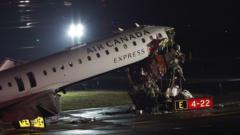
The radio crackles with a frantic command that no pilot ever wants to hear. "Stop, stop, stop!" The urgency in the air traffic controller's voice at LaGuardia Airport isn't just professional—it's visceral. When two massive pieces of machinery weighing hundreds of thousands of pounds are on a collision course, seconds feel like hours. This wasn't a drill or a simulated exercise. It was a terrifying reality on a runway that remains one of the most challenging in the United States.
If you've ever flown into New York, you know LaGuardia is cramped. It's basically a postage stamp surrounded by water. There’s almost zero margin for error. The recently released audio from a near-collision involving a Spirit Airlines jet and another aircraft provides a rare, unvarnished look at how human intuition and rapid-fire communication prevent catastrophe. Most people listen to these tapes for the drama. I listen to them because they reveal the breaking point of aviation safety systems.
The incident highlights a growing concern in the industry. As flight volumes return to pre-pandemic levels and beyond, the strain on the "human in the loop" is reaching a fever pitch. We're relying on tired controllers and distracted crews to manage a dance that's becoming increasingly complex.
Why the LaGuardia Runway Layout is a Constant Headache
LaGuardia isn't built like modern airports. Most international hubs have sprawling, parallel runways that allow for plenty of "buffer" space. LaGuardia uses an intersecting runway configuration. This means planes are constantly crossing paths that, if timed incorrectly, lead exactly to the "stop, stop, stop" scenario we heard on the tapes.
It’s a high-stakes game of Tetris. The Spirit Airlines flight was cleared for takeoff while another aircraft was still in a position that created a conflict. In the audio, you can hear the moment the controller realizes the gap is closing too fast. The tone shifts from the rhythmic, almost bored cadence of routine clearances to a sharp, high-pitched directive.
This isn't just about one person making a mistake. It’s about a system designed decades ago trying to handle 2026 traffic levels. We see these "runway incursions" happening more frequently across the country, from Austin to JFK. The common denominator? Human fatigue and a lack of automated override systems that can stomp on the brakes when a controller's eyes miss a flickering light on a radar screen.
Breaking Down the Anatomy of a Near Miss
When you listen to the recording, pay attention to the silence right after the command to stop. That's the sound of adrenaline. The pilot has to slam on the brakes, which, in a commercial jet, isn't as simple as hitting the pedal in your Toyota. It involves thrust reversers, heavy braking, and often, a lot of smoke from the tires.
- The initial clearance is given.
- A secondary movement is spotted by the ground controller or the tower.
- The "Abort" command is issued.
- The pilot confirms the stop.
In this specific LaGuardia case, the distance between the two planes was uncomfortably short. Aviation experts often talk about "the Swiss cheese model." For an accident to happen, the holes in several layers of safety (technology, communication, physical distance) have to line up perfectly. Here, the final layer—the human voice—was the only thing that stayed solid.
The Mental Toll on Air Traffic Controllers
We don't talk enough about the people in the tower. They’re working mandatory overtime. They’re dealing with aging equipment. When a controller screams "Stop!" into a headset, they aren't just doing their job; they're carrying the weight of hundreds of lives.
The National Air Traffic Controllers Association (NATCA) has been sounding the alarm for years about staffing shortages. When you're understaffed, you're tired. When you're tired, you miss things. It’s honestly a miracle these incidents don't happen every single day. The LaGuardia audio is a wake-up call that we're pushing our luck.
Critics argue that we should move toward fully automated towers. While that sounds great on paper, AI lacks the "gut feeling" a veteran controller has. A computer follows logic; a human hears a slight tremor in a pilot's voice and knows something is wrong before the data shows it. We need the tech to support the humans, not replace them.
What Happens After the Audio Ends
Once the planes are stopped and the heart rates slow down, the paperwork begins. The FAA and the NTSB don't take these lightly. An "Operational Error" or "Pilot Deviation" investigation is launched.
- Data recorders are pulled from the aircraft.
- Radar tracks are analyzed down to the millisecond.
- The controller is usually relieved of duty immediately for drug testing and a debrief.
- The runway is checked for debris or "hot spots" where braking occurred.
It’s a grueling process designed to ensure it never happens again. But it does happen. It happens because we are human and because the sky is crowded.
How You Can Track Aviation Safety Yourself
If this stuff fascinates you—or terrifies you—you don't have to wait for the news to report it. You can actually monitor this in real-time. Sites like LiveATC.net allow you to listen to the same frequencies the pilots use.
Watching FlightRadar24 while listening to the tower audio gives you a 4D view of how intense the job really is. You'll start to hear the "near misses" that don't make the headlines—the small corrections, the go-arounds, and the "tight" windows that controllers manage every minute.
If you’re a nervous flier, this might actually help. Seeing how many "saves" happen because of these protocols shows that the system, while stressed, is incredibly resilient. The "stop, stop, stop" command worked. Nobody was hurt. The planes went back to the gate, tires were checked, and life went on.
Stop looking at these incidents as failures. They are actually proof that the safety nets are catching us. However, we can't keep leaning on those nets until they fray. We need better funding for FAA infrastructure and a serious look at how we schedule the people responsible for our lives at 30,000 feet.
Next time you're sitting on the tarmac at LaGuardia, frustrated by a 20-minute delay, remember that audio. That delay might just be the controller taking an extra five seconds to make sure your path is clear. It’s worth the wait. Every single time.
Check the FAA's public database for Runway Safety statistics if you want to see the hard numbers on how often these "incursions" occur at your home airport. Information is the best cure for flight anxiety.