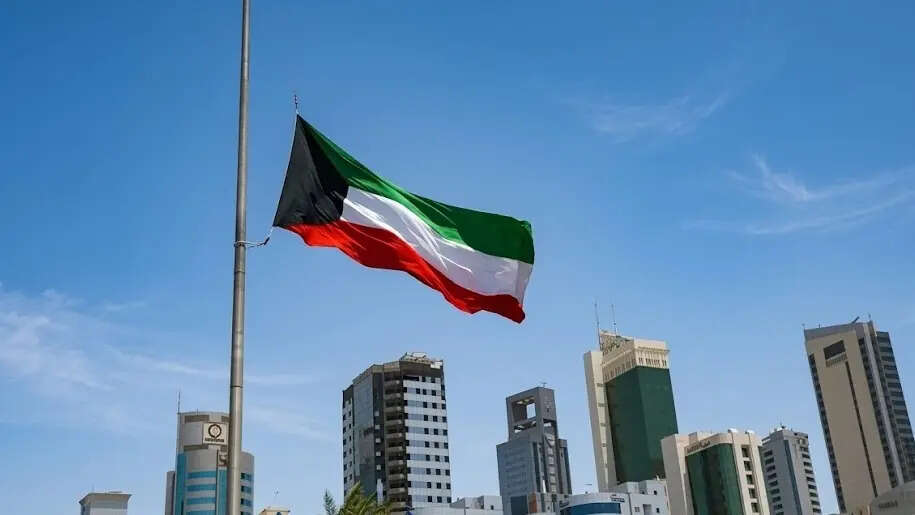
Kuwait just pulled the fire alarm on outdoor labor. Again. The standard headlines are screaming about "safety concerns" and "protecting the vulnerable." It sounds compassionate. It looks great on a government press release. It is also fundamentally dishonest, economically illiterate, and potentially more dangerous than the sun itself.
Stopping work between 11:00 AM and 4:00 PM during the peak of summer is the lazy man’s solution to a complex physiological and logistical crisis. We treat the sun like a scheduled terrorist, assuming that if we just hide indoors for five hours, the problem of extreme thermoregulation vanishes. It doesn’t.
I’ve spent a decade auditing supply chains across the MENA region. I’ve seen what happens when the sirens go off and the tools drop. The "safety" these mandates provide is a mirage. If we actually cared about the lives of the men building the skyline, we’d stop obsessing over the clock and start obsessing over the biological reality of heat stress.
The Myth of the Five Hour Safety Window
The competitor narrative suggests that by banning work during the hottest part of the day, we’ve solved the mortality risk. This is a lie. Heat stress is cumulative. It’s not a light switch; it’s a battery that drains.
When you force a workforce to stop at 11:00 AM, you aren't resetting their internal temperature to zero. Most of these workers are transported in non-air-conditioned buses to labor camps where the cooling systems are often substandard or failing. They spend their "rest" hours in a different kind of heat trap, only to be pushed back onto the site at 4:00 PM when the humidity is often climbing and the stored thermal mass of concrete and steel is radiating heat at its peak.
The Wet Bulb Globe Temperature (WBGT) doesn't care about your government decree. A high-humidity afternoon at 4:30 PM can be more lethal than a bone-dry noon. By focusing on a fixed window of time, regulators ignore the actual physics of heat. We are checking a box, not saving a life.
The Economic Penalty of Protectionism
Let’s talk about the money, because that’s what actually drives the site managers to cut corners. A mandatory work suspension creates a massive productivity debt. How do contractors pay it back? They compress the schedule.
When the ban is lifted, the pressure to "catch up" leads to:
- Night shifts with poor visibility: Leading to a spike in mechanical accidents and falls.
- Intensified work rates: Forcing laborers to move faster during the "allowable" hours, which spikes their metabolic heat production—the very thing that causes heatstroke.
- Corner-cutting on PPE: Workers shed safety gear because it’s too heavy or restrictive during the frantic catch-up period.
If you want to protect people, you don't stop the work; you change the nature of the environment. But that costs more than a free government mandate. It’s cheaper for the state to order a shutdown than to enforce a requirement for on-site cooling stations, wearable physiological monitors, and mandatory hydration intervals that prioritize biology over the calendar.
People Also Ask: Why not just work at night?
This is the standard "fix" people shout from their air-conditioned offices. "Just shift the schedule!"
Shift work is a physiological wrecking ball. Circadian rhythm disruption linked with extreme heat exposure creates a cocktail of cognitive impairment. A worker who hasn't slept properly because his dormitory is 30°C during the day is a walking liability on a crane at 2:00 AM.
Furthermore, Kuwait’s humidity often spikes at night. While the thermometer drops, the body’s ability to cool itself through sweat—the only mechanism that matters in the desert—effectively hits a wall. You can die of heatstroke at 32°C if the humidity is 90%. The government ban ignores this entirely.
The Solution Nobody Wants to Fund
True safety isn't a "stop" button. It’s an infrastructure investment. If Kuwait wanted to lead the world in labor safety, they wouldn't be issuing weather alerts; they would be mandating Active Cooling Technology.
- Phase Change Materials (PCM): We should be seeing cooling vests as standard-issue PPE. Not the cheap soak-in-water rags, but actual bio-thermal gear that maintains a constant temperature against the skin.
- On-Site Micro-Climates: Instead of sending men back to camps, sites should be required to provide pressurized, chilled "recovery zones" every 50 meters.
- The End of the Piece-Rate Hustle: The biggest killer is the incentive to work through the pain to hit a quota.
I’ve seen projects where we implemented mandatory 15-minute breaks every hour, regardless of the time of day, coupled with electrolyte monitoring. The result? Zero heat-related incidents and higher overall productivity than the "shutdown and scramble" model. But that requires a level of oversight and data integration that most Gulf contractors find "too intrusive."
The Hypocrisy of "Safety First"
We call it a safety measure, but it’s actually a liability shield. By ordering a suspension, the state shifts the responsibility. If a worker collapses at 10:55 AM, it’s a tragedy. If he collapses at 4:05 PM, the contractor says, "We followed the law."
The law is a blunt instrument in a world that requires a scalpel. We are using 20th-century labor tactics to solve a 21st-century climate reality. The sun is getting hotter, the humidity is getting stickier, and our response is to hide for five hours and hope for the best.
It’s time to stop patting ourselves on the back for "ordering" people to stay out of the sun. It’s time to build job sites that don't treat human biology as an afterthought to the project timeline. Until we move past the "Work Suspension" era, we are just managing the optics of mortality.
Stop banning work. Start engineering survival.