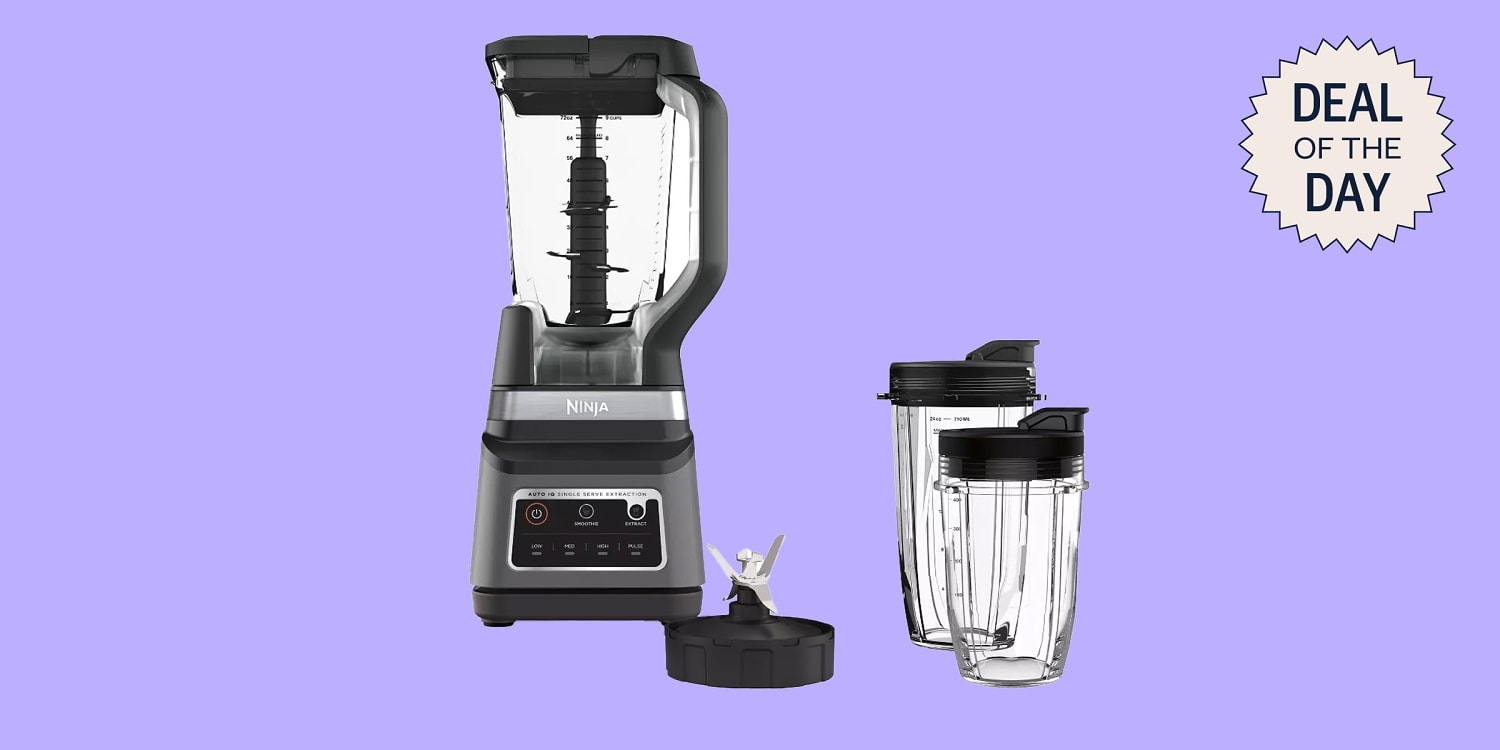
A $50 discount is not a deal. It is a bribe. It is a desperate attempt to get you to house a loud, vibrating monument to mediocrity on your granite countertop.
The industry is currently obsessed with "versatility." The competitor article wants you to believe that a Ninja blender—specifically one that tries to be both a single-serve smoothie maker and a family-sized pitcher—is the pinnacle of kitchen engineering. They call it a bargain. I call it a compromise that fails at both ends of the spectrum.
When you buy a machine designed to do "everything," you are purchasing a device that does nothing exceptionally well. This is the Swiss Army Knife fallacy. A Swiss Army Knife is great if you are trapped in the woods and need to saw a twig, but you wouldn’t use it to frame a house or perform surgery.
Stop falling for the "total crushing" marketing jargon. Let’s talk about what is actually happening inside that plastic jar.
The Myth of Horsepower and the Reality of Torque
Most consumers are trained to look at wattage. "1400 watts!" the box screams. "Professional grade!"
Wattage is a measurement of power consumption, not efficiency or output. It’s essentially telling you how much electricity the motor draws before it smells like burning hair. In the world of high-end blending, horsepower is a vanity metric. What actually matters is torque and blade geometry.
Mid-tier blenders like the Ninja series rely on a vertical "tower" of blades. They claim this "crushes" ice. It does. It smashes it into jagged snow. But it doesn't emulsify.
If you want a smoothie that feels like silk—the kind you pay $12 for at a boutique juice bar—you don't need "crushing" blades. You need a vortex. High-end machines from Vitamix or Blendtec use a specific jar shape and a blunt blade system to create a literal tornado. This pulls the ingredients down through the blades repeatedly.
The Ninja tower design creates "dead zones." You’ve seen it: the bottom is liquid, the top is a chunk of frozen mango, and the middle is an air pocket. You end up shaking the jar like a maraca just to get the motor to catch. That’s not "professional." That’s a design flaw masked by a low price point.
The Hidden Cost of Plastic Friction
Let's discuss the "BPA-Free" lie. Every reviewer raves about how light and durable these plastic pitchers are. They are light because they are cheap.
When you spin a blade at 20,000 RPM inside a plastic container, you are creating immense friction and heat. Over time, that plastic undergoes "crazing"—those tiny white cracks that make the jar look cloudy. That isn't just aesthetic wear. That is the structural degradation of the polymer.
If you are blending hot soup—which these "versatile" machines often claim they can handle—you are essentially marinating your food in micro-vibrations of plastic. If you want a machine that lasts a decade, you buy one with a high-density, high-temp copolyester jar or, better yet, glass (though glass has its own thermal shock risks).
The $50 off coupon is a distraction from the fact that you will be replacing this entire unit in 24 months when the plastic gear teeth on the base finally strip themselves smooth.
The Single-Serve Delusion
The "Multi-Serve" feature is the biggest selling point of the current sale. It comes with the 72-ounce pitcher for "crowds" and the 24-ounce cups for "on the go."
Here is the reality of human behavior: You will use the small cup 95% of the time.
Why? Because cleaning a 72-ounce pitcher with a removable, razor-sharp blade tower is a chore that most people will avoid at all costs. The "versatility" you are paying for is actually just clutter. You are storing a giant pitcher in your cabinet that only sees the light of day once a year when you make margaritas for a party of six.
By trying to own one machine that does both, you get a motor base that is over-engineered for a smoothie cup and under-engineered for a massive pitcher of frozen fruit.
If you actually care about your kitchen workflow, you should buy a dedicated, high-torque single-serve blender (like a NutriBullet or a small Vitamix) and leave the "batch" blending to a machine that doesn't sound like a jet engine taking off in a gravel pit.
Why "Smart" Programs Are Making You Dumber
The competitor loves to highlight the "Auto-iQ" technology. "One-touch programs that do the work for you!"
This is the gamification of the kitchen. Blending is not a "set it and forget it" process. Every ingredient has a different density. A handful of kale requires a different shear force than a frozen strawberry.
When you rely on a pre-programmed timer, you aren't blending; you're hoping. These programs are designed to compensate for the motor's inability to handle sustained high-speed loads without overheating. They pulse to let the motor cool down.
A truly powerful blender doesn't need to pulse. It simply annihilates whatever you put in it. If you have to push a button labeled "Smoothie" and wait 60 seconds for a series of erratic bursts, you are using a machine that is managing its own limitations, not your ingredients.
The Real Math of Value
Let's look at the numbers.
| Feature | The "Sale" Blender ($150-200) | The Real Investment ($400-600) |
|---|---|---|
| Warranty | 1 Year (Typical) | 7 to 10 Years |
| Blade Material | Stainless Steel (Thin/Sharp) | Hardened Stainless (Blunt/Heavy) |
| Coupling | Plastic on Plastic | Metal on Metal |
| Life Expectancy | 2-3 Years | 15+ Years |
| Cost Per Year | $75.00 | $40.00 |
The $50 discount is a psychological trick. It makes you feel like you are "winning" the transaction. In reality, you are entering a cycle of planned obsolescence.
I have seen people burn through three $150 blenders in six years. They spent $450 and have a drawer full of mismatched plastic lids and dull blades to show for it. Meanwhile, the "expensive" Vitamix 5200 I bought during the Obama administration is still turning almond skins into dust.
The "People Also Ask" Reality Check
"Can it crush ice?"
Yes, but so can a hammer. The question you should ask is: "Can it make a frozen daiquiri that doesn't have chunks of ice at the bottom?" The answer for these mid-tier machines is almost always "no."
"Is it easy to clean?"
The competitor says "dishwasher safe." This is technically true, but the high heat of a dishwasher accelerates the clouding and cracking of the plastic jars. If you have to take the blade assembly out to clean it, you are one slip away from a trip to the ER. High-end blenders are cleaned by putting a drop of soap and warm water in them and running them on high for 30 seconds. That is the only "smart" program you actually need.
"Does it fit under my cabinets?"
This is the only valid concern most people have. Manufacturers make these huge pitchers to look "imposing" on a shelf, but they are a nightmare for standard kitchen clearances.
Stop Being a "Value" Victim
The obsession with "deals" is ruining the quality of our tools. When you prioritize a $50 discount over the mechanical integrity of a motor, you are telling manufacturers that you don't care about the product—you only care about the hit of dopamine you get from "saving" money.
If you want a blender that actually changes the way you eat, stop looking at the sale circulars at big-box retailers. Save that $150. Put it in a drawer. Wait until you have $400. Buy a refurbished unit from a brand that pros actually use.
The "ninja" in your kitchen isn't a stealthy powerhouse. It's just a loud, plastic distraction that’s taking up space where a real tool should be.
Stop buying appliances based on what they cost today. Start buying them based on what they will cost you over the next decade. If the blade isn't heavy enough to be used as a weapon and the motor doesn't have a warranty longer than most car leases, leave it on the shelf.
Throw the coupon in the trash. Your morning smoothie deserves better than a machine that is "on sale" because it was built to be replaced.