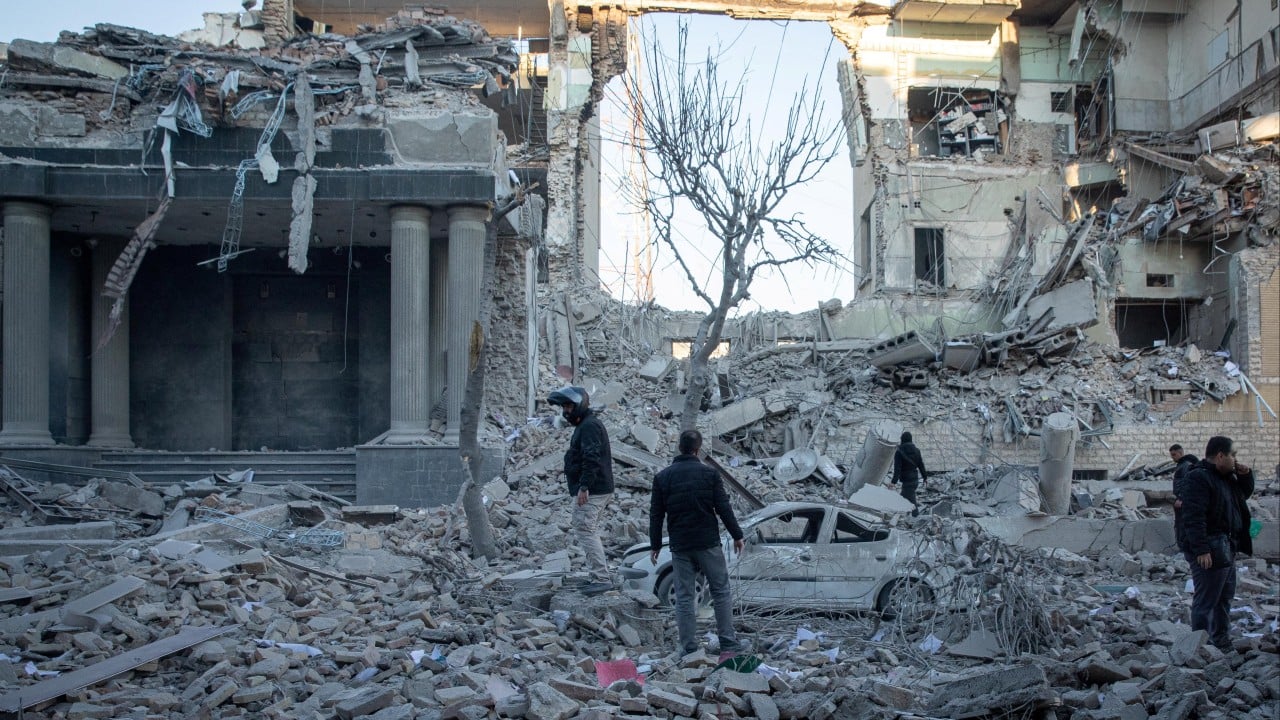
The headlines are screaming about a "failed diplomatic breakthrough" and the "specter of regional war." They are wrong. They are looking at the smoke and ignoring the mirror. What we just witnessed between Israel and Iran wasn't a failure of diplomacy; it was the highest form of it.
The media treats these missile exchanges like a bar fight spiraling out of control. In reality, it is a high-stakes corporate merger where both CEOs hate each other but need the stock price to stay stable. If you think we are on the brink of World War III, you aren't paying attention to the math. You’re falling for the kinetic illusion.
The Myth of the Escalation Ladder
Foreign policy "experts" love the term escalation ladder. They imagine two players climbing rung by rung until someone falls off into total chaos. It’s a tidy, academic way to describe a mess. But in the Middle East, the ladder is a circle.
Israel’s strikes on Iran are not designed to trigger a regime collapse or a full-scale invasion. They are calibrated "maintenance strikes." Think of it as a forced software update for a buggy operating system. You don’t want to delete the OS; you just want to disable the malware (in this case, specific drone manufacturing sites or air defense nodes) without crashing the entire server.
The "lazy consensus" says that every strike brings us closer to the end of the world. Logic suggests otherwise. Since 1979, these two powers have perfected the art of the Theatrical Kinetic Exchange.
- One side crosses a "red line."
- The other side broadcasts its intent to respond.
- The response is loud, expensive, and specifically targeted to avoid mass civilian casualties.
- Both sides claim victory to their domestic audience.
- The status quo is restored.
This isn't war. This is a brutal form of risk management.
Why Diplomacy Was Never the Goal
The competitor piece mourns the lack of a "diplomatic breakthrough." This assumes that both Tehran and Jerusalem want a breakthrough. They don’t.
For the Iranian leadership, the "Zionist Entity" is the ultimate external boogeyman. It justifies the existence of the IRGC and the squeezing of the Iranian middle class. For the Israeli government, the "Iranian Threat" is the gravity that keeps a fractured domestic coalition together.
If you solve the problem, you lose the leverage.
In my years analyzing regional security budgets, I’ve seen how "imminent threats" are the best fundraising tools in history. When a missile is in the air, nobody asks about housing prices in Tel Aviv or the inflation rate in Tehran. Peace, in its traditional sense, is a direct threat to the internal stability of both regimes.
The Precision Trap
We hear a lot about "precision-guided munitions." We are told that better technology makes war cleaner. That’s a lie.
Better technology makes war infinite.
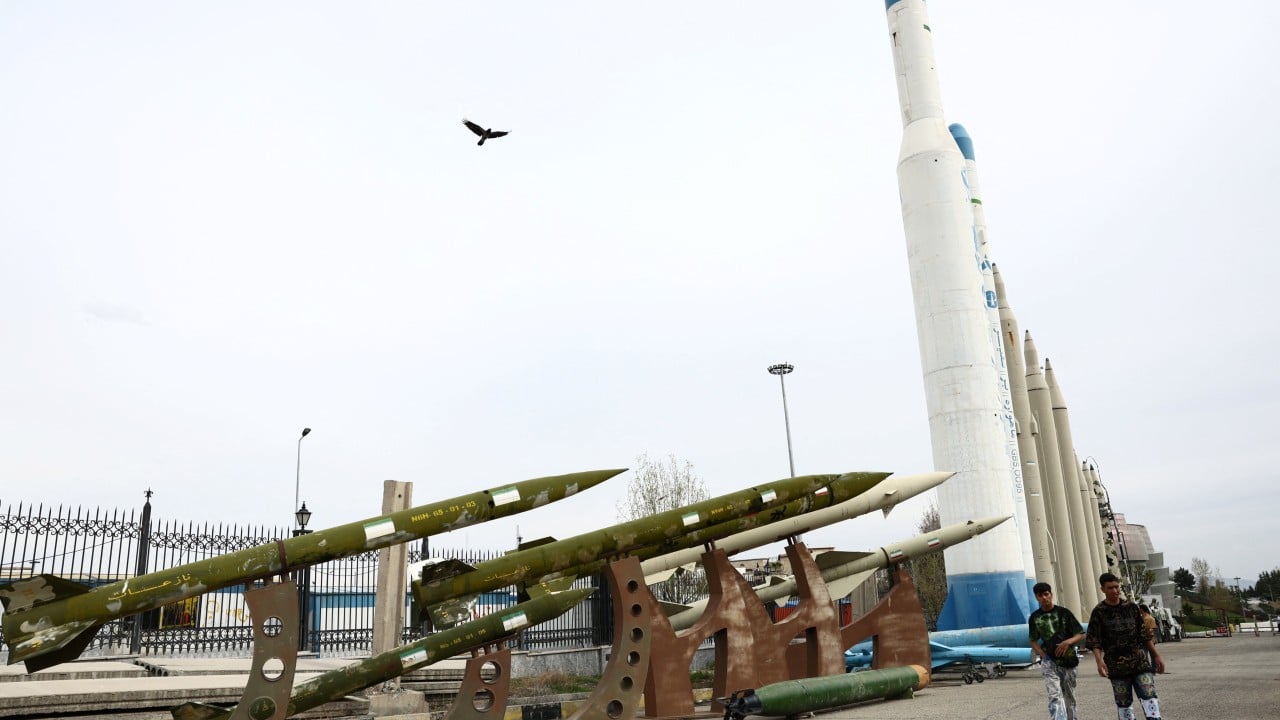
In the old days, you dropped a thousand dumb bombs, hit your target (maybe), and the war ended because you ran out of money or planes. Today, the $100 million F-35 and the $20,000 Shahed drone create a bizarre economic asymmetry. Israel is forced to use $2 million interceptors to down $20,000 pieces of flying lawnmower parts.
The Cost-Per-Kill Ratio
| Weapon System | Cost per Unit | Strategic Purpose |
|---|---|---|
| Shahed-136 (Iran) | $20,000 | Economic Exhaustion |
| Tamir Interceptor (Iron Dome) | $50,000 | Domestic Psychological Safety |
| Arrow 3 Interceptor | $2,000,000 | High-Altitude Asset Protection |
| Rampage Missile (Israel) | $500,000 | Targeted Surgical Attrition |
This isn't a battle for territory. It's a battle for the defense budget. Iran is trying to bankrupt the Israeli interceptor supply, while Israel is trying to demonstrate that Iran's sovereign borders are irrelevant. It’s an exercise in brand positioning.
The Proxy Lie
Stop calling them proxies. Hezbollah, the Houthis, and the various militias in Iraq are not "puppets" of Tehran. That’s a lazy Western simplification that ignores local agency.
I’ve sat in rooms where people talk about "cutting off the head of the snake." It’s a great metaphor for a thriller novel, but it’s terrible intelligence. These groups are more like franchisees. Iran provides the branding (ideology) and the supply chain (missiles), but the local managers make the daily operational decisions.
When Israel strikes Iran directly, they aren't trying to stop Hezbollah. They are sending a message to the Board of Directors. The message is: "Your insurance premiums just went up."
The Intelligence Paradox
The most dangerous part of this "kinetic management" strategy is that it relies on perfect intelligence. You have to know exactly how much you can hit without forcing the other person to go "all in."
The risk isn't a "lack of diplomacy." The risk is a math error.
Imagine a scenario where a "precision" strike hits an unintended target—a high-ranking official's family or a sacred site—due to a sensor glitch or a bad line of code. Suddenly, the theater ends and the real blood begins. The status quo depends on both sides being competent. In a region defined by chaos, betting on the permanent competence of your enemy is a hell of a gamble.
Stop Asking About "The Future of the Region"
The most common question I get is: "What happens next?"
You’re asking the wrong question. You are looking for a finale in a show that is designed to run for fifty seasons. There is no "endgame." There is only the next fiscal quarter of conflict.
The "actionable advice" for anyone watching this? Ignore the maps with the red arrows. Watch the energy markets and the shipping insurance rates. If those aren't spiking into the stratosphere, the professionals—the traders, the insurers, the people who actually lose money when things blow up—know the secret.
They know this is a choreographed dance. They know that "no diplomatic breakthrough" is the desired outcome.
The strikes will continue. The rhetoric will escalate. The flags will be burned. And on Monday morning, the same people will still be in power, using your fear to justify their next procurement cycle.
Stop waiting for the explosion that ends the story. The story is the explosion.