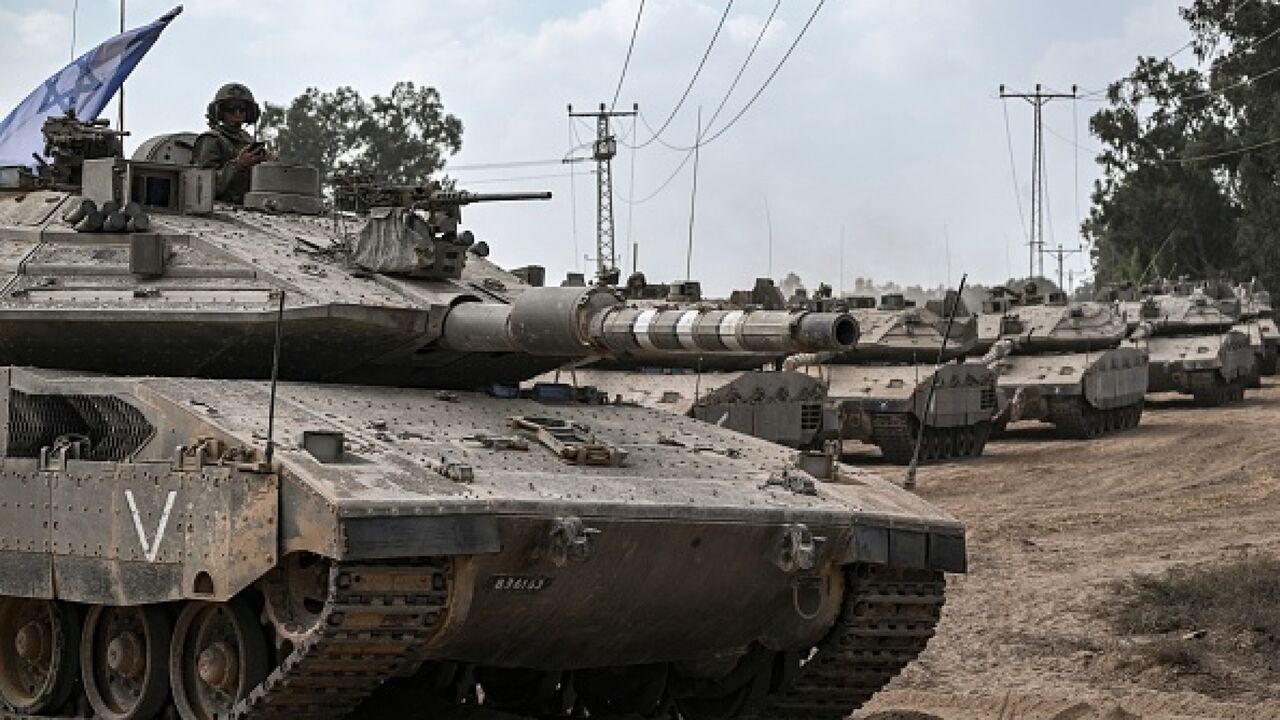
The reported engagement between an Israeli F-35I "Adir" and an Iranian-operated Yak-130 over Tehran represents more than a tactical skirmish; it is a live-fire validation of the shift from traditional air superiority to information-dominant localized strikes. This incident signals the collapse of the "sanctuary" status of sovereign airspace in high-tension corridors. To analyze this event, one must move beyond the headlines of a "first kill" and examine the specific technical asymmetries, the penetration of sophisticated Integrated Air Defense Systems (IADS), and the doctrinal implications of using a fifth-generation stealth asset against a subsonic advanced trainer in the heart of an adversary’s capital.
The Asymmetry of the Engagement Envelope
The technical disparity between the Lockheed Martin F-35I and the Yakovlev Yak-130 defines the outcome before the first radar lock. The Yak-130 is a subsonic, twin-engine lead-in fighter trainer (LIFT) designed for pilot instruction and light ground attack. While maneuverable, it lacks the sensor suite, low-observable (LO) characteristics, and electronic warfare (EW) capabilities to survive in a contested environment against a high-end peer.
The Detection Delta
The F-35I operates on the principle of the "Kill Chain" compression. Its AN/APG-81 Active Electronically Scanned Array (AESA) radar allows it to track and engage targets long before the Yak-130’s onboard systems—or the ground-based radar supporting it—can achieve a track.
- Radar Cross Section (RCS) Differential: The F-35I maintains an RCS roughly equivalent to a metal marble from specific aspects. In contrast, the Yak-130, with its conventional external hardpoints and non-stealthy engine air intakes, presents a massive signature that illuminates clearly on Israeli airborne early warning and control (AEW&C) platforms.
- Sensor Fusion: The F-35 does not merely "see" a target; it correlates data from its Electro-Optical Targeting System (EOTS) and Distributed Aperture System (DAS). This provides the pilot with 360-degree situational awareness, allowing for a passive engagement where the F-35 never emits a detectable radar pulse, instead slaving a heat-seeking missile (like the AIM-9X Sidewinder) to the DAS infrared track.
Penetration Mechanics of Tehran’s Air Defense
The presence of an Israeli F-35 over Tehran implies a systemic failure of the Iranian IADS, which includes Russian-made S-300PMU2 batteries and indigenous systems like the Bavar-373. The failure is not necessarily a lack of "power" in the radar but a failure of the signal-to-noise ratio processing required to isolate a stealth airframe against the backdrop of urban electronic clutter.
The Electronic Warfare Variable
The F-35I "Adir" is unique due to its integration of Israeli-made electronic warfare suites. Unlike standard F-35 variants, the Adir carries a "plug-and-play" architecture that allows for real-time jamming and cyber-electronic attacks.
- Digital Radio Frequency Memory (DRFM) Jamming: By capturing incoming radar pulses from Iranian S-300s and retransmitting them with a slight delay or phase shift, the F-35 creates "ghost" targets. This forces the ground operator to sort through false positives, providing the F-35 with the seconds required to enter and exit the engagement zone.
- Terrain Masking and Loitering: If the F-35 approached Tehran, it likely utilized the Zagros Mountains for terrain masking, popping up into the radar horizon only when the engagement was imminent.
The Yak-130 as a Target of Opportunity
The deployment of the Yak-130 in this context suggests it was likely being used for CAP (Combat Air Patrol) or as a low-cost interceptor for slower threats like drones. Its destruction by an F-35 indicates that the Israeli Air Force (IAF) prioritized the elimination of "eyes in the sky." Even a subsonic trainer can act as a visual or IR sensor node for a larger air defense network. By removing the Yak-130, the F-35 eliminated a localized sensor, further blinding the Tehran defense grid.
The Cost Function of High-End Interdiction
The logic of using a $100 million stealth fighter to down a $15 million trainer is found in the "strategic signaling" value rather than the attrition value. In military economics, this is a negative return on investment in hardware, but a massive gain in psychological and deterrent capital.
Escalation Dominance
By successfully engaging a manned aircraft over the capital city, the IAF demonstrates "Escalation Dominance." This concept dictates that at every level of conflict, one side has the capability to increase the stakes to a level the other cannot match. The message is clear: the most protected airspace in Iran is transparent to Israeli sensors.
- The Risk of Manned Interception: Shooting down a manned aircraft is a significant escalation compared to intercepting a drone. It carries the weight of pilot loss and the definitive violation of sovereignty.
- The Verification of Stealth: This engagement serves as a real-world test of the F-35’s stealth coatings under combat conditions against modern Russian-made sensors. Data gathered during this mission—radar illumination patterns, response times, and frequency usage—will be fed back into the Mission Data Files (MDF) that govern the F-35’s automated threat recognition.
Strategic Constraints and Operational Limits
Despite the tactical success, this engagement highlights several operational bottlenecks that both sides must navigate. No weapon system, including the F-35, is a silver bullet.
Fuel and Range Logistics
The primary constraint for an F-35 mission from Israel to Tehran is fuel. The F-35A/I has an internal combat radius of approximately 590 nautical miles. A round trip to Tehran exceeds this, necessitating either:
- Aerial Refueling: Utilizing Boeing 707 (Re'em) tankers, which are themselves non-stealthy and vulnerable.
- External Fuel Tanks: These increase range but destroy the aircraft’s stealth profile, making them unlikely for a deep penetration mission unless jettisoned before entering the radar envelope.
- Forward Basing: Hypothetical cooperation with regional third parties for emergency landing or refueling.
The Intelligence Gap
A kinetic strike over a capital requires high-fidelity, real-time intelligence. The IAF must know exactly when and where the Yak-130 will be to avoid a protracted dogfight that would bleed fuel and increase exposure time. This suggests a deep penetration of Iranian command and control (C2) networks, allowing the IAF to intercept the Yak-130 at its most vulnerable flight phase.
The Shift in Regional Air Power Dynamics
The integration of the Yak-130 into the Iranian Air Force was intended to modernize their pilot pipeline in preparation for the Su-35 "Flanker-E." This engagement disrupts that transition. If the Yak-130 cannot survive a standard patrol over its own base, the training of fourth-generation pilots becomes a high-risk endeavor.
The second-order effect is the pressure on Russia. If Russian-origin aircraft and air defense systems are perceived as ineffective against the F-35, the export value of these systems diminishes. This creates a geopolitical friction point between Moscow and Tehran, as the latter may demand more advanced, unexported technology to counter the "Adir" threat.
Tactical Reality Check on the "First Kill"
While the F-35 has recorded kills against UAVs (notably the 2021 interception of Iranian drones), a manned-to-manned kill is a different echelon of combat. The tactical sequence likely followed a "Beyond Visual Range" (BVR) logic:
- Passive Detection: F-35 detects Yak-130 via ESM (Electronic Support Measures) or IRST (Infrared Search and Track).
- Verification: Identification Friend or Foe (IFF) and EOTS visual confirmation at distance.
- Kinetic Launch: Engagement via an AIM-120D AMRAAM or AIM-9X, potentially utilizing "lock-on after launch" (LOAL) capabilities to keep weapon bay doors open for the minimum duration possible.
- Extraction: High-speed egress utilizing the F-35's internal fuel and low-observable profile to vanish before ground-based QRF (Quick Reaction Force) can vector in.
The friction in this scenario remains the possibility of atmospheric or human error. In a dense urban environment like Tehran, the risk of collateral damage or misidentification is paramount. The precision of the F-35’s sensor suite is the only factor preventing a tactical engagement from becoming a strategic catastrophe.
The immediate strategic play for regional actors is the hardening of C2 nodes and the transition to passive, multi-static radar arrays. For the IAF, the priority shifts to maintaining the "stealth advantage" through constant software updates and EW signature management. The Tehran engagement has moved the F-35 from a deterrent asset to an active instrument of sovereign penetration, fundamentally changing the risk calculus for any future localized conflict in the Middle East. Would you like me to analyze the specific radar cross-section vulnerabilities of the S-300 against the F-35's X-band jamming frequencies?