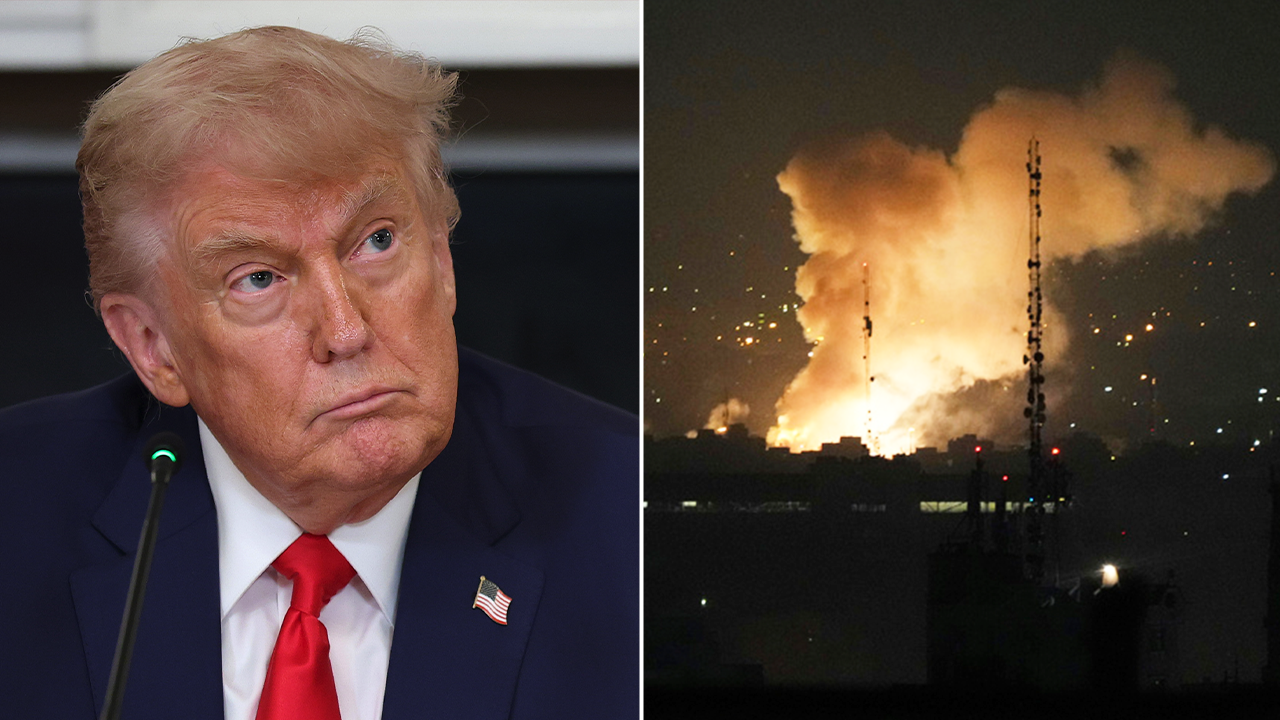
The escalation of lethal kinetic activity in the West Bank—most recently evidenced by the deaths of four Palestinians during Israeli military operations—is not a series of isolated tactical events. Rather, it represents a systemic failure of the "mowing the grass" doctrine, a long-standing security framework designed to manage rather than resolve asymmetric conflict. This friction is a direct output of a deteriorating security vacuum created by the weakening of the Palestinian Authority (PA) and the simultaneous expansion of localized militant cells. To understand the current trajectory of violence, one must look past the casualty counts and analyze the structural drivers: the shift from preemptive intelligence-led raids to high-friction urban combat, the collapse of civil-military coordination, and the emerging "multi-front" synchronization strategy employed by regional actors.
The Triad of Tactical Escalation
The transition from low-intensity policing to high-intensity urban warfare in the West Bank is driven by three distinct structural shifts in the operating environment.
1. The Proliferation of Non-Hierarchical Militancy
Traditional counter-terrorism models rely on decapitating hierarchical leadership. However, the current environment is defined by "The Lion’s Den" model—small, localized, and horizontally structured groups that lack a central command node. These cells operate with high degrees of autonomy, making them resistant to traditional intelligence infiltration. When Israeli Defense Forces (IDF) enter areas like Jenin or Tulkarm, they no longer face a organized military wing but a decentralized network of youth-led cadres. This structural shift forces the IDF to use heavier ordnance and larger troop footprints, which statistically increases the probability of lethal outcomes for both combatants and bystanders.
2. Technical Parity in the IED Domain
A significant driver of the increased lethality is the technical evolution of Improvised Explosive Devices (IEDs). The introduction of Iranian-influenced EFP (Explosively Formed Penetrator) technology into the West Bank has altered the IDF’s risk calculus. Previously, armored vehicles provided near-total protection against small arms fire. The presence of roadside bombs capable of disabling heavy armor forces the IDF to utilize air support—specifically drones and Apache helicopters—to provide overwatch and kinetic strikes. This shift from ground-based arrests to air-to-ground engagement fundamentally changes the casualty profile of these operations.
3. The Collapse of Security Coordination
The Palestinian Authority’s security forces (PASF) are caught in a legitimacy-security trap. To maintain domestic standing, they must distance themselves from Israeli security cooperation; to maintain their existence, they require the stability that cooperation provides. As the PASF retreats from refugee camps and urban centers to avoid being labeled as "subcontractors of the occupation," a power vacuum emerges. The IDF then fills this vacuum with "Operation Break the Wave" style incursions. Every IDF raid further erodes the PA's remaining sliver of authority, creating a self-reinforcing loop of instability.
The Geography of Attrition
The spatial distribution of violence indicates a strategic narrowing of the conflict zone. Most lethal encounters are concentrated in the Northern West Bank (the "Green Line" seam zone). This geography is critical because of its proximity to Israeli population centers.
- The Jenin-Nablus Axis: This region serves as the laboratory for new militant tactics. The dense urban architecture of refugee camps creates a "fortified enclave" effect where traditional surveillance is limited.
- The Rural Buffer: Outside the urban hubs, the friction is defined by settler-Palestinian violence, which serves as a secondary theater that stretches IDF resources thin, forcing a redistribution of battalions from the Gaza or Northern fronts to the central command.
This geographic concentration suggests that the current conflict is not a generalized "intifada" but a series of "localized insurgencies" that are being tactically linked through social media and shared logistics, even if they lack a unified political wing.
The Cost Function of Kinetic Persistence
From a strategic consulting perspective, the current Israeli approach can be viewed through a cost-benefit lens where the "cost of inaction" (potential terror attacks inside Israeli cities) is weighed against the "cost of intervention" (international diplomatic pressure, Palestinian civilian casualties, and radicalization).
The "Cost Function" is currently skewed by two variables:
- The Intelligence Threshold: As militant groups become more tech-savvy and use encrypted comms, the "human intelligence" (HUMINT) required for surgical strikes becomes harder to acquire. This forces a reliance on "noisy" operations—large convoys and daylight raids—which have a higher friction coefficient.
- The Political Constraints: The absence of a viable political horizon for the Palestinian population removes the "off-ramp" for escalation. Without a diplomatic alternative, the incentive for militants shifts from "negotiation leverage" to "total attrition."
The Multi-Front Synchronization Hypothesis
A critical oversight in standard reporting is the role of external synchronization. There is significant evidence that the surge in West Bank activity is timed to coincide with pressures on Israel’s northern border (Hezbollah) and the ongoing operations in Gaza. This "unification of the fronts" strategy aims to achieve three objectives:
- Resource Dilution: Forcing the IDF to maintain a high troop presence in the West Bank prevents the full mobilization of reserves to the North.
- Domestic Destabilization: Increasing the internal friction within Israel regarding the cost of the occupation and the security of the settlements.
- PA Obsolescence: Demonstrating that the Palestinian Authority is irrelevant to the "resistance," thereby paving the way for a post-Abbas succession crisis that favors radical factions.
Strategic Forecast: The Move Toward Annexation or Collapse
The current trajectory is unsustainable and points toward a binary outcome. Either the Palestinian Authority undergoes a total systemic collapse, leading to a "Gaza-fication" of the West Bank where Israel is forced to resume full civil administration, or there is a radical shift toward a "Security-First" annexationist policy.
The "Mowing the Grass" strategy has hit a point of diminishing returns. Each raid that results in four deaths, as seen in the recent health authority reports, serves as a recruitment tool for the next generation of non-hierarchical militants. The strategic play for regional players is now to manage the "day after" Abbas.
The immediate tactical requirement for the IDF will be the deployment of persistent autonomous surveillance (UAVs) and AI-driven predictive policing to lower the troop footprint while maintaining the lethality of their deterrence. However, technology cannot fix a structural political vacuum. The West Bank is currently an "open-loop system" where kinetic inputs do not lead to a stable output, but rather to increased system heat.
The next logical step in this theater is not a peace summit, but a massive, multi-brigade clearing operation designed to reset the "IED infrastructure" in the northern camps, likely followed by a total sealing of the seam zone. This will necessitate a re-evaluation of the 1994 Oslo Accords' security divisions, moving toward a "de facto" Israeli security control over Area A, effectively ending the era of Palestinian security autonomy.
The strategic priority must shift from "containing the violence" to "hardening the infrastructure" while preparing for the inevitable power struggle within the Palestinian leadership. Any analyst focusing solely on the death toll is missing the tectonic shifts in the regional security architecture; the West Bank is no longer a secondary theater, but the primary pressure point in a coordinated regional strategy of exhaustion.