The current state of the Russia-Ukraine conflict has shifted from a war of maneuver to a high-stakes competition of industrial throughput and diplomatic arbitrage. While headline-driven reporting focuses on individual drone strikes or localized casualties, these events are merely lagging indicators of two deeper structural shifts: the normalization of deep-strike drone warfare as a cost-offsetting mechanism for Ukraine, and the strategic pivot toward Middle Eastern defense corridors to secure long-term hardware replenishment.
The Drone Strike Asymmetric Cost Function
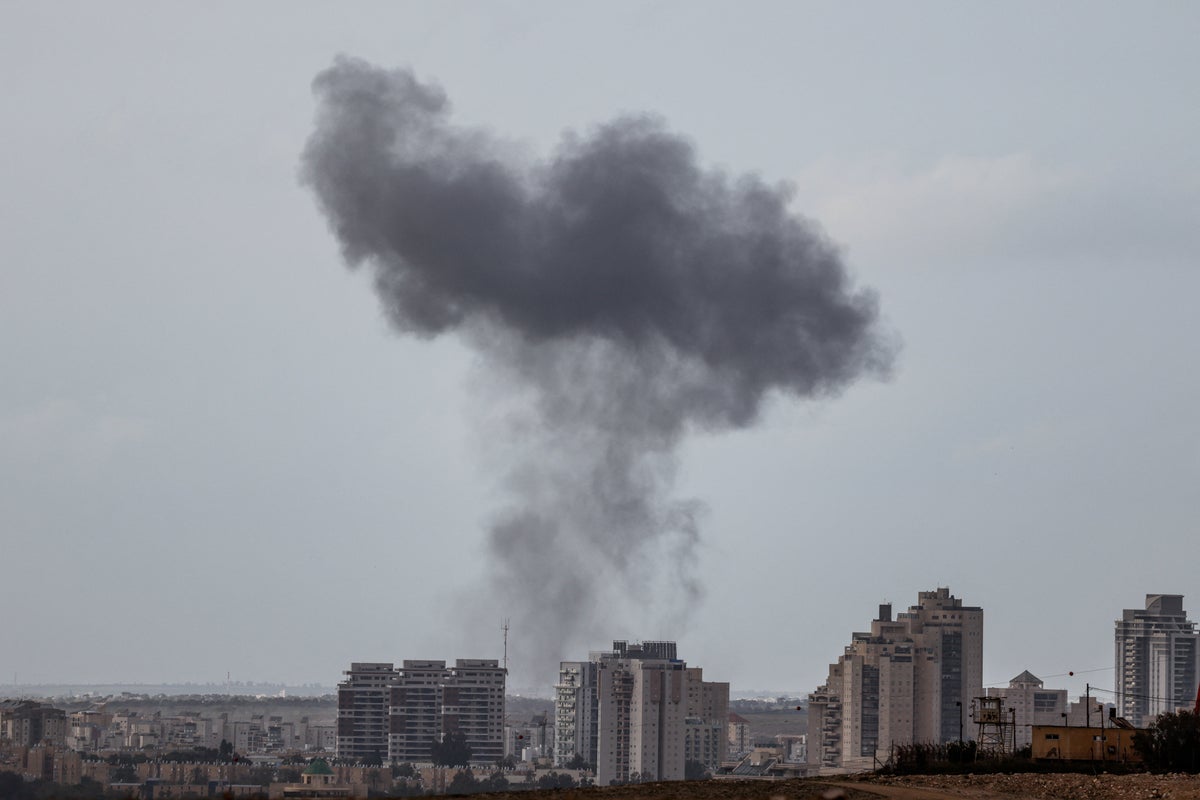
Ukraine’s recent drone operations, such as those resulting in strikes near Moscow and Belgorod, represent a specific military logic designed to exploit a widening gap in Russian domestic air defense density. To analyze the efficacy of these strikes, one must look past the immediate casualty count and examine the Interception-to-Impact Ratio (IIR). Meanwhile, you can read similar developments here: The Calculated Silence Behind the June Strikes on Iran.
The cost of a single Ukrainian "Beaver" or similar long-range OWA (One-Way Attack) drone is estimated between $30,000 and $100,000. In contrast, the S-400 or Pantsir-S1 interceptors required to neutralize them cost between $500,000 and $2 million per missile. This creates a recursive economic drain on Russian defense resources. Even if Russia intercepts 90% of incoming drones, the 10% that penetrate the shield target high-value logistics—oil refineries, ammunition depots, and command nodes—where the replacement cost of the target far exceeds the total cost of the drone swarm.
This strategy aims to achieve three specific mechanical outcomes: To see the bigger picture, we recommend the recent article by Al Jazeera.
- Air Defense Dilution: Forcing Russia to pull advanced radar and missile units away from the front lines to protect civilian and industrial infrastructure deep within the interior.
- Economic Friction: Disrupting the refining capacity of the Russian energy sector, which serves as the primary engine for the Kremlin's war chest.
- Psychological Normalization: Bringing the kinetic reality of the war into the Russian heartland to erode the "Special Military Operation" narrative of localized, distant conflict.
The Middle Eastern Defense Corridor and Strategic Arbitrage
Volodymyr Zelensky’s recent diplomatic outreach to Saudi Arabia and the United Arab Emirates signifies a sophisticated shift in procurement strategy. While the West remains the primary provider of high-end intelligence and heavy armor, the Middle East offers a different set of strategic assets: intermediary leverage and surplus manufacturing.
The logic behind these defense deals rests on the principle of Triangular Diplomacy. Saudi Arabia and the UAE maintain a delicate balance with Moscow via OPEC+ and regional security frameworks. For Kyiv, these nations act as critical nodes for several functions:
- Financial Mediation: Securing investment for Ukraine’s domestic defense industry, allowing for the localized production of NATO-standard 155mm artillery shells and electronic warfare (EW) suites.
- Third-Party Transfers: Accessing Soviet-era equipment stockpiles or modern munitions that these nations possess, which can be transferred via complex swaps that allow the donors to maintain a facade of neutrality.
- Energy Security Influence: Utilizing the Gulf states' influence over global oil prices to put pressure on Russia’s primary revenue stream.
The objective is not merely to acquire "more weapons," but to diversify the supply chain. Over-reliance on a single bloc, such as the EU or the US, creates a single point of failure based on domestic political cycles. By integrating with Middle Eastern defense frameworks, Ukraine builds a multi-polar support system that is more resilient to the shifting winds of Western populism.
The Mechanics of Tactical Attrition
The frontline reality is dictated by the Sensor-to-Shooter Loop. This is the time elapsed between a drone identifying a target and an artillery unit or FPV (First-Person View) drone neutralizing it. On the current battlefield, this loop has shrunk to under three minutes in many sectors.
This hyper-transparent environment makes large-scale armored breakthroughs nearly impossible. Any concentration of vehicles is detected by thermal imaging and targeted by precision munitions before they can reach the "break-in" phase of an assault. This has forced both sides into a "milling" phase—small-unit actions that focus on capturing 100-200 meters of trench line at a time.
The limiting factor in this tactical environment is the Electronic Warfare (EW) Envelope. Russian forces have historically excelled in signal jamming and GPS spoofing. Ukraine’s response has been the rapid iteration of frequency-hopping drones and AI-enabled terminal guidance, which allows a drone to maintain its flight path even after losing a manual link with the operator. The battle is no longer about who has the most tanks, but who can control the electromagnetic spectrum for the longest duration in a 5-kilometer radius.
Constraints on Russian Resilience
While Russia’s economy has proven more resilient to sanctions than many analysts predicted in 2022, it faces a looming Human Capital and Hardware Deficit.
The "burn rate" of Soviet-era T-80 and T-72 tanks from storage is estimated at roughly 100 units per month. While Russia can produce new tanks, the production rate of the T-90M is significantly lower than the attrition rate. Consequently, the Russian military is increasingly reliant on refurbished, older variants that lack modern optics and reactive armor.
Furthermore, the labor market in Russia is experiencing an acute shortage. With hundreds of thousands of men either at the front, having fled the country, or working in 24/7 defense plants, the civilian economy is beginning to overheat. Inflation and labor costs are rising, creating a structural tension between the needs of the military-industrial complex and the stability of the domestic social contract.
The Strategic Recommendation for the Ukrainian High Command
To maintain the current momentum and prepare for the 2026 campaign cycle, the Ukrainian leadership must prioritize Vertical Integration of Defense Manufacturing.
Relying on "Defense Deals" in the Middle East is a necessary short-term bridge, but the long-term strategic play is the "Fortress Ukraine" model. This involves moving assembly lines for critical components—specifically solid-state batteries for drones, micro-controllers, and propellant for artillery—into hardened, underground facilities.
The kinetic strikes on Russian soil must be scaled not for symbolic value, but for Economic Chokepoint Disruption. The focus should move from generic military targets to specific sub-components of the Russian energy supply chain that are under-sanctioned but difficult to replace, such as specialized cooling units for refineries or high-capacity rail infrastructure in the Ural mountains.
The war will not be won through a single decisive battle, but through the systematic degradation of the opponent's ability to replace complex systems. Success depends on maintaining an asymmetric cost-exchange ratio while building a decentralized, globalized supply network that can outlast the political will of any single allied nation.