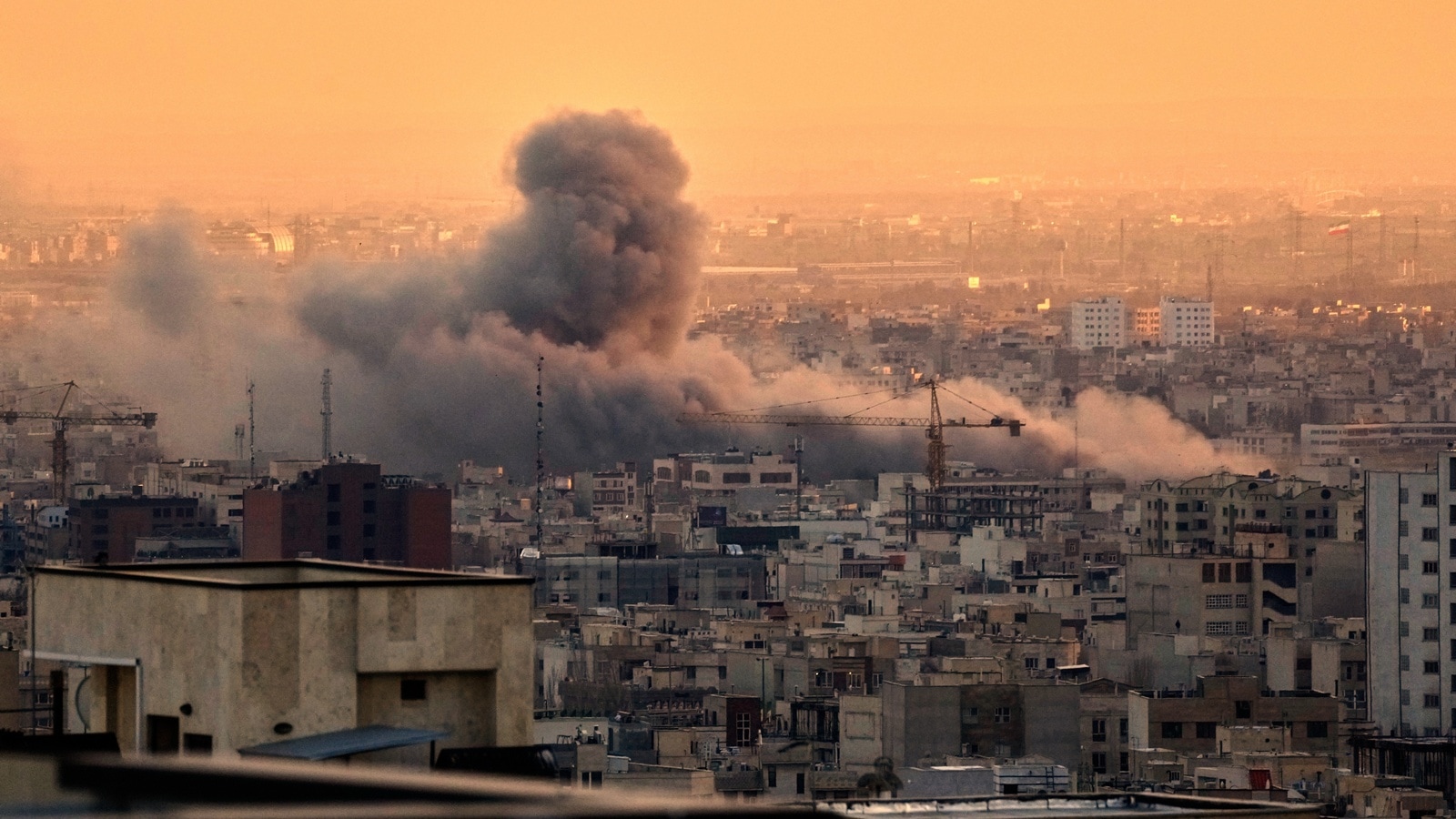
The strike on a high-value facility in Tehran during a reported session of the Assembly of Experts represents more than a tactical military engagement; it is a direct intervention in the transition of power within the Islamic Republic. By targeting the physical infrastructure where the selection of the third Supreme Leader was allegedly being deliberated, the kinetic action disrupts the continuity of the Velayat-e Faqih (Guardianship of the Islamic Jurist). This operation forces a shift from a controlled, bureaucratic succession process to a high-friction, emergency survival mode that compromises the internal stability of the regime's core decision-making body.
The Triple-Tier Disruption Framework
The strategic impact of this strike functions across three distinct layers of Iranian statecraft: the institutional, the psychological, and the succession-specific timeline. Meanwhile, you can find related stories here: The Cold Truth About Russias Crumbling Power Grid.
- Institutional Attrition: The Assembly of Experts is a body of 88 clerics charged with appointing the Supreme Leader. By introducing physical insecurity into their primary meeting environments, the strike devalues the institution's ability to deliberate. When the physical safety of the electors cannot be guaranteed, the legitimacy of the selection process becomes secondary to the survival of the voters.
- Psychological Paralysis: The intelligence requirement for such a strike is immense. To execute a kinetic hit on a specific building during a specific, high-stakes meeting indicates a level of deep-state penetration that suggests the Iranian security apparatus is compromised. This creates a "trust deficit" within the inner circle, leading to internal purges and the "paranoia bottleneck," where decision-making slows because every official is viewed as a potential signal source for the adversary.
- Succession Interruption: The current Supreme Leader, Ali Khamenei, is in an advanced stage of life. The process of grooming a successor—widely rumored to be Mojtaba Khamenei—requires a stable, uncontested environment. A strike during these deliberations introduces a "chaos variable" that allows rival factions within the Islamic Revolutionary Guard Corps (IRGC) to potentially bypass clerical tradition and seize direct control under the guise of national emergency.
Mapping the Intelligence-to-Effect Chain
The execution of this strike reveals a sophisticated intelligence-to-effect chain that implies a multi-year infiltration strategy. For a kinetic asset to impact a "meeting underway," the following sequence must be flawlessly maintained:
- Human Intelligence (HUMINT) Placement: Information regarding the exact timing and location of a secret succession meeting cannot be derived from satellite imagery alone. It requires high-level human sources within the IRGC or the clerical administration.
- Signals Intelligence (SIGINT) Correlation: Cross-referencing communication patterns of high-ranking officials to confirm their physical presence at the target site.
- Tactical Execution Speed: The window of opportunity for such a strike is often measured in minutes. The "kill chain"—the time from identifying the target to the munitions impacting—must be shorter than the duration of the meeting.
This creates a Transparency Paradox for the Iranian state: The more they centralize power to protect the succession, the easier it is for an adversary to target the single point of failure. To explore the full picture, we recommend the detailed report by Associated Press.
The IRGC Versus the Clerical Elite
The strike exposes a widening gap between the military and religious components of the Iranian power structure. Historically, the Supreme Leader balances the IRGC (the sword) against the Assembly of Experts (the spirit). By targeting the building where the "spirit" chooses its next head, the strike inadvertently strengthens the "sword."
If the Assembly of Experts is perceived as too vulnerable to function, the IRGC will likely move to institutionalize its influence. We see a transition from a Theocratic Monarchy to a Prætorean State. In this model, the next Supreme Leader would not be a religious authority who commands the military, but a figurehead sanctioned by the military to maintain the facade of clerical rule.
The Technical Calculus of Precision Decapitation
A precision strike in a densely populated urban center like Tehran requires specialized munitions designed for low collateral damage but high-penetration capability. The use of thermobaric or deep-penetrating warheads suggests the intent was not just to destroy the building, but to ensure that everyone within a specific reinforced "safe room" was neutralized.
The Error Margin Analysis of such an operation is critical. If the strike misses or fails to kill the primary targets, it grants the regime a massive propaganda victory and justifies a direct, overt escalation. The decision to proceed indicates a confidence interval exceeding 90% in both the intelligence and the delivery system. This high-confidence strike serves as a "technical deterrent," signaling to the Iranian leadership that their most secure facilities are effectively glass houses.
The Succession Vacuum and the Risk of Factional Civil War
The primary danger of an interrupted succession is the emergence of competing claims to the "Divine Mandate." In Iranian constitutional law, if the Supreme Leader dies or becomes incapacitated before a successor is finalized, a temporary council takes over. This council is composed of the President, the head of the judiciary, and one cleric from the Guardian Council.
However, the recent death of President Ebrahim Raisi in a helicopter crash already destabilized this triumvirate. The strike on the succession meeting creates a Succession Vacuum characterized by three competing power centers:
- The Hereditary Loyalists: Those backing Mojtaba Khamenei to maintain the status quo.
- The IRGC Ultranationalists: Those who view the clerical system as a liability and seek a more aggressive, military-first foreign policy.
- The Pragmatic Bureaucrats: A dwindling group that seeks to preserve the state's survival through limited engagement with the West to lift sanctions.
When the venue for peaceful (albeit closed-door) transition is bombed, these factions are forced to settle their differences through internal security apparatuses rather than clerical consensus. This increases the probability of "night of the long knives" scenarios within Tehran's political districts.
Quantifying the Deterrence Shift
Prior to this event, the "Red Line" for Israeli-Iranian engagement was generally understood to be nuclear facilities or proxy leadership in Lebanon and Syria. By striking a site of supreme political importance inside the capital, the rules of engagement have been rewritten.
The new deterrent model is Individual Accountability. The message is no longer "We will strike your program," but rather "We will strike you while you are making the decision." This shifts the cost-benefit analysis for Iranian officials. The personal risk of holding high office now outweighs the institutional benefits. This likely leads to a "brain drain" of the clerical elite, where the most capable or cautious individuals refuse to participate in the succession process to avoid being targeted.
Strategic Forecast: The Emergence of the "Ghost State"
The long-term result of this kinetic intervention is the emergence of a "Ghost State" in Iran. To survive, the succession process will go completely underground. Meetings will no longer happen in dedicated halls but in mobile, subterranean, or civilian-cloaked environments.
While this increases survival probability, it decreases administrative efficiency. A leader chosen in a bunker, without the public or institutional pageantry of the Assembly of Experts, lacks the "theocratic gravity" required to command the loyalty of the Iranian public. This creates a permanent legitimacy crisis.
The strategic play for external actors is to maintain pressure on the intelligence front. The goal is not necessarily the total destruction of the Iranian state, but the permanent "un-manning" of its leadership. By keeping the succession process in a state of kinetic flux, the adversary prevents the regime from ever achieving the internal stability necessary to project power effectively outside its borders. The focus must remain on the Infiltration-Interruption Cycle: use deep-cover intelligence to identify the nodes of power transition and apply kinetic force to ensure those nodes never successfully close the circuit of authority.
The next phase of this conflict will not be fought on the borders, but in the registers of secret meetings and the digital trails of the elite. The vulnerability of the "chosen" is now the primary lever of regional control.