The current escalation in the Persian Gulf represents a sophisticated exercise in coercive signaling rather than a drift toward accidental total war. While media reports focus on the visceral impact of urban casualties—specifically the 12 fatalities in southern Tehran—and the surface-level rhetoric of state leaders, the underlying reality is a rigid mathematical competition for regional leverage. This conflict is governed by a specific cost-function where both Washington and Tehran are attempting to maximize their geopolitical position while keeping the price of engagement below the threshold of a full-scale regional conflagration.
The reported deaths in Tehran, resulting from internal security breaches or targeted strikes, serve as a domestic pressure variable for the Iranian leadership. In the logic of asymmetric warfare, such events are rarely isolated. They function as catalysts for a "retaliation loop," where the perceived cost of inaction exceeds the military risk of a counter-strike. This creates a volatile feedback system that traditional diplomatic frameworks struggle to contain.
The Triad of Modern Escalation
To understand why talks are occurring simultaneously with kinetic strikes, one must analyze the three pillars that currently define the U.S.-Iran friction point.
1. The Proportionality Constraint
State actors in this theater operate under a strict doctrine of calibrated response. If a strike occurs in Tehran, the Iranian military response is rarely directed at the source of the launch. Instead, it targets "soft" economic or logistical nodes, such as maritime shipping lanes or regional energy infrastructure. This displacement of aggression is a tactical choice intended to internationalize the cost of the conflict, forcing third-party nations to pressure the primary adversary for a ceasefire.
2. The Information Asymmetry Gap
The disconnect between public rhetoric and backchannel negotiations is a structural necessity. Publicly, the U.S. executive branch must maintain a posture of maximum pressure to satisfy domestic political requirements and reassure regional allies. Privately, the "talks" referenced by the administration serve as a de-escalation valve. These communications are not designed to reach a final peace treaty but to establish "red lines" that prevent miscalculation. The primary objective of these hidden dialogues is the synchronization of expectations regarding what constitutes an "acceptable" level of violence.
3. The Proxy Variable
The use of non-state actors adds a layer of deniability that complicates the attribution of responsibility. When casualties occur on Iranian soil, the immediate reflex is to attribute the act to foreign intelligence or state-sponsored groups. This creates a "proxy buffer" where direct state-to-state war can be avoided even as high-intensity kinetic operations continue.
The Economic Attrition Mechanism
War in the 21st century is increasingly fought through the manipulation of supply chains and the weaponization of financial systems. The strategic logic behind the current tension is rooted in the "Inverted Sanctions Model." While the U.S. utilizes the global banking system to starve the Iranian economy, Iran utilizes its geographic position to threaten the global energy supply.
This creates a deadlock where neither side can achieve a decisive victory without destroying the very systems they wish to control. The bottleneck in the Strait of Hormuz acts as a physical representation of this stalemate. A total closure of the strait would trigger a global energy shock, but it would also result in the complete naval destruction of the Iranian fleet and the likely end of the current regime's ability to export its remaining oil. Therefore, the threat of closure is more valuable than the closure itself.
The Logistics of Urban Vulnerability
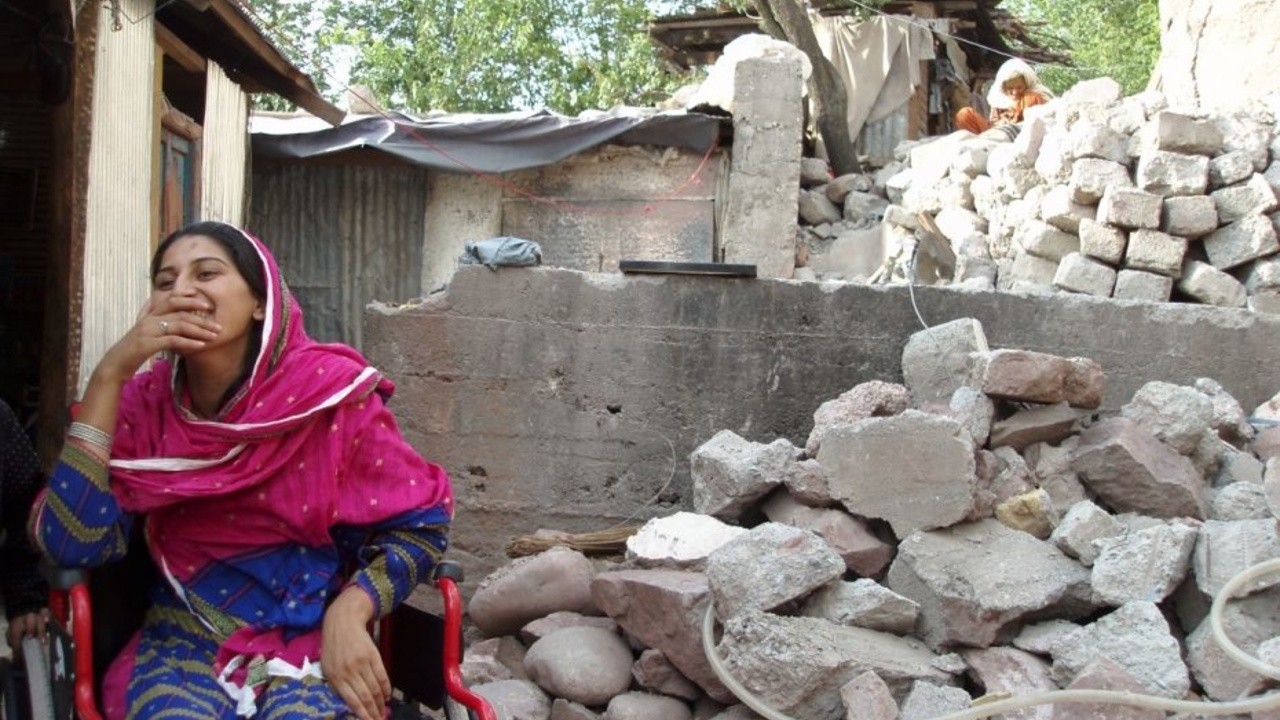
The deaths in south Tehran highlight a critical shift in the geography of the conflict. Urban centers are no longer the "rear" of the battlefield; they are the primary theater for psychological operations. Analyzing the impact of these strikes requires a breakdown of the Internal Security Matrix:
- Intelligence Saturation: High-casualty events in capital cities indicate a failure in the state’s counter-intelligence apparatus. This forces the state to divert resources from foreign military theaters to domestic policing, effectively achieving a strategic "pinning" of forces without a single border crossing.
- Social Cohesion Erosion: Targeted strikes in working-class districts, like those in south Tehran, are designed to test the loyalty of the government's core constituency. If the state cannot provide basic security in its most loyal neighborhoods, the social contract begins to fracture.
- Infrastructure Stress: Kinetic strikes create immediate cascading failures in power grids, water treatment, and emergency services. The secondary cost of a strike—measured in man-hours lost and repair capital—often exceeds the immediate military value of the target.
The Technical Reality of Backchannel Communication
When the U.S. administration states that "talks are under way," it is likely referring to the "Swiss Channel" or the "Omani Bridge." These are not diplomatic summits with flags and handshakes; they are highly technical exchanges of data and intent.
The mechanism of these talks follows a specific protocol:
- Verification of Intent: Confirming that a specific kinetic action was or was not an intentional escalation by the state.
- Definition of Red Lines: Communicating the specific threshold that, if crossed, would trigger a catastrophic military response (e.g., the sinking of a carrier or the destruction of a nuclear facility).
- Exit Ramp Planning: Providing the adversary with a face-saving method to de-escalate without appearing weak to their domestic audience.
This process is fraught with "Signal Noise." In a high-stress environment, a defensive radar lock can be misinterpreted as a targeting solution for a pre-emptive strike. The "talks" function as a noise-reduction filter, ensuring that neither side accidentally triggers a war they are not prepared to finance or sustain.
The Bottleneck of Military Intervention
The logistical reality of a full-scale invasion or sustained air campaign remains the ultimate deterrent. Unlike the rapid deployments of the early 2000s, current regional defenses are integrated and mobile. The cost-to-kill ratio for an invading force has shifted dramatically due to the proliferation of precision-guided munitions and low-cost drone technology.
A sustained campaign against a state with the geographic depth and entrenched defensive positions of Iran would require a mobilization of assets that currently do not exist in the theater. The "12 killed" in Tehran is a tragic local event, but in the cold calculus of the Pentagon and the IRGC, it is a data point in a broader attrition war that is currently in a state of high-intensity equilibrium.
Strategic Forecast and Operational Recommendation
The path forward will not be found in a comprehensive nuclear deal or a total military victory, but in the management of the "Gray Zone." Expect a continued cadence of high-profile, low-volume kinetic events followed by periods of intense backchannel negotiation.
For regional actors and private entities, the strategic move is the diversification of logistics. The vulnerability of the Tehran-to-Baghdad corridor and the Strait of Hormuz means that any operation relying on regional stability is currently at high risk of a "Black Swan" disruption.
The immediate tactical priority for international observers is to monitor the "retaliation interval." If Iran fails to respond to the Tehran deaths within a 72-hour window, it signals a significant success in the backchannel talks. If a retaliatory strike occurs against an energy node in the Gulf, it indicates that the communication channels have failed to keep pace with the kinetic reality on the ground. The play is to hedge against a 15% spike in energy volatility while maintaining a baseline assumption that both powers will avoid a "Total War" scenario due to the prohibitive economic costs involved for the global financial architecture.