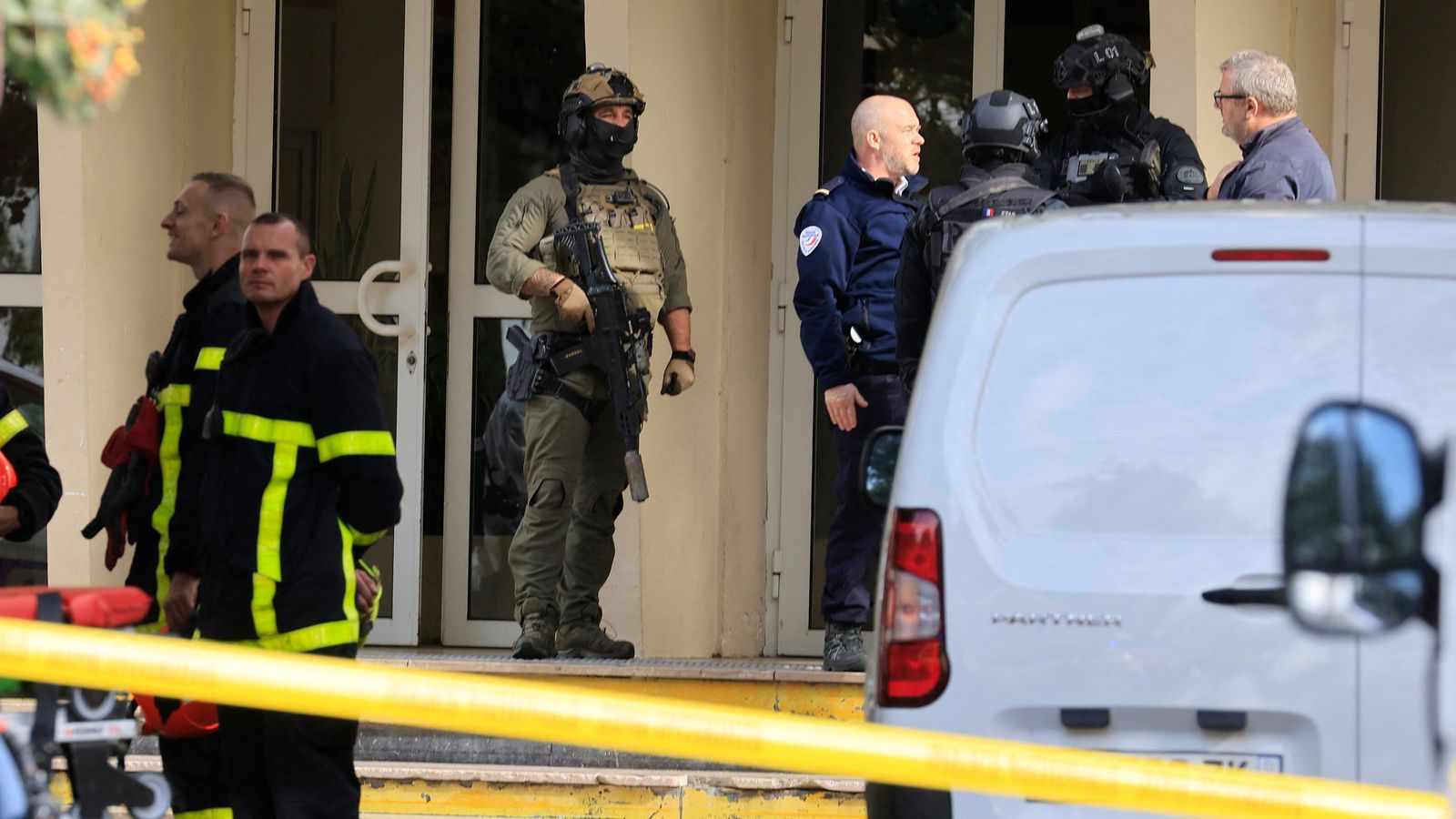
The escalation of the IRGC’s "retaliatory" campaign against the Al-Kharj air base marks a transition from symbolic theater to a strategy of sustained kinetic attrition. By executing 51 distinct strike waves, the Islamic Revolutionary Guard Corps is not attempting a singular knockout blow; it is testing the saturation limits of regional integrated air and missile defense (IAMD) systems. This shift in targeting logic—moving from military installations to "American-linked industrial sites"—indicates a broader intent to increase the insurance premiums and operational risks of Western capital in the Middle East.
The Mechanics of Cumulative Attrition
The 51st wave of strikes against Al-Kharj suggests a deliberate pacing of operations designed to deplete interceptor inventories. Military logistics at this scale operate on a cost-asymmetry model. A single interceptor from a Patriot (PAC-3) or Terminal High Altitude Area Defense (THAAD) battery costs several million dollars, whereas the drones and short-range ballistic missiles (SRBMs) deployed by the IRGC often cost between $20,000 and $150,000.
The primary objective of these repeated waves is "Interceptor Exhaustion." This involves:
- Sensor Saturation: Overloading radar arrays with low-RCS (radar cross-section) targets to force engagement decisions under compressed timelines.
- Economic Bleeding: Forcing the defender to expend high-value munitions against low-value decoys.
- Maintenance Degradation: Continuous operational tempo (OPTEMPO) for defense batteries leads to mechanical fatigue and reduced system readiness.
The persistence of these strikes creates a "perm-war" environment where the defensive success rate must be 100% to avoid catastrophe, while the offensive success rate only needs to be 1% to achieve a strategic propaganda victory or physical damage.
Transition to Industrial Sabotage Frameworks
The IRGC’s warning regarding American-linked industrial sites represents an expansion of the conflict’s "target set" into the private sector. This is a move toward total grey-zone warfare, where the distinction between a military target and a commercial asset is erased. Industrial sites present a different vulnerability profile than hardened air bases like Al-Kharj.
Commercial infrastructure—refineries, desalination plants, and logistics hubs—is rarely protected by high-end missile defense. These sites are "soft targets" where a single successful strike can trigger cascading failures in regional supply chains. The IRGC is leveraging "Economic Deterrence" by signaling that the cost of US military presence will be paid by private sector shareholders and regional economic stability.
The threat focuses on three specific industrial vectors:
- Energy Infrastructure: Targeting midstream assets like pipelines and pumping stations which are harder to defend than centralized refineries.
- Logistics Chokepoints: Port facilities and automated warehousing systems that rely on fragile digital and physical architecture.
- Utility Nodes: Power grids and water treatment plants, where disruption causes immediate civil unrest and pressure on local governments to distance themselves from US military cooperation.
The Logic of Signal vs. Noise
In the context of the 51st strike, the volume of attacks serves as the "noise" intended to mask "signal" developments. While the world watches the explosions at Al-Kharj, the IRGC uses the chaos to refine its targeting algorithms and test the response times of US Quick Reaction Forces (QRF).
The IRGC utilizes a "Feedback Loop" methodology:
- Launch: Deploy a mix of Shahed-type loitering munitions and Fateh-110 missiles.
- Observe: Monitor electronic emissions from US defense systems (SIGINT) and visual confirmation of interceptions.
- Analyze: Determine which flight paths or altitudes triggered delayed responses.
- Iterate: Adjust the 52nd wave to exploit those specific gaps.
This is an iterative engineering process disguised as a military campaign. Each wave is a data collection mission.
Counter-Defense Realities and Hardware Constraints
The defense of Al-Kharj relies on a multi-layered architecture. However, no system is infallible against high-volume swarms. The technical bottleneck in defending against the 51st wave and future threats lies in the "Recharge Rate." Even if a base has sufficient interceptors in stock, the time required to reload a launcher under fire creates a window of vulnerability.
Modern IAMD systems face a "Probability of Kill" ($P_k$) challenge. If a drone swarm consists of 30 units and the defender's $P_k$ per interceptor is 0.9, the statistical probability of at least one drone penetrating the shield remains uncomfortably high. When the attacker moves to the 51st iteration, they are essentially gambling on the law of large numbers.
Strategic Realignment of Private Assets
For American-linked industrial entities in the region, the IRGC’s warning necessitates a move from passive security to active resilience. The standard "fence and guard" model is obsolete against drone-based industrial sabotage. Companies must now consider:
- Kinetic Hardening: Installing physical barriers around critical control systems and transformers.
- Electronic Countermeasures (ECM): Investing in localized signal jamming and "spoofing" technologies to divert incoming loitering munitions.
- Decentralization: Distributing critical processes across multiple nodes to ensure that a strike on one site does not result in total operational shutdown.
The IRGC's strategy is designed to make the US presence in the Middle East a liability for the very capital interests that often drive foreign policy. By threatening the "American-linked" industrial base, they are attempting to create a rift between the Department of Defense and the private sector, forcing a cost-benefit analysis that may eventually favor withdrawal.
The 51st strike is not the end of a cycle; it is the calibration of a new permanent reality in regional warfare. Strategic defense must shift from intercepting every missile to neutralizing the launch infrastructure and making the cost of the 52nd strike prohibitive through asymmetric counter-pressure.