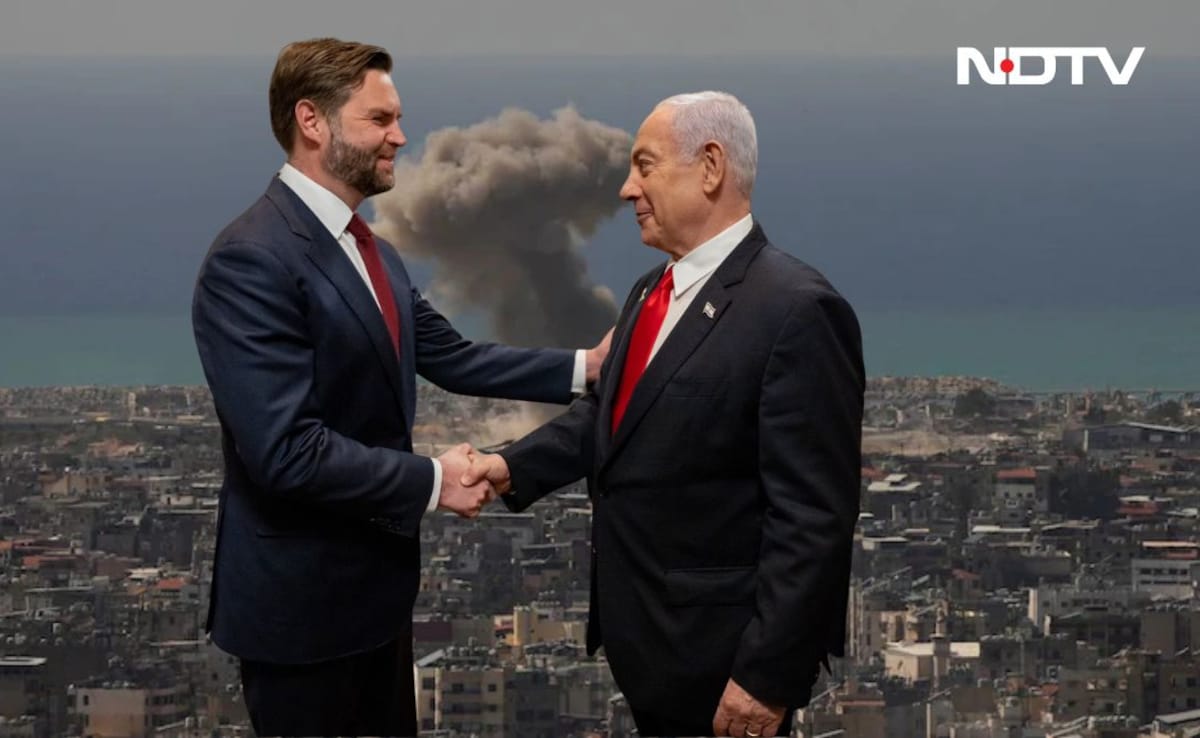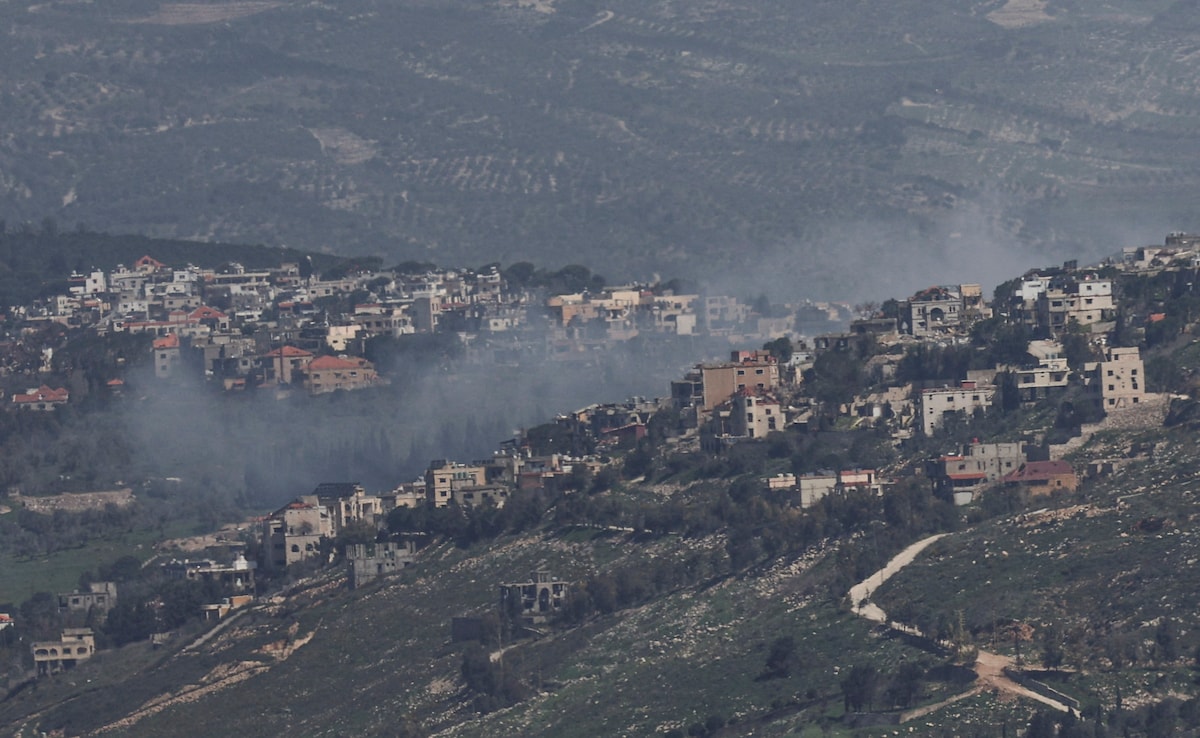
The death of 400 combatants in a centralized paramilitary organization represents more than a statistical milestone; it serves as a diagnostic marker for the shifting efficiency of modern counter-insurgency. While media reporting focuses on the tally, the strategic significance lies in the attrition-to-escalation ratio. If a non-state actor loses 400 specialized personnel without achieving a fundamental shift in the regional security architecture, the organization is experiencing a net loss in operational equity. This represents a systemic failure of their deterrence model.
The Taxonomy of Loss: Distinguishing Foot Soldiers from High-Value Assets
Aggregated casualty figures often mask the qualitative degradation of a fighting force. To understand the impact of 400 deaths, one must categorize the losses through a functional lens. Hezbollah's hierarchy is not a monolith; it operates through distinct tiers of expertise.
- Tier 1: Strategic Command and Technical Architects. These are the individuals responsible for long-range precision fire coordination and cross-border tunnel logistics. The loss of a single Tier 1 asset is mathematically equivalent to dozens of frontline infantrymen due to the "Knowledge Bottleneck" inherent in secretive organizations.
- Tier 2: Tactical Field Commanders. These officers manage the "Nasser" or "Aziz" units. Their removal creates a localized vacuum, forcing the central command to over-extend its communications to maintain order, which in turn increases their electronic signature.
- Tier 3: Specialized Technical Operators. This includes Anti-Tank Guided Missile (ATGM) teams and drone pilots. These roles require significant investment in training. When attrition in this tier exceeds the recruitment-to-deployment cycle, the group's "Strike Density" begins to decay.
The current data suggests a high concentration of Tier 2 and Tier 3 losses. This indicates that intelligence-driven targeting is successfully decapitating the middle-management layer, leaving the base of the pyramid disconnected from the strategic apex.
The Intelligence-Sensor-Kinetic Loop
The speed at which these 400 combatants were identified and neutralized points to a highly optimized Kill Chain. This cycle is defined by the time elapsed between "Find" and "Finish."
- Persistent Surveillance (The Find): High-altitude long-endurance (HALE) drones and signals intelligence (SIGINT) create a digital "heat map" of movement.
- Pattern of Life Analysis (The Fix): AI-driven algorithms identify deviations in routine that signal military preparation.
- Target Validation (The Track): Cross-referencing human intelligence (HUMINT) with geospatial data to ensure the target's identity.
- Kinetic Strike (The Finish): The use of precision-guided munitions to minimize collateral damage while ensuring the target’s elimination.
The fact that these strikes are occurring deep within sovereign territory suggests that the "Intelligence Permeability" of the organization has reached a critical threshold. Once a militant group’s internal communications are compromised, every death functions as a data point that informs the next strike, creating a self-reinforcing loop of attrition.
The Economic Cost of Attrition
Warfare is a resource-allocation problem. For Hezbollah, each combatant represents a sunk cost consisting of recruitment, years of training, and ongoing stipends for their families.
$C_{total} = C_{t} + C_{o} + C_{s}$
In this simplified function, $C_{t}$ represents training investment, $C_{o}$ is the opportunity cost of the asset’s specific expertise, and $C_{s}$ is the long-term social support cost for survivors. When the loss exceeds 400, the financial burden shifts from operational funding to social welfare. This creates a "Fiscal Drag" on the organization. If the group cannot provide for the families of the fallen, it risks losing its domestic legitimacy—the very foundation of its "Resistance" identity.
Strategic Overreach and the Buffer Zone Paradox
A primary objective of these 400 combatants was to enforce a "Linkage Policy," connecting the conflict in Gaza to the Lebanese border. However, the systematic elimination of these fighters has produced the opposite effect.
Instead of forcing a ceasefire through pressure, the high attrition rate has allowed the opposing force to establish a de facto buffer zone through fire superiority rather than physical occupation. By neutralizing the ATGM teams and Radwan Force commanders who would lead a ground incursion, the kinetic campaign has effectively "hollowed out" the border region. This demonstrates a transition from Linear Defense (holding ground) to Dynamic Denial (making the ground untenable for the enemy).
The Limitation of Martyrs as a Metric
Traditional insurgent doctrine relies on "Martyrdom" as a recruitment tool. The logic dictates that every casualty inspires two new recruits. This psychological model fails when the rate of technological detection outpaces the rate of human replacement.
In a high-intensity electronic warfare environment, bravery is secondary to invisibility. If a recruit knows they will be identified by a thermal sensor before they can even see their target, the psychological incentive to join diminishes. We are seeing the transition from "Heroic Warfare" to "Algorithmic Warfare." In this new paradigm, 400 deaths represent a failure of the organization to adapt its "Signature Management"—their ability to hide from modern sensors.
The Fragility of the Radwan Force
The Radwan Force, Hezbollah’s elite offensive wing, has borne a disproportionate amount of this attrition. This unit is designed for rapid, cross-border maneuvers. Their training is specialized and cannot be mass-produced.
When an elite unit loses its veteran core, it undergoes "Institutional Memory Decay." The remaining members may have the equipment, but they lack the unspoken coordination and field intuition that only comes from years of integrated operations. The loss of 400 personnel, concentrated in these specialized units, suggests that the organization's offensive "teeth" are being blunted while its defensive "shell" remains largely intact. This forces the group into a reactive posture, stripping them of the initiative.
Disruption of the Logistics-to-Frontline Pipeline
Casualties of this volume indicate a breakdown in the safe zones once thought to be secure. The "Strategic Depth" of Lebanon—the Bekaa Valley and southern suburbs of Beirut—is no longer a sanctuary.
The mechanism of this disruption is "Targeted Interdiction." By hitting the personnel responsible for the supply chain, the flow of munitions from the Syrian border to the Litani River becomes fragmented. It is not enough to have 150,000 rockets if the personnel trained to deploy them are neutralized at a rate that exceeds the group's ability to reorganize. The bottleneck is no longer the hardware; it is the human capital required to operate it.
The Strategic Play: Transitioning to Force Preservation
The current trajectory indicates that Hezbollah must choose between continued attrition or a strategic pivot to Force Preservation.
To survive the current technological disadvantage, the organization will likely attempt to "Go Dark." This involves a total cessation of electronic communications, a return to primitive courier-based messaging, and the deep burial of assets. However, this shift comes with a massive cost: it renders the organization incapable of rapid, coordinated responses.
The strategic play for any force facing this level of attrition is to recognize that the Information Age of Insurgency is over. The next phase will be defined by subterranean hardening and autonomous systems. If the organization continues to deploy human assets into a sensor-saturated environment at the current rate, they are not fighting a war of attrition; they are participating in a managed liquidation of their own capabilities. The 400-casualty mark is not a peak; it is a baseline for what happens when a 20th-century paramilitary structure meets 21st-century algorithmic targeting.