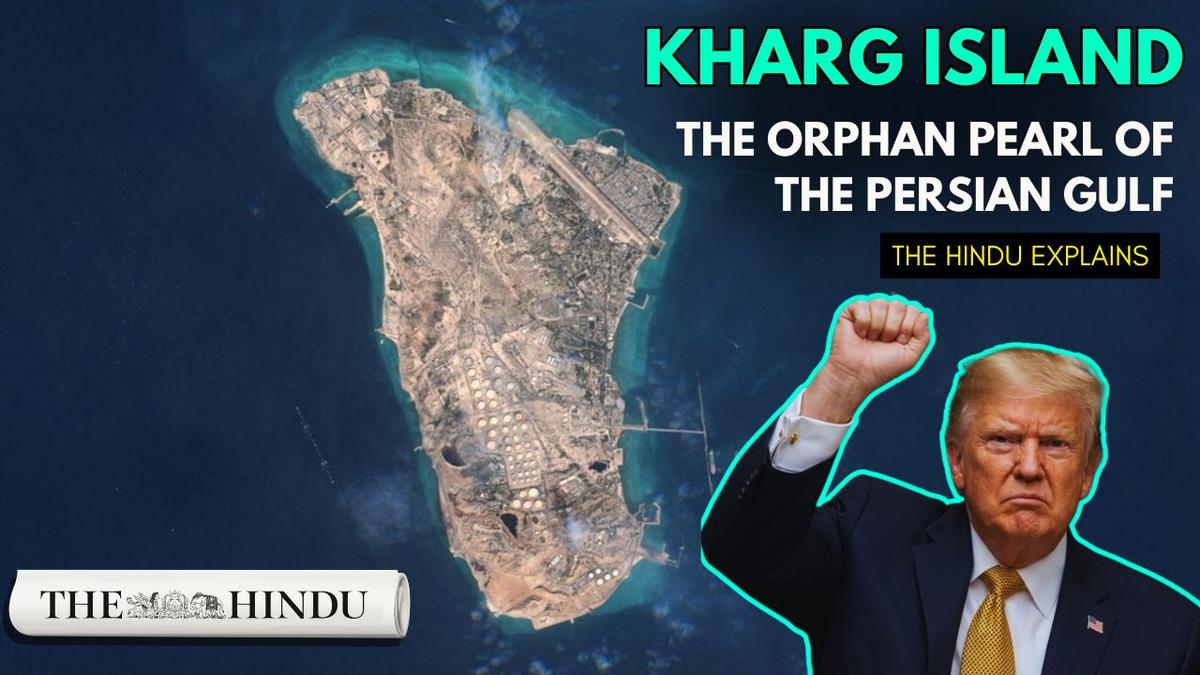
The Western obsession with Kharg Island is a masterclass in strategic myopia.
Military analysts and cable news pundits love pointing at that 12-square-mile rock in the Persian Gulf as the "ultimate choke point." They frame it as the jugular of the Iranian economy. They claim that if Israel or the U.S. knocks out the T-jetty and the Sea Island terminal, the Iranian regime collapses as its oil revenue evaporates.
This is a fantasy built on 1980s logic. It assumes we are still fighting the Tanker War of the Reagan era.
Kharg Island is not the endgame. It is a distraction. If you are watching Kharg, you are missing the tectonic shift in how energy, sanctions, and asymmetric warfare actually function in 2026. The "collapse" everyone predicts is a ghost. Here is why the consensus is not just wrong—it is dangerously obsolete.
The Myth of the Single Point of Failure
The prevailing narrative suggests that 90% of Iran’s oil exports flow through Kharg, making it a "fragile" target. This ignores the reality of modern Iranian logistics.
Over the last decade, Tehran has spent billions diversifying its export infrastructure precisely because they knew the West would eventually hyper-fixate on Kharg. The Goreh-Jask pipeline was not a vanity project; it was a bypass. By moving crude 1,000 kilometers from the Goreh terminal to Jask, outside the Strait of Hormuz, Iran effectively neutralized the "choke point" threat.
Even if Kharg goes dark tomorrow, the Jask terminal provides a pressure valve. More importantly, the Iranian "Ghost Fleet"—a shadowy network of aging tankers using ship-to-ship (STS) transfers—operates with a fluidity that land-based terminals cannot match. These vessels don't need a pristine jetty. They need a quiet patch of water and a flexible hose.
I have watched analysts track "static targets" while ignoring the "liquid logistics" that actually keep the crude moving. Attacking Kharg is like smashing a beehive and expecting the bees to stop making honey. They just find a new hole in a different tree.
The China Factor: Why Your Sanctions Logic is Dead
The loudest voices calling for a strike on Kharg assume that an oil cutoff would force Iran to the negotiating table. This reflects a fundamental misunderstanding of the current global power dynamic.
Iran does not sell to "the market." It sells to China.
Beijing is not a passive observer in this conflict. They are the primary beneficiary of Iranian "distressed" crude. If Kharg is hit, China does not just shrug and buy from Saudi Arabia at a premium. They lean into their strategic reserves and accelerate the development of non-dollar trade settling.
- The Teapot Refineries: China's independent refineries (the "teapots") are the world's best at laundering sanctioned oil. They don't use SWIFT. They don't use Western insurance.
- Economic Insulation: Iran has already adjusted to a "resistance economy." Their budget isn't built on $100 Brent; it is built on the bare minimum required to keep the IRGC funded and the domestic population quiet enough to prevent a total uprising.
If you think a 30% drop in export capacity ends the war, you haven't studied the survival of the Castro regime or the Kim dynasty. Totalitarian states don't die from "supply chain disruptions." They consolidate.
The $200 Oil Trap
Let’s talk about the math that the "strike Kharg" hawks conveniently forget.
If Kharg Island is neutralized, the global oil market reacts instantly. We aren't talking about a $5-per-barrel "war premium." We are talking about a vertical spike. Speculators would push Brent toward $150 or $200 within seventy-two hours.
The irony? Iran might actually make more money on their remaining 20% of exports via Jask and the Ghost Fleet than they did on 90% at pre-war prices.
Meanwhile, the U.S. economy—and specifically the political survival of any administration in Washington—is tethered to the price at the pump. The "success" of a strike on Kharg would be measured in $7-per-gallon gasoline in Ohio. That is not a victory; it is a self-inflicted wound.
The Asymmetric Nightmare: Beyond the Terminal
The competitor's view treats this like a game of Risk. Move piece A to spot B, capture the island.
In reality, the Kharg obsession ignores the Iranian counter-move: The Infrastructure Tit-for-Tat.
Iran’s military doctrine is built on "equalizing the pain." If Kharg is hit, the Abqaiq plant in Saudi Arabia is the next target. The UAE’s desalination plants are targets. The undersea fiber-optic cables that handle 25% of the world's internet traffic are targets.
The West thinks it can conduct a "surgical" strike on a single island. Iran views the entire Gulf as a single, interconnected kill zone. They don't need to win a naval battle; they just need to make the region uninsurable. When Lloyd’s of London pulls coverage for the Persian Gulf, the world economy stops. Not because of a lack of oil, but because of a lack of paper.
The "People Also Ask" Fallacy
You’ll see people asking: “Can Israel’s F-35s reach Kharg?” or “Does Iran have the air defense to stop them?”
These are the wrong questions. The technical capability to hit the island is irrelevant. The question you should be asking is: "Is Kharg Island the actual center of gravity for the Iranian regime?"
The answer is a resounding no. The center of gravity is the regime's internal security apparatus and its ideological grip on the "Gray Zone"—the space between peace and total war.
Blowing up a jetty does nothing to diminish the IRGC’s influence in Iraq, Lebanon, or Yemen. It does nothing to stop the drone factories in Isfahan. In fact, it provides the regime with the ultimate nationalist rallying cry: "The Great Satan is starving your children by attacking our resources."
The High Cost of Predictability
The most dangerous part of the Kharg Island fixation is how predictable it makes Western strategy.
When you telegraph that a specific island is the "key to the war," you allow your opponent to pre-calculate the cost. Iran has already priced in the loss of Kharg. They have fortified it, yes, but they have also decentralized their command structures so that the loss of the island doesn't paralyze their response.
If you want to actually disrupt the Iranian war machine, you don't look at the tankers. You look at the data centers. You look at the illicit banking nodes in Dubai and Kuala Lumpur. You look at the dual-use technology supply chains in Europe that keep the drones flying.
But that isn't as "cinematic" as a video of a burning oil terminal.
Stop Hunting for Silver Bullets
There is a psychological comfort in believing that one island holds the key to a complex, multi-decade geopolitical struggle. It suggests that the problem is solvable with a single sortie.
It isn't.
I’ve seen military planners fall in love with "vulnerability maps" that ignore the human element of resilience. Kharg Island is a convenient target for a spreadsheet, but a terrible one for a long-term strategy.
If the U.S. or Israel strikes Kharg, they aren't "shaping the course of the war." They are merely escalating it into a domain where Iran has the home-field advantage: asymmetric, messy, and economically ruinous chaos.
The island is a monument to old-world thinking. Destroying it won't kill the regime; it will only prove that we are still fighting the last war while Iran is busy winning the next one.
The real war isn't happening on a jetty in the Gulf. It’s happening in the shadows of the global financial system and the silicon of the drone-guidance systems. Leave the island alone and start looking at the things that actually matter.
Stop looking for a "win" button on a map. There isn't one. There is only the long, grinding reality of a conflict that cannot be solved by blowing up a pile of sand and steel.