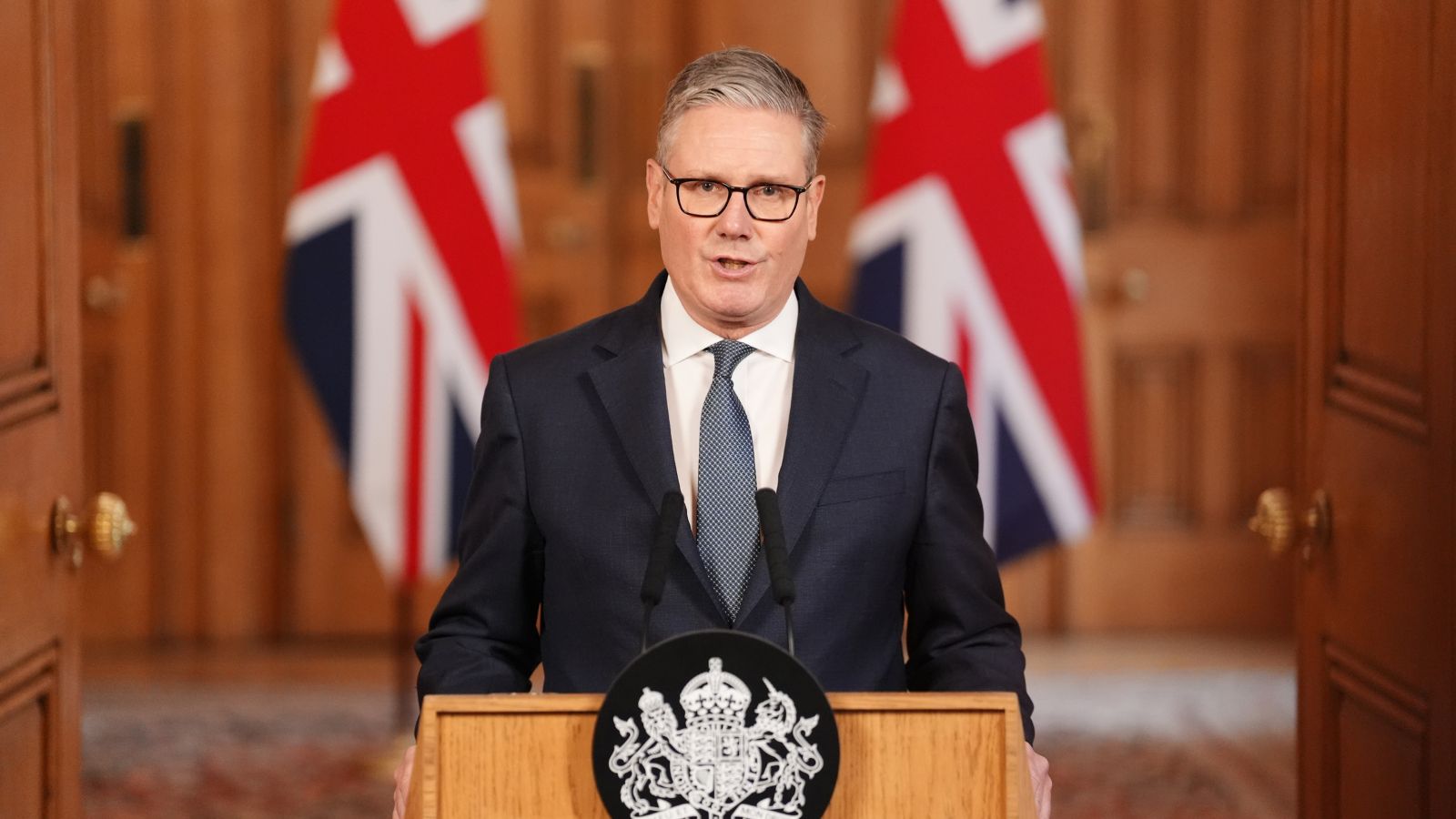
The rain in London doesn’t just fall; it settles into the stone, making everything look a little more permanent than it actually is. Inside the halls of power, where the carpet is thick enough to swallow the sound of a nervous footstep, words are chosen like surgical instruments. They are meant to heal, to cut, or to cauterize.
When Keir Starmer spoke about the British Indian Ocean Territory, specifically the strategic outpost of Diego Garcia, he used the phrase "limited defensive purpose." It is a phrase designed to sound boring. It is meant to evoke the image of a gatekeeper checking IDs at a quiet suburban parking lot. But behind that linguistic fog lies a reality that has shaped global shadows for sixty years. You might also find this connected coverage useful: Strategic Asymmetry and the Kinetic Deconstruction of Iranian Integrated Air Defense.
To understand why a few words uttered in a briefing room matter to a family in a living room three thousand miles away, you have to look at the map—not as a collection of borders, but as a nervous system.
The Concrete Heart of the Ocean
Imagine a tiny, footprint-shaped atoll in the middle of the vast, blue silence of the Indian Ocean. It is remote. It is isolated. It is also, perhaps, the most important piece of real estate on the planet that you aren’t allowed to visit. As reported in recent articles by BBC News, the results are widespread.
For decades, Diego Garcia has been the "unsinkable aircraft carrier." It’s the place where the United States keeps its longest reach. When a crisis flares in the Middle East or tensions rise in the South China Sea, the response often begins here, on a strip of tarmac surrounded by palm trees and saltwater.
But the ground beneath that tarmac has been shaking. Not from earthquakes, but from the slow, grinding tectonic plates of international law. For years, the sovereignty of the Chagos Islands—of which Diego Garcia is the crown jewel—has been a point of friction. Mauritius claimed it. The UK held it. The UN signaled that the lease was up.
The deal struck by the Starmer administration is a masterclass in the art of the "messy compromise." The UK is handing sovereignty to Mauritius, but with a massive, ninety-nine-year asterisk: the military base stays. The US keeps the keys.
The Cost of a Zip Code
The facts of the deal are dry: a long-term lease, a right of return for displaced islanders (everywhere except Diego Garcia itself), and a financial package. But facts don't capture the smell of jet fuel or the silence of a displaced generation.
Consider the "hypothetical" Chagossian—let’s call her Marie. Marie grew up hearing stories of a lagoon where the fish were so plentiful you could catch them with your hands. Her parents were forced onto a ship in the late 1960s and early 70s to make room for the base. They were dropped in the slums of Port Louis or the suburbs of Crawley, given a pittance, and told the islands were no longer theirs.
For Marie, this news isn’t about "geopolitical stability." It’s about the bittersweet realization that while she might finally be allowed to walk on the sand of her ancestral neighboring islands, the one island that actually matters to the world’s superpowers remains a fortress she cannot enter.
The "limited defensive purpose" Starmer mentioned is the barrier between Marie and her history. It is a legal shield. By defining the base's role so narrowly, the UK government is trying to thread a needle: they want to satisfy the international courts by giving the land back, but they need to reassure Washington that the mission won't change.
Why the Word Limited Matters
In the world of international relations, "limited" is a loaded word. It’s a shock absorber. It’s meant to tell the neighbors—China, India, Iran—that this isn't a base for aggression, but a shield for the status quo.
Is it true?
Logically, a base that can launch B-52 bombers doesn’t feel "limited" to those on the receiving end. However, in the context of this deal, the word serves a different master. It is about legal liability. If the base is strictly for "defensive purposes," it becomes much harder for international bodies to argue that its presence violates the spirit of the sovereignty handover.
It is a dance. The UK moves left, Mauritius moves right, and the United States stands perfectly still in the center, holding the heavy equipment.
The Invisible Stakes
We often think of national security as something that happens "out there," in some abstract realm of satellites and submarines. We forget that security is a currency. We pay for it with sovereignty, with the displacement of people, and with the complicated morality of keeping the peace by preparing for war.
The British government was backed into a corner. To hold onto the islands indefinitely would have been to embrace the role of the colonial holdout in an era that has no patience for it. It would have damaged the UK’s "soft power," making its lectures on international law to other nations sound hollow.
Yet, to walk away entirely would have been a catastrophic breach of the "Special Relationship" with the US. It would have left a vacuum in the Indian Ocean that other powers are more than hungry to fill.
So, they chose the middle path. A path where the map changes color, but the boots on the ground stay the same.
The Grip of the Handshake
This isn't just about a base. It’s about how a medium-sized power like Britain navigates a world that is becoming increasingly polarized. It’s about the realization that you can’t own every room you stand in, so you settle for owning the lease on the most important chair.
Critics will call it a surrender. Supporters will call it a pragmatic victory for the rule of law. The reality is far more human and far more exhausting. It is the story of a government trying to manage a legacy it no longer wants, while protecting a security arrangement it cannot live without.
The diplomatic cables will eventually be filed away. The news cycle will pivot to the next crisis. But for the next ninety-nine years, the planes will continue to roar off that runway in the middle of the ocean.
The lagoon will remain crystal clear, reflecting a sky that belongs to everyone and a strip of land that belongs to almost no one. The deal is signed. The sovereignty has shifted. But as the sun sets over the Indian Ocean, the lights of the base flicker on—a persistent, glowing reminder that some handshakes are so heavy, they can hold down an entire island for a century.
The rain continues to fall in London. It washes the dust off the statues of old empires, while a few miles away, in a small house in the suburbs, a woman looks at an old photograph of a beach she is now legally allowed to visit, but can never truly call home.


