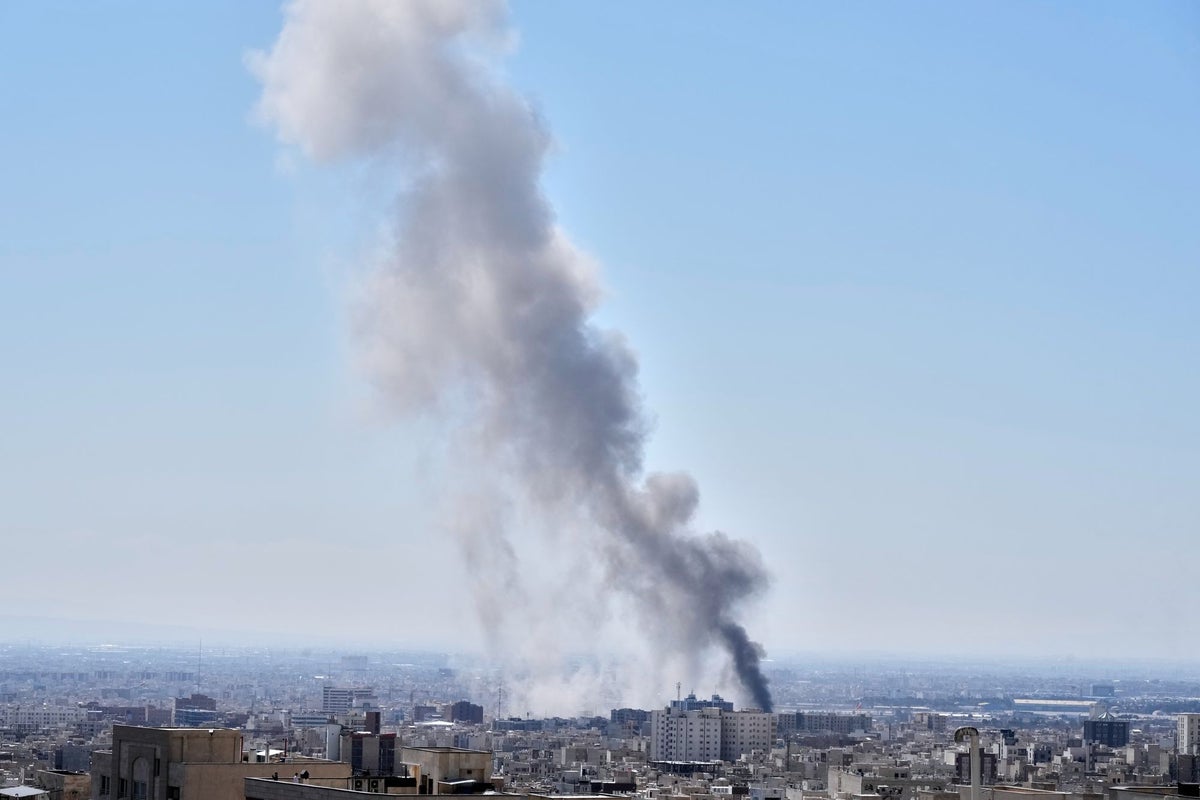
The October 2024 Israeli strikes on Iranian military infrastructure represent a critical inflection point in the interpretation of Article 51 of the UN Charter, shifting the discourse from reactive defense to a model of cumulative necessity. To evaluate the legality of these actions, one must move beyond the surface-level rhetoric of "retaliation" and instead analyze the engagement through the trifecta of international legal constraints: the triggers of jus ad bellum, the restrictive filters of the Caroline Test, and the operational boundaries of jus in bello.
The primary friction point in this legal assessment is not whether an attack occurred—the Iranian ballistic missile launch on October 1 provided the factual predicate—but whether the subsequent response met the stringent criteria of necessity and proportionality required to bypass the general prohibition on the use of force under Article 2(4) of the UN Charter.
The Architecture of Justified Force
International law recognizes a narrow corridor for the lawful use of force. For the Israeli-US strikes to reside within this corridor, they must satisfy a sequential logic of self-defense. This logic is built upon three distinct pillars:
1. The Attribution and Gravity Threshold
Under the UN Charter and established customary law, not every cross-border friction constitutes an "armed attack." The International Court of Justice (ICJ) established in the Nicaragua case that there is a difference between the "most grave forms of the use of force" and a mere "frontier incident."
The October 1 Iranian barrage involved approximately 180 ballistic missiles. From a strategic consulting perspective, the gravity of this event is measured by its intent and potential for lethality, rather than the success of the Arrow or Iron Dome interception systems. Legal precedent suggests that the failure of an attack to cause mass casualties due to effective defense does not diminish its status as an "armed attack." Therefore, the initial trigger for a self-defense claim is factually grounded.
2. The Temporal Constraint of Necessity
Necessity dictates that force must be the last resort. Critics of the strikes argue that diplomatic channels or international sanctions had not been fully exhausted. However, the operational reality of ballistic missile warfare creates a "compressed decision window."
The "Necessity" pillar is often evaluated through the Caroline Test, which requires that the need for self-defense be "instant, overwhelming, leaving no choice of means, and no moment for deliberation." While the October 26 strikes occurred weeks after the Iranian attack, the Israeli defense establishment frames this not as a delayed retaliation, but as an ongoing cycle of an "active armed conflict." In this framework, the necessity is not tied to a single moment but to the prevention of the next imminent phase of a multi-front engagement.
3. Proportionality as a Function of Objective
A common misconception defines proportionality as "symmetry"—the idea that if Iran fired 180 missiles, Israel may only fire 180 missiles. This is a flawed interpretation. In international law, proportionality is measured against the minimum force required to end the threat.
- Symmetric Proportionality: Matches the scale of the enemy’s blow (Retributive).
- Strategic Proportionality: Uses the amount of force necessary to disable the enemy’s capability to continue the attack (Functional).
The Israeli strikes targeted S-300 air defense batteries and planetary mixer facilities used for solid-fuel missile production. By focusing on production bottlenecks rather than civilian centers or energy infrastructure, the strikes align more closely with the functional definition of proportionality. The objective was the degradation of future launch capacity, which provides a stronger legal defense than a purely punitive strike on economic assets.
The Doctrine of Anticipatory Self-Defense
The involvement of US assets—primarily in the form of intelligence, refueling, and the deployment of THAAD batteries—introduces the concept of collective self-defense. This requires a formal request from the state under attack and a shared legal justification.
The US-Israeli strategy relies heavily on the "unwilling or unable" doctrine. This controversial but increasingly utilized legal theory posits that a state can use force on another state's territory if that state is unwilling or unable to prevent its territory from being used as a base for attacks. While Iran is a sovereign actor using its own military, the broader context of proxy engagement (Hezbollah, Houthis) creates a "cumulative impact" theory.
The cumulative impact theory argues that while individual small-scale attacks might not reach the "gravity" threshold of an armed attack, their aggregate effect does. This creates a legal paradox: Does a series of low-level escalations eventually grant a "blank check" for a major kinetic response? Most international law experts remain divided, as the UN Charter does not explicitly authorize "accumulation of events" as a justification for large-scale aerial campaigns.
Target Selection and Jus in Bello
Once the decision to use force (jus ad bellum) is made, the execution must follow the rules of engagement (jus in bello). The October strikes were notable for what they did not hit: nuclear sites and oil refineries.
From a legal-risk management perspective, targeting the Parchin and Khojir military complexes signals adherence to the Principle of Distinction. This principle requires combatants to distinguish between military objectives and civilian objects.
- The Military Advantage Factor: To justify the strikes on Parchin, the military advantage gained (disabling missile production) must outweigh the potential for collateral damage.
- The Dual-Use Dilemma: If a facility produces both civilian chemicals and missile fuel, it becomes a "dual-use" target. The legality of striking such targets hinges on the "Rule of Proportionality" under Protocol I of the Geneva Conventions, which prohibits attacks where incidental loss of life would be excessive in relation to the concrete military advantage anticipated.
The tactical decision to bypass Iranian energy infrastructure was likely a move to maintain this legal standing and avoid violating international environmental laws or the prohibition against targeting "objects indispensable to the survival of the civilian population."
Structural Bottlenecks in Legal Enforcement
The primary limitation of any analysis of the strikes' legality is the lack of a centralized, binding adjudicator. The UN Security Council (UNSC) is the body charged with maintaining international peace and security, yet it is structurally paralyzed by the veto power of its permanent members.
The US maintains that the strikes were a "proportionate and necessary exercise of the inherent right of self-defense." Iran maintains the strikes were a "flagrant violation of sovereignty and territorial integrity." In the absence of an ICJ ruling—which would require both parties to consent to jurisdiction—the "legality" of the strikes exists in a state of geopolitical superposition. It is simultaneously a lawful defense in the eyes of the West and an unlawful aggression in the eyes of the Global South and the "Axis of Resistance."
This creates a Precedent Inflation. Every time a state successfully executes a "delayed self-defense" strike without facing international sanctions, the threshold for what constitutes "imminence" under the Caroline Test erodes. We are witnessing the transition from "reactive defense" to "preemptive degradation."
Strategic Calculus of Future Engagements
The legality of the October strikes will not be determined by a courtroom, but by the norms they establish for the next decade of Middle Eastern conflict. Analysts must monitor two specific variables that will dictate the legal landscape:
- The Definition of "Armed Attack" in the Cyber/Electronic Era: If future Iranian "attacks" involve non-kinetic disabling of Israeli infrastructure, will the legal community accept kinetic missile strikes as a "proportional" response?
- The Expansion of Collective Self-Defense: The integration of US THAAD operators into the Israeli theater blurs the line between "support" and "co-belligerency." This increases the legal liability of the US under the Articles on Responsibility of States for Internationally Wrongful Acts.
The strategic play for regional actors is now to document "cumulative harm" meticulously. For Israel, this means building a public-facing legal dossier that links every proxy action to a central command in Tehran, thereby justifying the "accumulation of events" doctrine. For Iran, the strategy is to pivot toward "sovereignty-based" legal arguments, focusing on the sanctity of borders to isolate the US-Israeli position in the UN General Assembly.
The move away from targeting civilian and economic infrastructure suggests a sophisticated legal-military coordination aimed at preserving the "Self-Defense" narrative while achieving maximum kinetic degradation of the adversary's long-range capabilities. The success of this strategy depends entirely on the continued avoidance of high-casualty civilian incidents, which would immediately shift the legal burden from Article 51 to a potential war crimes investigation.