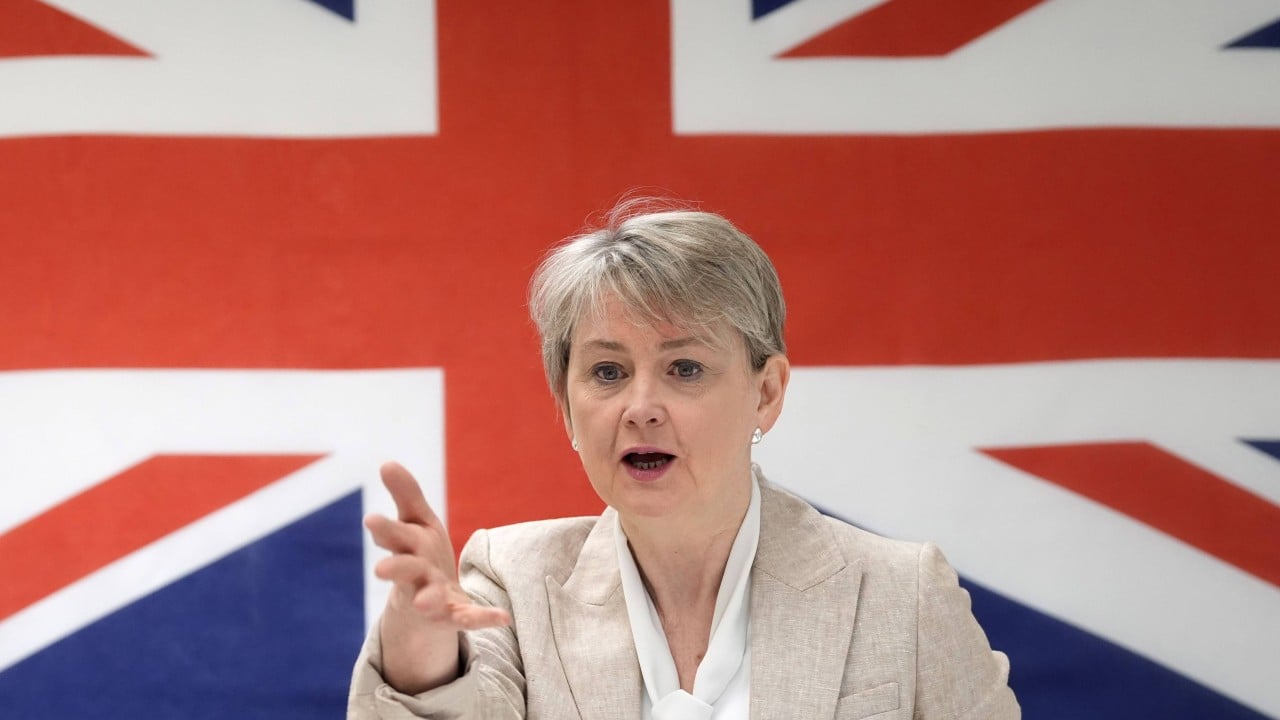
The outrage is scripted. On one side, the British government issues another "stern" demand for the release of Jimmy Lai, citing the erosion of the rule of law. On the other, Hong Kong officials fire back with a rehearsed defense of judicial independence, accusing London of colonial-era interference.
Everyone is playing their part. No one is actually looking at the ledger.
If you believe this is a binary battle between "Western democracy" and "Eastern authoritarianism," you’ve already lost the plot. This isn't a legal dispute; it's a stress test for how global financial hubs survive the death of the middle ground. The "lazy consensus" suggests that these diplomatic barbs actually influence judicial outcomes. They don’t. They are designed to manage domestic optics while the real machinery of global capital quietly recalibrates behind the scenes.
The Rule of Law is a Moving Target
The competitor's narrative treats "the rule of law" like a static monument. It isn't. In international finance, the rule of law is simply the predictability of outcomes for capital.
London’s critique of the National Security Law (NSL) hinges on the idea that Hong Kong has broken its promise. But from a cold, pragmatic perspective, the NSL provided exactly what the business sector was screaming for in late 2019: stability. You can’t run a bank when the lobby is being firebombed. The irony that most activists miss is that the very institutions they want to "save" often preferred the grim certainty of the NSL to the chaotic uncertainty of the protests.
When the UK "slams" Hong Kong, they aren't trying to change the verdict for Jimmy Lai. They are performing a necessary ritual to maintain their status as the moral arbiter of the Commonwealth. If they didn't speak up, they'd lose face. If Hong Kong didn't snap back, they’d lose sovereignty points with Beijing.
The Jimmy Lai Paradox
Jimmy Lai is not just a media tycoon; he is the human personification of a specific era of globalization that has expired. That era—where a businessman could leverage a media empire to openly lobby for foreign sanctions against his own city—is dead.
The Western media paints Lai as a pure martyr. The pro-Beijing camp paints him as a traitorous puppet. Both are oversimplifications. Lai was a high-stakes gambler who bet that Western diplomatic pressure could outweigh domestic security imperatives. He miscalculated the shift in the global power balance.
Wait for the "experts" to tell you that this trial is the "death knell" for Hong Kong as a financial center. I’ve heard that same eulogy since 1997. I’ve seen firms claim they are moving to Singapore, only to realize that the liquidity and the gateway to the mainland's $18 trillion economy still run through Central.
The data doesn't support the "exodus" narrative. Total deposits in Hong Kong’s banking system have remained remarkably resilient. Why? Because institutional capital doesn't care about the freedom of the press as much as it cares about the freedom to move money. As long as the Hong Kong Dollar remains pegged to the Greenback and the courts remain efficient for commercial disputes, the "rule of law" for the 1% is functioning perfectly fine.
The Sovereignty Trap
British politicians love to cite the Sino-British Joint Declaration. It’s a great document for a museum. In the world of realpolitik, a treaty is only as strong as the enforcement mechanism behind it. The UK has no enforcement mechanism.
By demanding Lai’s release, London actually makes his release less likely. No sovereign state, especially one as sensitive about its "century of humiliation" as China, is going to be seen taking orders from its former colonial administrator.
The UK’s intervention is a tactical error if the goal is truly Lai’s freedom. But if the goal is to look principled for a domestic electorate while simultaneously welcoming record amounts of Hong Kong capital through the BNO visa scheme, then the strategy is brilliant.
The Myth of Neutral Courts
We are told that politics has "invaded" the courtroom. This assumes courts were ever neutral spaces devoid of political context.
Every legal system is a reflection of the state's survival instinct. In the US, the Patriot Act redefined the boundaries of civil liberties in the name of security. In the UK, the Public Order Act 2023 significantly expanded police powers to shut down protests.
The difference isn't that Hong Kong is "political" and the West is "neutral." The difference is the transparency of the power grab. Hong Kong’s transition is jarring because it is happening in real-time, under the glare of a global spotlight, involving a man who owned the most popular newspaper in the city.
The Cost of the Performance
There is a downside to this contrarian view: the erosion of soft power. While the hard numbers of the stock exchange might hold steady, the "vibe shift" is real.
The talent pool is changing. The Western expat who came for the "New York with dim sum" energy is being replaced by the mainland professional who sees Hong Kong as a safer, more international version of Shenzhen. This isn't a collapse; it's a replacement.
Businesses aren't leaving; they are transforming. They are hiring compliance officers who understand the NSL as well as they understand the GDPR. They are learning to navigate a world where the "rule of law" has different definitions depending on which border you’ve crossed.
Stop Asking if Hong Kong is "Fine"
The premise of the question is flawed. Hong Kong isn't a patient in a hospital; it's an asset in a portfolio.
- Is the judiciary independent for a contract dispute between two banks? Yes.
- Is it independent for a national security case involving a high-profile critic? The state has made its answer clear.
If you are an investor or a professional, you need to stop waiting for a return to 2018. That world is gone. The Jimmy Lai trial is the final period at the end of that chapter.
The UK’s "slamming" of the city is the political equivalent of a "thoughts and prayers" tweet. It’s high-volume, low-impact. The real story is how the city is being re-engineered to function without the need for Western approval.
What You Should Actually Be Tracking
Forget the headlines about diplomatic "slams." If you want to know the future of the city, watch these three things:
- The US Dollar Peg: This is the only "rule of law" that truly matters to the global elite. If the HKD/USD relationship ever fractures, the game is over.
- Cross-Boundary Wealth Management Connect: This is the plumbing of the future. The integration of the Greater Bay Area is the actual strategic priority, not the opinion of the Foreign Commonwealth and Development Office.
- The Arbitral Centers: Watch where the big commercial cases are being settled. If they move to Singapore or London, then the city has a problem. If they stay, the city is winning.
The Jimmy Lai trial is a tragedy for some, a necessity for others, and a performance for the rest. But don't mistake the theater for the economy.
Stop reading the statements from the UK Foreign Office as if they are policy shifts. They are press releases for a ghost. The city has moved on, and the world’s capital is moving with it, even if it has to hold its nose while doing so.
Burn your copies of the 1984 Joint Declaration. They won't help you navigate the 2026 fiscal year.