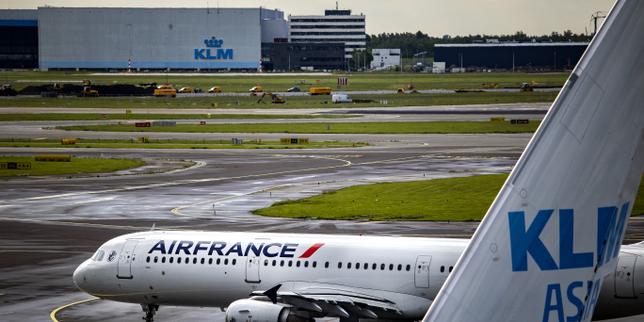
Air France-KLM, Corsair, and the rest of the legacy carrier pack are at it again. They see smoke in the Middle East, they see a flicker in the Brent Crude index, and they immediately reach for the "Surcharge" button. It is a reflex. It is also a massive distraction from the fact that these companies are failing at the most basic tenet of 21st-century logistics: risk management.
The narrative being fed to the public is simple, clean, and completely wrong. The story goes like this: Geopolitical tension leads to oil price volatility, which leads to higher operating costs, which must be passed on to the passenger to "save" the airline.
Stop buying it.
The "petroleum surcharge" is not an economic necessity. It is a confession of incompetence.
The Myth of the Unavoidable Cost
When Air France-KLM or Corsair announces a surcharge ranging from 50 to several hundred euros depending on the haul, they want you to believe they are victims of the market. They aren't. They are victims of their own refusal to hedge effectively.
In the world of high-stakes aviation, fuel isn't just a liquid you put in a wing; it’s a financial instrument. Sophisticated carriers use derivatives—call options, swaps, and collars—to lock in fuel prices months or years in advance. This is "Fuel Hedging 101."
When an airline slaps a surcharge on your ticket because of a sudden spike in oil prices, they are telling you one of two things:
- They failed to hedge their fuel needs and are now gambling with your wallet.
- They are hedged, and the surcharge is pure, unadulterated profit masquerading as a "recovery fee."
I have spent years watching corporate boards lean on these surcharges as a crutch. It’s easier to blame a conflict in the Middle East than it is to admit your treasury department got caught napping while Southwest or Ryanair locked in prices at $70 a barrel. If a carrier was truly prepared, a three-week spike in crude wouldn't move the needle on a ticket price for a flight six months from now.
Why "Market Price" is a Fairy Tale
The competitor's article focuses on the "rising cost of oil" as a direct correlate to ticket prices. This is a linear delusion.
The price of a barrel of oil is only one component of the "crack spread"—the difference between the price of crude oil and the petroleum products extracted from it, like Jet A-1. Even if crude prices remained flat, jet fuel prices can spike due to refining bottlenecks or regional logistics.
But here is the kicker: Airlines don't set prices based on costs. They set prices based on demand.
If they could charge you $5,000 for a seat to New York because the demand was there, they would do it regardless of whether oil was $20 or $120 a barrel. The surcharge is a psychological tool. It’s a way to raise the base fare without looking like the "bad guy." By labeling it a "tax" or a "surcharge" tied to a global crisis, they offload the moral burden of price gouging onto "geopolitics."
The Efficiency Trap
Let’s talk about the fleet. Air France and Corsair love to talk about their "modern, fuel-efficient aircraft." The A350s and the A330neos are marvels of engineering. They burn significantly less fuel per seat-mile than the gas-guzzlers of the 90s.
If these airlines are becoming more efficient, why are the surcharges getting larger?
Mathematically, the impact of a fuel price hike should be decreasing as fleets modernize. If you’re flying a plane that is 25% more efficient, your sensitivity to oil prices should drop by a corresponding margin. Instead, we see the opposite. Surcharges are becoming a permanent fixture of the fare structure.
Notice how these "temporary" fuel surcharges rarely disappear when oil prices crash. They just get folded into the base fare or rebranded as a "carrier-imposed fee." It is a one-way valve.
The Geopolitical Scapegoat
The current situation in the Middle East is tragic and complex. For the airline industry, however, it is a convenient "Event."
In the industry, we call this "The CNN Effect." As soon as a conflict hits the front page, airline PR departments prepare the "Surcharge" press release. It doesn't matter if the flight path doesn't go anywhere near the Strait of Hormuz. It doesn't matter if the airline gets its fuel from a refinery in Normandy that hasn't seen a drop of Middle Eastern crude in a decade.
The "war" is the excuse. The passenger's fear of "rising costs" is the opportunity.
How to Actually Beat the Surcharge
If you think you can avoid this by booking early, you’re playing the wrong game. Airlines are now adjusting these surcharges dynamically.
The only way to win is to stop looking at the "Total Price" and start looking at the "Fare Breakdown." When you see a "YQ" or "YR" code in the taxes and fees section of your ticket, that is the fuel surcharge.
- Look for non-legacy carriers: Low-cost carriers (LCCs) often have much more aggressive hedging strategies because their margins are razor-thin. They can't afford to be wrong.
- Use Points/Miles: Many frequent flyer programs do not pass on the "YQ" surcharge to award tickets—though Air France’s Flying Blue is notorious for being one of the worst offenders here.
- Call the Bluff: If an airline claims a surcharge is necessary due to fuel costs, but their quarterly earnings show record profits from "auxiliary revenue," they aren't struggling. They’re extracting.
The Brutal Truth of the Balance Sheet
Airlines are essentially hedge funds with wings. They make or lose their real money on fuel bets and currency fluctuations, not on the chicken-or-pasta choice in row 32.
When Air France-KLM adds a surcharge, they are asking you to pay for their lack of financial discipline. They are asking you to subsidize their inability to predict the most predictable thing in the world: that oil prices are volatile and the Middle East is unstable.
If a bakery ran out of flour because they didn't order enough, and then charged you an extra $2 for a baguette because "flour is hard to find today," you’d walk out. But because it’s an airline, and because they wrap it in the flag of "global crisis," we pull out our credit cards.
Stop looking at the surcharge as a "cost of doing business." Look at it as a penalty for their failure.
The next time you book a flight and see that "fuel adjustment," realize you aren't paying for kerosene. You are paying for a CEO's missed hedge and a board room's desire to keep margins fat while the world burns.
Demand better. Fly with the carriers that actually know how to manage a spreadsheet.
Check the YQ code on your next booking before you click "pay."