The maritime blockade of the Strait of Hormuz has entered a lethal new phase of economic warfare. While Washington and Tehran trade ultimatums, a quiet structural shift in the Persian Gulf is rendering the old maps of energy security obsolete. Iran is no longer just threatening to close the world’s most important chokepoint; it is actively building a future where it doesn’t need it.
For decades, the geopolitical consensus was simple. If Iran blocked the Strait, it would commit economic suicide by choking its own exports. That calculation changed on February 28, 2026, when Operation Epic Fury converted a cold war into a kinetic one. Now, with the Supreme Leader gone and the Islamic Revolutionary Guard Corps (IRGC) operating under a decentralized "Smart Control" doctrine, Tehran has unveiled a selective vetting system that turns the waterway into a private toll road for friendly nations.
The Toll Booth at the Edge of the World
The IRGC has moved beyond crude threats of total closure. Instead, they have implemented a sophisticated registration system that effectively nationalizes the international waters of the Strait. Under this new regime, vessels from China, India, and Pakistan are granted "safe corridor" status, while tankers linked to the West or its allies face $2 million "transit fees" or the very real prospect of being set ablaze.
This is not a temporary tactical maneuver. It is a fundamental redesign of maritime law through brute force. By allowing 20 million barrels of oil to remain "hostage" while selectively bleeding the valve for allies, Iran has created a two-tier global energy market. The result is a staggering divergence in Brent crude prices, which recently spiked to $101.89, and a tripling of insurance premiums that acts as a permanent tax on Western consumption.
Jask and the Pipeline to Survival
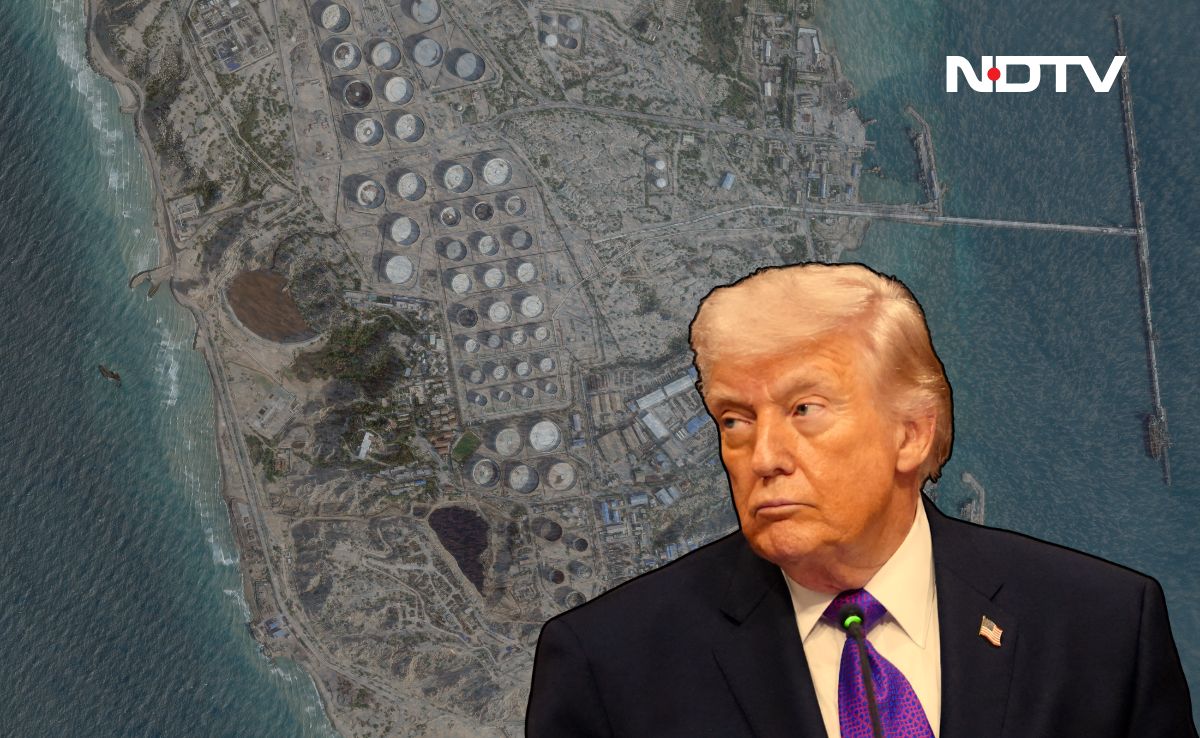
The real story isn’t the mines in the water; it is the steel in the ground. The Goureh-Jask pipeline, a 1,000-kilometer artery terminating outside the Persian Gulf, is the center of Iran’s long-term survival strategy. By moving its primary export terminal to the Gulf of Oman, Iran aims to bypass the very chokepoint it currently occupies.
While current loading volumes at Jask haven't yet reached the 1 million barrels per day (bpd) target, the intent is clear. Iran is attempting to decouple its economy from the geography of the Strait. This allows the IRGC to play a high-stakes game of chicken with Donald Trump. They can threaten to "obliterate" the shipping lanes for everyone else while maintaining a back-door exit for their own crude.
The Failure of Conventional Deterrence
The White House has responded with a mixture of "maximum pressure" and erratic diplomacy. Trump’s 15-point peace proposal, which includes the total dismantling of Iran’s nuclear program, assumes that Tehran is desperate for a return to the status quo. It ignores the fact that the status quo was a slow death by sanctions.
From the perspective of the IRGC, the current crisis is an opportunity to reset the terms of engagement. They have observed that the U.S. is hesitant to strike oil infrastructure directly, fearing a global inflationary collapse that would see gas prices soar past $5.00 a gallon in an election year. This hesitation is a weakness that the Iranian command is exploiting with "calibrated ambiguity."
The China-Russia Windfall
While the West grapples with supply shocks, Beijing and Moscow are the primary beneficiaries of the Hormuz paralysis. China continues to receive discounted Iranian crude, effectively insulated from the price spikes hitting London and New York. Russia, meanwhile, has seen its own energy revenues resurrected as the U.S. issued temporary sanctions waivers to keep global supply from flatlining.
The "oil for security" bargain that defined the last eighty years—where the U.S. Navy guaranteed safe passage for Gulf crude in exchange for market stability—is dead. Regional powers like Saudi Arabia and the UAE are now looking at their own alternative pipelines, such as the East-West line to Yanbu, with renewed urgency. They realize that the U.S. umbrella is no longer a guarantee of flow, but a lightning rod for conflict.
A Fragile Pause
The current ten-day extension on strikes against Iranian energy plants, set to expire on April 6, 2026, is a thin veneer of stability. Trump’s claim that he is dealing with "professionals" suggests a hope for a transactional exit. However, the IRGC’s "vetting system" is already generating billions in grey-market revenue and political leverage.
The Strait of Hormuz is no longer a binary switch that is either open or closed. It has become a programmable filter, controlled by a regime that has learned to thrive in the chaos. The world is waiting to see if Washington will truly seize the islands or if it will simply accept a new reality where the most vital waterway on earth is a private Iranian lake.
The leverage has shifted. Until the Jask terminal is either fully operational or physically neutralized, Tehran holds the remote control to the global economy.
Would you like me to analyze the specific impact of the $2 million transit fees on the current Baltic Dry Index?