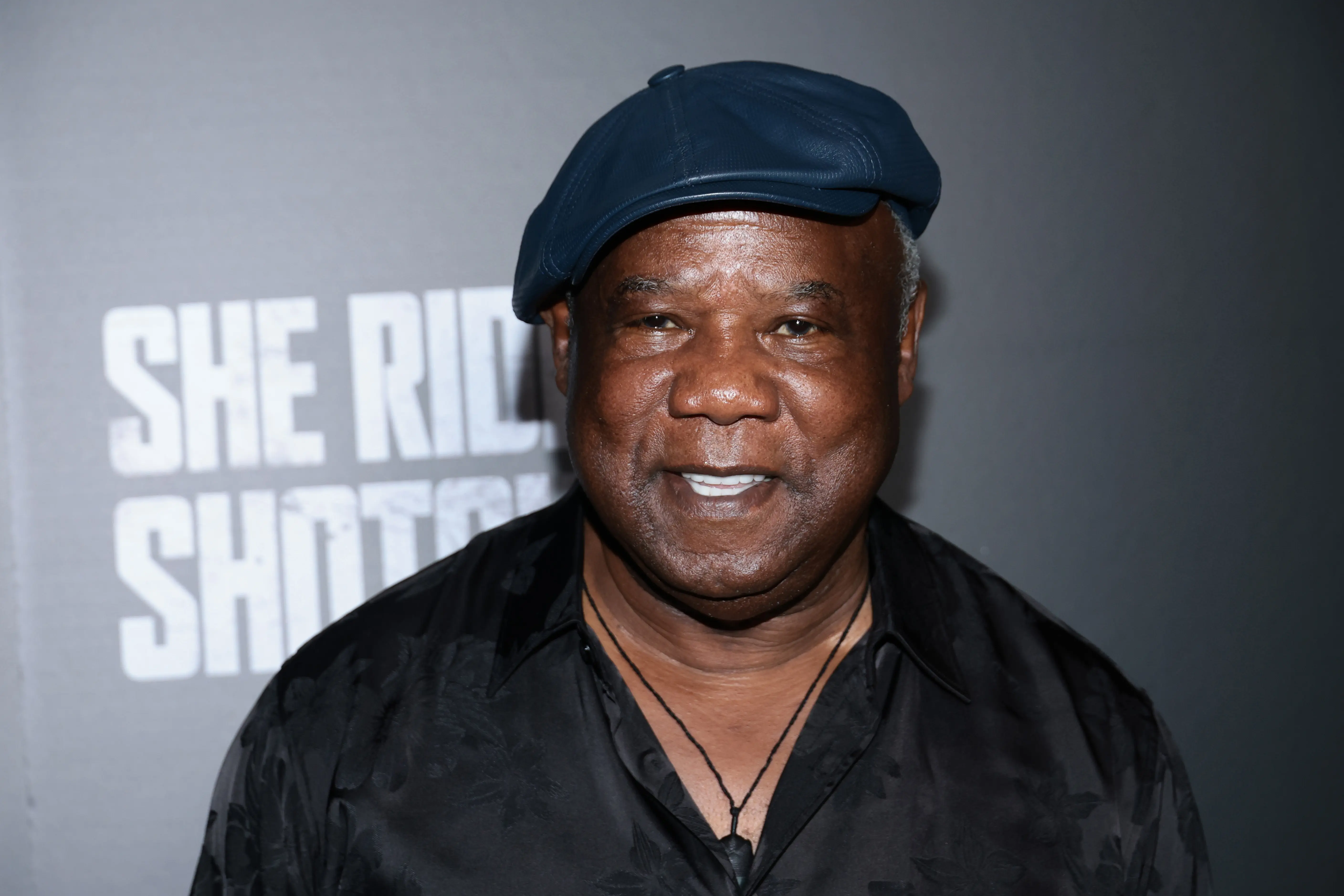
The world of acting lost a giant who didn't need to scream to be heard. Isiah Whitlock Jr. passed away at 71, leaving behind a body of work that defined the "character actor" archetype for a whole generation. Most people know him for one specific, elongated catchphrase from HBO’s The Wire. You know the one. It’s the three-second word that turned a corrupt state senator into a cultural icon. But if you only remember him for that, you’re missing the real story of a man who was the backbone of Spike Lee’s best films and the most reliable presence in New York theater.
He wasn't just a guy with a funny line. He was a master of the "lived-in" performance. When Whitlock walked onto a screen, you believed he’d been sitting in that office or walking those streets for twenty years before the camera started rolling. That’s a rare gift. Most actors "perform." Whitlock just existed.
The Senator Clay Davis Phenomenon
In The Wire, Whitlock played Senator Clay Davis. It was a role that could have easily drifted into a one-dimensional villain or a cartoonish politician. Instead, he made Davis a charming, terrifying, and deeply hilarious snake. He understood that in a city like Baltimore, power isn't just about money. It’s about theater.
The famous "sheeeeeeeee-it" wasn't just a gimmick. Whitlock originally used it in the 2002 film 25th Hour, but it became his signature on the HBO drama. It served as a verbal middle finger to the system, the police, and the viewers. He took a word and turned it into an art form. It’s arguably the most recognizable piece of dialogue in the history of "prestige TV."
But look closer at those scenes. Watch his eyes. He played Davis with a constant, simmering intelligence. He was always three steps ahead of the detectives trying to cuff him. He made corruption look like a civic duty. That’s the brilliance of Isiah Whitlock Jr. He didn't play "bad guys." He played men who thought they were the heroes of their own complicated stories.
A Career Built on Consistency Not Fame
Whitlock’s journey started long before Baltimore. Born in South Bend, Indiana, he studied at Southwest Minnesota State University before heading to San Francisco and eventually New York. He was a theater rat at heart. He spent years on stage, honing a craft that relied on timing and presence rather than good looks or blockbuster stunts.
He was a staple in the New York acting scene. If you saw a play at the Public Theater or caught an episode of Law & Order in the 90s, chances are you saw Whitlock. He belonged to that elite group of actors who are "famous to your favorite actors." They aren't on every magazine cover, but they’re the ones directors call when they need a scene to feel authentic.
The Spike Lee Connection
You can't talk about Whitlock without talking about Spike Lee. Their collaboration spanned decades and multiple films, including 25th Hour, She Hate Me, Chi-Raq, BlacKkKlansman, and Da 5 Bloods. Lee clearly saw something in Whitlock that others might have missed—a specific kind of gravitas that could pivot into comedy at a moment’s notice.
In Da 5 Bloods, Whitlock played Melvin. It was a performance that reminded everyone he had massive dramatic range. He wasn't the loudest voice in the group of Vietnam veterans, but he was often the heart. He brought a weary, soulful energy to a film that was otherwise frantic and explosive. It’s arguably one of his best late-career turns.
Why We Should Study Character Actors Like Whitlock
We live in a celebrity-obsessed culture. We track the movements of A-list stars and ignore the people who actually make movies worth watching. Whitlock was a reminder that the "supporting" cast is usually doing the heavy lifting. Without a Clay Davis to push against, the "good guys" in The Wire wouldn't have been half as interesting.
He also had a great sense of humor about his own fame. He didn't shy away from his catchphrase; he leaned into it. He even released a "talking bobblehead" that said the line. He knew what the fans wanted, but he never let it define him. He stayed busy. He kept working. He stayed curious about the craft until the very end.
Beyond the Screen
Whitlock wasn't just a face on TV. He was a mentor to younger actors and a fixture in the New York creative community. He lived a life that was remarkably low-drama for someone in the industry. He showed up, did the work, and went home. In an era of social media meltdowns and constant self-promotion, his career feels like a blueprint for how to actually survive in show business.
He also had a sneaky amount of range in voice work and comedy. His guest spots on shows like Veep and BoJack Horseman showed he could play with the best improvisers and comedians in the business. He had a deadpan delivery that was lethal. He could say more with a sigh than most actors could with a monologue.
The Lasting Influence of a New York Legend
Losing Isiah Whitlock Jr. feels like losing a piece of the furniture in the house of American drama. You didn't always notice how much he was doing until he wasn't there anymore. He leaves behind a filmography that serves as a masterclass in subtlety.
If you want to honor his memory, don't just watch the clips of him shouting on YouTube. Go back and watch 25th Hour. Watch his guest spots on The Good Wife. Pay attention to how he listens to other actors. That’s where the real magic happened. He was a generous performer who made everyone around him look better.
His death at 71 is a massive loss, but his work is permanent. He proved that you don't need to be the lead to be the star of the show. He was a craftsman. He was an original. And frankly, we won't see another one like him for a long time.
If you’re an aspiring actor or just a fan of the medium, take an afternoon to dive into the Spike Lee joints or a marathon of The Wire. Pay attention to the way Whitlock uses his physical space. Notice how he never rushes a line. There is an entire education in his performance style if you’re willing to look for it. Go watch a master at work and see how it’s actually done.