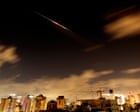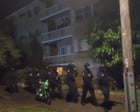
The video is hard to watch if you care about civil liberties. Last week, footage surfaced of New South Wales police arresting a protester during Israeli President Isaac Herzog's visit to Sydney. It wasn't just a standard move-along order. It was a high-intensity takedown that has legal experts and human rights advocates sounding the alarm. If you think the right to protest is set in stone in Australia, this incident suggests the ground is shifting beneath our feet.
The core of the issue isn't whether you agree with the protester's message. It's about the proportionality of the response. When the state uses "extreme" force against a single individual expressing a political opinion, it sends a chilling message to everyone else. Legal professionals are now questioning if the police crossed a line from maintaining order to suppressing dissent.
The Footage That Sparked a Legal Backlash
When the NSW police released the bodycam and CCTV footage, they likely expected it to justify their actions. Instead, it did the opposite for many legal observers. The video shows a protester being tackled and restrained with what looks like an unnecessary level of aggression. We're talking about a situation where the individual didn't appear to be an immediate physical threat to the visiting head of state or the public.
Lawyers from organizations like the NSW Council for Civil Liberties have been vocal. They argue that the "extreme" nature of the arrest doesn't match the alleged offense. In Australia, the law generally requires police to use the minimum force necessary. When you see three or four officers pinning a non-violent person to the pavement, "minimum" isn't the word that comes to mind. It feels more like a performance of power.
Why the Isaac Herzog Protest Matters for Every Australian
This isn't just a niche story about Middle Eastern politics. It's a case study in how "high-priority" visits are used to justify a suspension of normal democratic norms. Isaac Herzog's visit was treated as a high-security event, which is fair enough. However, security for a dignitary shouldn't automatically mean the total erasure of the public's right to be heard.
The legal community is worried about a "security creep." This happens when the police use the presence of a VIP to implement "exclusion zones" or "special powers" that wouldn't hold up in court under normal circumstances. If we accept this today for a presidential visit, what's to stop it from becoming the standard for a local council meeting or a climate rally tomorrow?
The Problem with Discretionary Power
Police in NSW have broad discretionary powers. They can give "reasonable directions" to protesters. But "reasonable" is a slippery word. In this case, the direction was to leave the area. When the protester didn't comply instantly, the escalation to physical force was near-instantaneous.
Legal experts point out that the law expects police to de-escalate. That means talking, negotiating, and giving people a chance to move voluntarily. The Herzog video shows very little of that. It shows a snap decision to go hands-on. Honestly, it looks like the police were more concerned with clearing the "visual clutter" of a protester than managing a genuine security risk.
NSW Police and the Trend of Aggressive Policing
This incident didn't happen in a vacuum. Over the last few years, we've seen a measurable toughening of anti-protest laws in New South Wales. Fines have skyrocketed. Jail time is now a real possibility for blocking a bridge or a road. But this arrest represents something different: the physical application of those harsh policies on the street.
Critics argue that the police are becoming increasingly militarized in their mindset. Instead of being "peace officers," they're acting like a security detail for the elite. When lawyers criticize these "extreme" tactics, they're pointing to a breach of the social contract. You pay taxes for police to keep you safe, not to keep you quiet.
- The use of "pain compliance" techniques on non-violent individuals.
- The rapid escalation from verbal warnings to physical restraint.
- The targeting of specific political messages while others are ignored.
These aren't just complaints from activists. These are technical legal concerns about the validity of the arrests and the potential for civil lawsuits against the state.
What the Law Says About Your Right to Dissent
Australia doesn't have a Bill of Rights like the US. We have an "implied freedom of political communication" in our Constitution. It's a bit weaker than a literal right to protest, but it's supposed to protect us from exactly this kind of overreach. The High Court has ruled multiple times that the government can't just ban protests because they're annoying or politically inconvenient.
For an arrest to be lawful, the officer must believe on reasonable grounds that it's necessary. If the goal is just to stop a person from yelling a slogan, an arrest—especially a violent one—is rarely "necessary." The courts have often found that police overstep when they prioritize "orderly flow" over "freedom of expression."
The Downward Spiral of Public Trust
Every time a video like this goes viral, public trust in the police takes a hit. When the NSW police department released the footage, they probably thought it showed them doing a tough job in a tense environment. But for many, it just showed a lack of composure.
If people feel that the police are a tool for one side of a political debate, they stop cooperating. They stop seeing the badge as a symbol of safety. That's a dangerous place for a society to be. Lawyers aren't criticizing these arrests just to be difficult; they're doing it because they know that a heavy-handed police force eventually creates a more volatile public.
How to Protect Yourself During a Protest
If you're planning on exercising your rights, you need to know how to handle these situations. Don't assume that just because you're being peaceful, you won't be targeted.
- Know the "Move-On" Laws: In NSW, police can order you to leave a public place if they believe you're obstructing people or traffic. You can ask for their name, rank, and station.
- Record Everything: The only reason we're having this conversation is because there was video. If you see an arrest, film it from a safe distance.
- Don't Resist Physically: Even if the arrest is "illegal" or "extreme," resisting physically often gives the police a legal justification for more force. Fight it in court, not on the sidewalk.
- Legal Support: Keep the number of a legal aid group or the NSW Council for Civil Liberties handy.
The backlash against the Isaac Herzog protester arrest is a turning point. It's forced a public conversation about where we draw the line between security and the right to be a loud, annoying, and vital part of a democracy. We can't afford to let "extreme" become the new normal.
If you believe your rights were violated during a recent event, contact the NSW Ombudsman or seek independent legal advice immediately. Documenting these incidents is the only way to hold the system accountable and ensure that "reasonable force" actually means something in the real world.