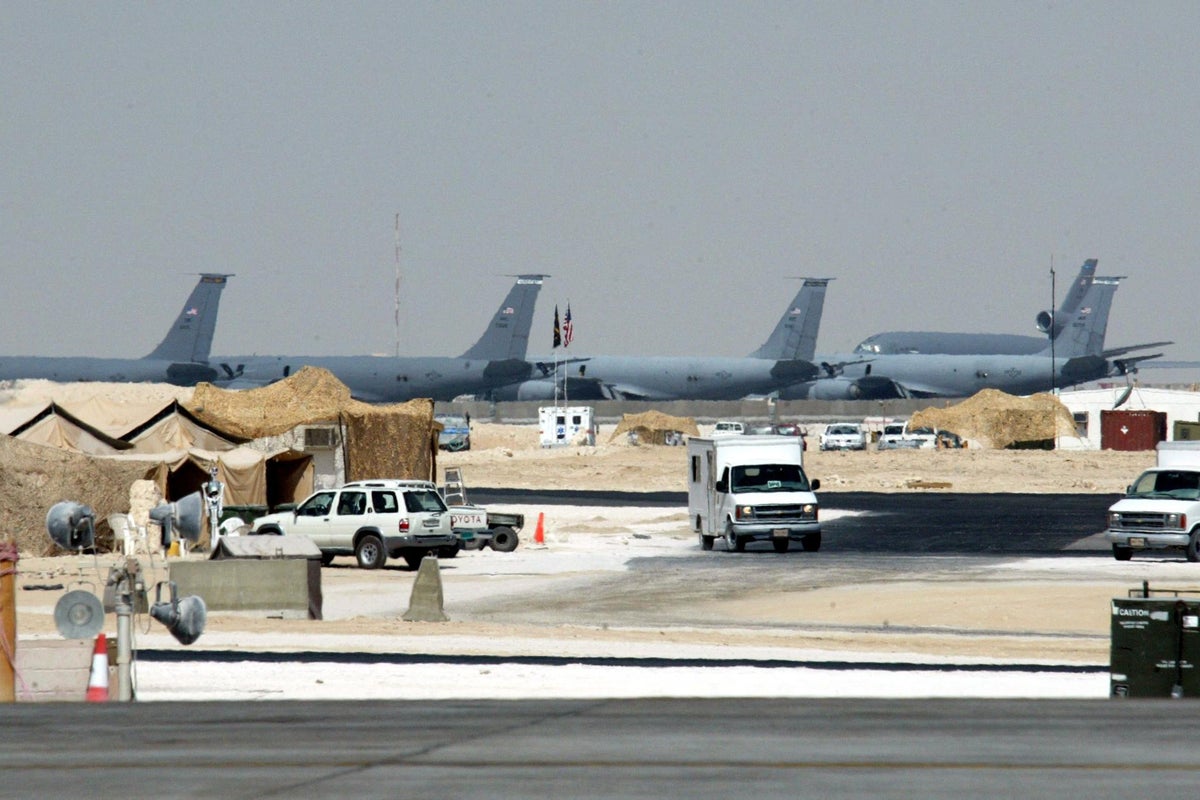
The wind in the Al-Tanf garrison doesn't just blow; it scours. It carries a fine, silty dust that finds its way into the sealed housing of a laptop, the fibers of a thermal blanket, and the very pores of the few hundred U.S. troops stationed there. This tiny patch of Syrian desert sits at a lonely crossroads near the borders of Iraq and Jordan. On a map, it looks like a speck of dust on a vast beige canvas. In reality, it is a cork in a bottle, sitting directly atop a highway that could link Tehran to the Mediterranean.
While headlines in Washington or London speak of "strategic posture" and "regional escalation," the reality of Western military presence in the Middle East is measured in the hum of air conditioners fighting a losing battle against 110-degree heat. It is measured in the flickering glow of radar screens in Qatar and the heavy thud of supply planes landing in the scrublands of Djibouti. We often treat these bases as static dots on a briefing slide. They are not. They are living, breathing extensions of a geopolitical nervous system that is currently twitching with every spark of conflict.
The Great Central Hub
If you want to understand how the United States maintains its grip on the region, you have to look at Qatar. Specifically, Al-Udeid Air Base.
Imagine a city of ten thousand people where everyone wears a uniform and the main industry is the management of the sky. Al-Udeid is the largest U.S. military installation in the Middle East. It isn't just a runway; it is the brain. The Combined Air Operations Center (CAOC) located here oversees every piece of metal flying in the airspace over Iraq, Syria, and Afghanistan. When an F-15 takes off or a drone begins its silent patrol, the orders likely pulsed through the fiber-optic cables buried under the Qatari sand.
Qatar is an interesting partner. It hosts the Americans while simultaneously maintaining a diplomatic line to almost every other player in the region, including those the U.S. considers adversaries. This creates a strange, quiet tension. The base is a fortress of Western power, yet it sits in a country that prides itself on being the region’s ultimate mediator. For the airmen stationed there, the "escalation" isn't an abstract concept found in a newspaper. It is the sudden increase in flight sorties and the sharpening of the security posture at the gates.
The Sentinel of the Gulf
Travel east across the water to Bahrain, and the scenery changes from runways to piers. Since 1947, the U.S. Navy has had a footprint here. Today, it is the home of the U.S. Naval Forces Central Command and the 5th Fleet.
The stakes here are liquid.
Roughly 20 percent of the world’s oil passes through the Strait of Hormuz. It is a narrow, crowded waterway where a single mistake or a calculated provocation can send global markets into a tailspin. The 5th Fleet is the primary deterrent against that possibility. In the Naval Support Activity Bahrain, the mission is less about the desert and more about the deep blue.
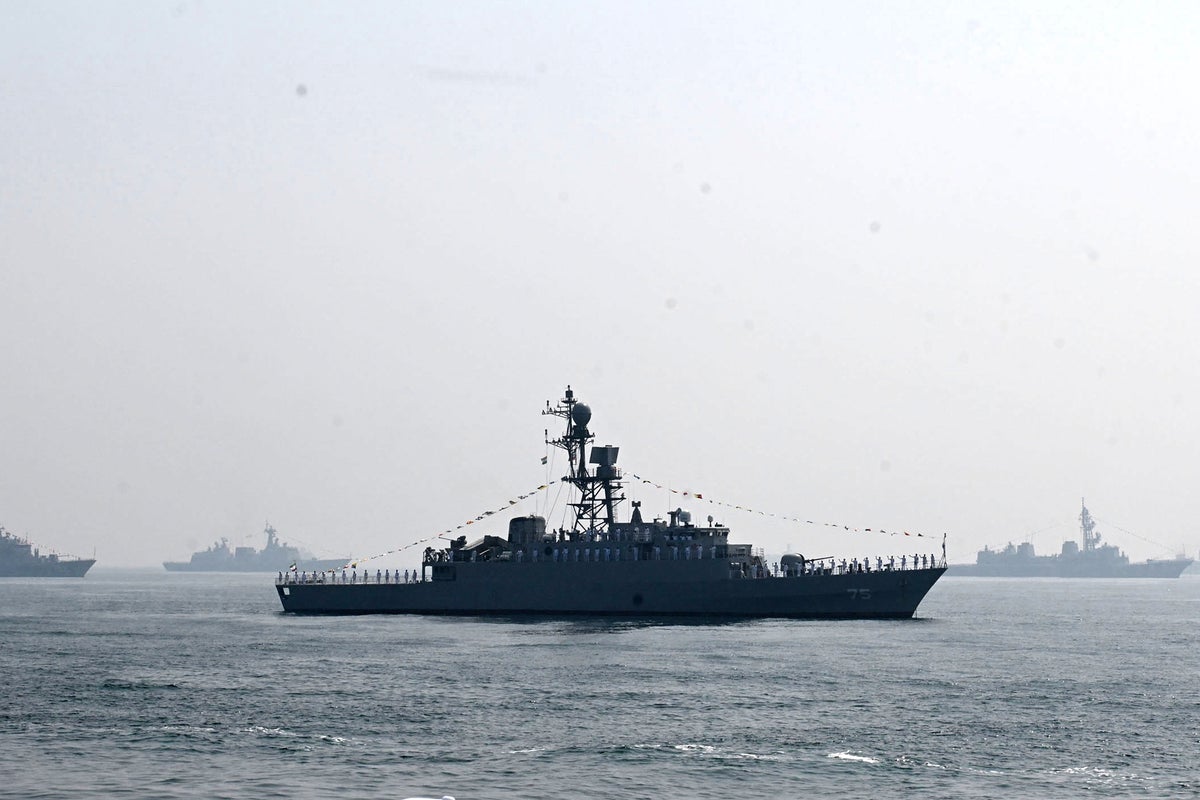
Consider a young sailor on a destroyer in the Persian Gulf. Their world is defined by the "blips" on a surface-search radar. Some of those blips are massive tankers carrying the lifeblood of the global economy. Others are small, fast-moving patrol boats that play a constant game of chicken. When conflict escalates elsewhere—say, in Gaza or Lebanon—the tension trickles down into these waters. The "shadow war" at sea becomes less shadowy. The sailors feel it in the frequency of their drills and the way their commanders watch the horizon.
The British Footprint
The United Kingdom might not have the sheer volume of boots on the ground that the U.S. does, but its presence is surgical and deeply rooted in history. The UK maintains a permanent naval base in Bahrain, HMS Juffair, signaling a return to a "East of Suez" strategy that many thought had died decades ago.
But the real British weight is felt in places like Oman and Cyprus. RAF Akrotiri on Cyprus is a Mediterranean unsinkable aircraft carrier. When the UK needs to launch strikes or conduct surveillance over the Levant, the planes roar off those runways. It is a colonial vestige that has become a modern necessity for British power projection.
In Oman, the Duqm port serves as a vital logistics hub. It allows the Royal Navy to maintain a presence in the Indian Ocean without having to constantly navigate the narrow chasm of the Strait of Hormuz. For the British government, these bases aren't just about war; they are about maintaining a seat at the table. They are the physical proof that Britain still intends to be a global player, even as its domestic budget shrinks.
The Fragile Outposts
Away from the massive hubs of Qatar and Bahrain lie the "lily pads." These are smaller, more vulnerable sites in Iraq and Syria.
In Iraq, there are roughly 2,500 U.S. troops scattered across bases like Al-Asad Airbase and Union III in Baghdad. Their official mission is to advise and assist in the fight against remnants of ISIS. However, as regional tensions rise, these bases often find themselves at the receiving end of rocket and drone fire from various militias.
This is where the human cost becomes most vivid.
Think of a hypothetical sergeant—let’s call him Elias. Elias isn't there to conquer territory. He’s there to train local forces and provide intelligence. But when the "siren of death" wails across Al-Asad, Elias has seconds to reach a concrete bunker. He sits in the dark, feeling the ground shake from an incoming 122mm rocket, wondering if a geopolitical decision made three thousand miles away has just marked his location for a strike.
These bases are technically "guests" of the Iraqi government, but that government is caught in a grueling tug-of-war. Half of the political establishment wants the Americans out to appease neighborly interests, while the other half fears that a total U.S. withdrawal would lead to a security vacuum that could be filled by something much worse.
The Silent Partner in the South
Then there is Jordan. Muwaffaq Salti Air Base is a name few civilians know, but it is a massive hub for U.S. drone operations and fighter jets. Jordan is one of the most stable U.S. allies in the region, yet its position is incredibly delicate. The Jordanian population is deeply connected to the Palestinian cause, and the government must balance its vital military partnership with the U.S. against the boiling anger of its own streets.
The base at Tower 22, a small logistics outpost in Jordan near the Syrian border, became a household name for a tragic reason in early 2024 when a drone strike killed three U.S. service members. It was a stark reminder that even the "back-end" support roles are fraught with life-and-death stakes. There are no safe zones when a regional conflict turns hot.
The Invisible Infrastructure
Why does this network exist? It isn't just about oil, and it isn't just about countering any single nation. It is about the "Rules-Based International Order"—a phrase that sounds like a dry textbook entry until you realize it means your local gas station having fuel and your Amazon package arriving on time.
The U.S. and UK military presence acts as a massive, incredibly expensive insurance policy for global trade.
But insurance policies have premiums.
The premium here is paid in the lives of the men and women stationed at these outposts and the billions of dollars spent every year to keep the lights on in the desert. There is also a political premium. Every base is a focal point for local resentment, a symbol of "Western imperialism" that local leaders can use to galvanize opposition.
The Looming Question
When you look at the map of these bases, you see a ring of steel. From the Incirlik Air Base in Turkey down to the Lemonnier base in Djibouti, the West has surrounded the heart of the Middle East with a logistical and combat apparatus that is unmatched in human history.
But as conflict escalates, the question isn't just "Where are the bases?" It is "What are they for now?"
Are they there to prevent a wider war, or do they serve as the very targets that will draw the West into one?
The soldiers at Al-Tanf don't have the luxury of debating this. They spend their days watching the horizon through high-powered optics, looking for the telltale dust clouds of an approaching convoy or the glint of a drone in the midday sun. They are the human tripwires of a global strategy.
The maps we see on the news are clean. They use little icons of planes and ships to show "force projection." They don't show the sleepless nights in the CAOC in Qatar, or the vibration of the bulkheads on a destroyer in the Gulf, or the way the silence of the Syrian desert feels heavy when you know you’re being watched from the ridges.
The Middle East is currently a room filled with gas. These bases are the people holding the matches—some are trying to keep them unlit, while others find their hands shaking as the heat rises.
The iron map isn't just a layout of runways and docks. It is a precarious web of human lives held together by the hope that the next "blip" on the radar is just a false alarm.
The sun sets over the Persian Gulf, turning the water into a sheet of hammered gold. On the deck of a carrier, a catapult fires, and a jet screams into the purple sky. It is a display of power that is breathtaking and terrifying all at once. Below deck, someone is writing a letter home, trying to explain why they are sitting in a steel box ten thousand miles away, waiting for a war they hope never starts.