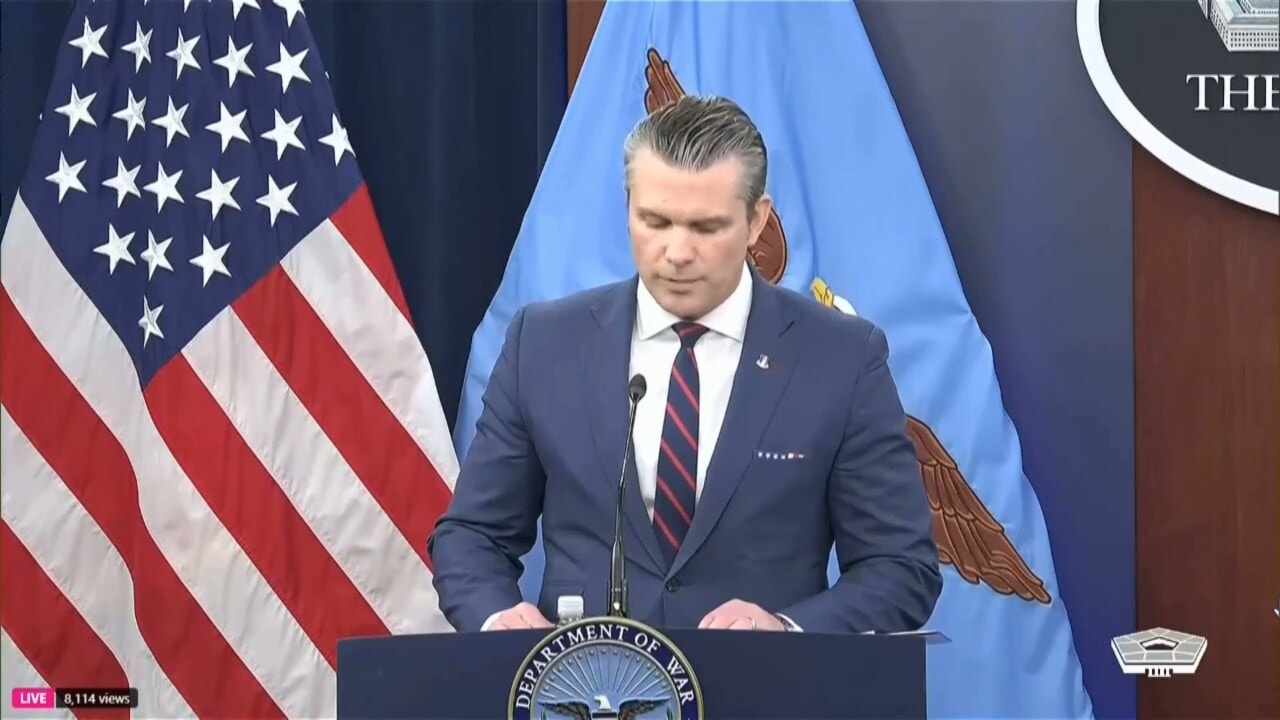
The shift in American foreign policy regarding Tehran is no longer a matter of diplomatic nuance or incremental pressure. It has become an ideological confrontation defined by a single, uncompromising principle. Pete Hegseth, in his capacity as a central architect of this movement, is signaling a departure from decades of strategic ambiguity. This isn't just about sanctions or rhetoric. It is a fundamental rewiring of how the United States intends to project power in the Middle East, moving from a posture of containment to one of overt dominance.
At its core, the Hegseth doctrine rejects the notion that the Islamic Republic can be bargained with through traditional Western diplomacy. For years, the prevailing wisdom in Washington relied on the "carrots and sticks" approach—offering sanctions relief in exchange for nuclear compliance. Hegseth has effectively set that playbook on fire. He views the Iranian government not as a rational state actor, but as a revolutionary entity that only respects the credible threat of overwhelming force. This worldview is built on the belief that any hesitation by the U.S. is interpreted by Tehran as a weakness to be exploited.
The Death of Strategic Patience
For decades, the concept of "strategic patience" governed the U.S.-Iran relationship. The idea was to wait out the regime, support internal dissent, and use international coalitions to squeeze the economy. Hegseth argues that this approach has failed. He points to the expansion of Iranian proxy networks—the "Axis of Resistance"—across Iraq, Syria, Lebanon, and Yemen as proof that while the U.S. waited, Iran acted.
The new doctrine is characterized by a refusal to apologize for American interests. In practical terms, this means the U.S. will likely stop seeking permission from European allies before taking unilateral action. It means the threshold for military intervention has been lowered. If an Iranian-backed militia targets an American asset, the response will not be proportional. It will be designed to be lopsided, permanent, and psychologically devastating.
Money as a Weapon of War
One of the most significant pillars of this hardline stance involves the total financial isolation of the Iranian state. While previous administrations utilized "targeted" sanctions, the current trajectory points toward a scorched-earth economic policy. The goal is simple: bankruptcy.
Hegseth’s supporters argue that the only way to stop Iran’s nuclear ambitions is to ensure they cannot afford the electricity to run the centrifuges, let alone the steel to build them. This involves aggressive enforcement against the "ghost armada" of tankers that move Iranian oil to Asian markets. It also involves a direct confrontation with the financial institutions in third-party countries that facilitate these transactions. There is no middle ground here. You either trade with the United States, or you trade with Iran. You cannot do both.
The Intelligence Gap and the Risk of Miscalculation
Critics of this "no hesitation" policy warn that it ignores the complexities of Iranian internal politics. By treating the regime as a monolith, the U.S. risks unifying the various factions within Iran against a common external enemy. When a nation feels it has nothing left to lose, its behavior becomes unpredictable.
There is also the question of intelligence. Hardline doctrines require perfect clarity on the ground. If the U.S. moves to a pre-emptive strike footing, the cost of a mistake—hitting the wrong facility or misinterpreting a troop movement—could spark a regional conflagration that no one is prepared to manage. Hegseth’s lean into "no apologies" assumes that American military superiority is enough to deter a full-scale war, but history suggests that asymmetric actors often find ways to bleed a superior power through a thousand small cuts.
Redefining the Nuclear Red Line
The most volatile element of this doctrine is the redefinition of the nuclear "red line." Under the JCPOA (the Iran nuclear deal), the focus was on "breakout time"—how long it would take Iran to produce enough fissile material for a bomb. Hegseth’s framework appears to move that line back significantly. The mere existence of certain types of research or the enrichment of uranium to 60 percent is no longer a talking point for the next round of Geneva talks. It is a target.
This shift places tremendous pressure on Israel. For years, Jerusalem and Washington have had a "quiet" disagreement over exactly when military action becomes necessary. Hegseth’s alignment with the most hawkish elements of the Israeli defense establishment suggests that the gap between the two allies has closed. The message being sent to Tehran is that the window for a negotiated settlement hasn't just closed; it has been boarded up.
The Role of Domestic Optics
It is impossible to separate this foreign policy from domestic politics. Hegseth, a veteran and a media personality, understands the power of the "strongman" narrative. After the chaotic withdrawal from Afghanistan, there is a palpable desire among a segment of the American electorate to see a more assertive, unapologetic version of U.S. power.
By framing the Iran issue in such stark, moralistic terms, the administration is making it difficult for future leaders to pivot back to diplomacy. It sets a new baseline for what "strength" looks like. This isn't just about Iran; it's a signal to China and Russia that the era of American retrenchment is over. The "no hesitation" policy is a branding exercise as much as it is a military strategy.
The Regional Ripple Effect
The Gulf monarchies are watching this shift with a mixture of relief and anxiety. On one hand, Saudi Arabia and the UAE have long complained that the U.S. was too soft on Iranian expansionism. On the other hand, they are the ones who will be on the front lines if Tehran decides to retaliate by targeting desalination plants or oil refineries in the Persian Gulf.
Hegseth's doctrine requires these allies to pick a side more clearly than ever before. The "hedging" strategy—where countries like Qatar or Oman act as intermediaries—is becoming increasingly dangerous. The U.S. is effectively telling the region that the "gray zone" of Middle Eastern politics is being phased out.
Practical Implications for the Pentagon
For the Department of Defense, the "no apologies" doctrine translates to a massive reshuffling of assets. We are seeing a move away from long-term counter-insurgency operations toward high-intensity, "over-the-horizon" capabilities. This includes increased investment in long-range precision fires, cyber-offensive capabilities, and stealth platforms that can penetrate Iran’s increasingly sophisticated air defense networks.
Military planners are being told to prepare for a scenario where "proportionality" is no longer the guiding legal or strategic principle. Instead, the focus is on "restoring deterrence" through the visible and violent destruction of high-value targets. This is a high-stakes gamble that assumes the Iranian leadership values their own survival more than their ideological goals.
The shift led by figures like Hegseth represents a total rejection of the post-Cold War consensus on the Middle East. It is a return to a more primal form of statecraft, where power is the only currency that matters. Whether this leads to a safer world or a catastrophic conflict depends entirely on whether the Iranian regime is as fragile as the hawks believe, or as resilient as the skeptics fear. There are no more safety nets.
Examine the current deployment of carrier strike groups in the Eastern Mediterranean and the Persian Gulf. These are not just patrols; they are the physical manifestation of a doctrine that has traded the briefcase for the bayonet. If you are waiting for a return to the negotiating table, you are looking at a past that no longer exists.


