Sirens are screaming across Tel Aviv and the headlines are doing exactly what they were designed to do: manufacture panic. The "lazy consensus" in modern geopolitical reporting suggests we are one misfire away from a total regional meltdown that resets the global order. They point to Trump’s rhetoric about being "not ready for a deal" and the physical reality of interceptor missiles lighting up the night sky as evidence of an impending apocalypse.
They are wrong.
What you are witnessing isn't the prelude to World War III. It is a high-stakes, kinetic negotiation. It is a brutal form of price discovery for geopolitical influence. If you’re reading the standard news cycle, you’re looking at the sparks and ignoring the engine. The sirens aren't a signal to hide; they are a signal that the status quo is being recalibrated by actors who have no intention of actually burning the house down.
The Myth of the "Accidental" Great War
Mainstream analysts love the "Sleepless into Sarajevo" trope—the idea that nations accidentally stumble into a total war they never wanted. It’s a convenient narrative because it absolves leaders of agency. In the context of Iran and Israel, it’s total fiction.
Every missile launched from an IRGC facility and every interceptor fired by the IAF is a calculated data point. This is "Performative Escalation."
- Strategic Thresholds: Iran knows exactly how many projectiles it can launch to "save face" without triggering a regime-ending response.
- Economic Guardrails: Global powers, including China and the US, have zero appetite for a $150-per-barrel oil world.
- The Proxy Buffer: The reason this conflict stays in the "gray zone" is that both sides benefit more from the threat of war than the reality of it.
I’ve sat in rooms where "security experts" hyperventilate over a single drone strike while the actual money—the sovereign wealth funds and the energy majors—barely flinches. Why? Because they understand the difference between tactical theater and strategic shift.
Trump’s "Not Ready for a Deal" is a Value Play
When the media reports that Donald Trump isn't ready for a deal with Tehran, they treat it as a failure of diplomacy. In reality, it’s a textbook application of the "Best Alternative to a Negotiated Agreement" (BATNA).
The status quo media wants a "deal" at any cost because they equate ink on paper with safety. But a deal signed under pressure of perceived urgency is almost always a bad asset. By stating he isn't ready, Trump is effectively shorting Iran’s leverage. He is signaling that the US is comfortable with the current level of friction, which forces the counterparty to lower their "asking price" for regional stability.
This isn't "chaos." It’s a squeeze.
The Iron Dome is a Psychological Crutch
We need to talk about the Iron Dome and the Arrow system without the worshipful tone usually reserved for tech breakthroughs. Yes, the physics are impressive. $V_{intercept} > V_{threat}$ is a beautiful thing to see in a simulation. But the obsession with the "interception rate" misses the point entirely.
The Iron Dome doesn't just stop rockets; it stops political pressure.
If ten rockets hit a residential block, the Israeli government is forced into a full-scale ground invasion of Lebanon or Iran. If the Iron Dome stops nine of them, the government has the political "air cover" to refrain from a total war. Ironically, the more effective the defense system, the longer the low-level conflict can be sustained.
The danger isn't that the system fails; it's that the system works so well it allows both sides to continue playing the game of "Calculated Escalation" indefinitely. This creates a "Volatility Trap" where the lack of a decisive outcome keeps the entire region in a permanent state of high-cost, low-yield tension.
Why the "Expert" Predictions on Oil Prices are Garbage
"If Iran closes the Strait of Hormuz, oil goes to $200."
You’ve heard this for twenty years. It hasn't happened. It won't happen.
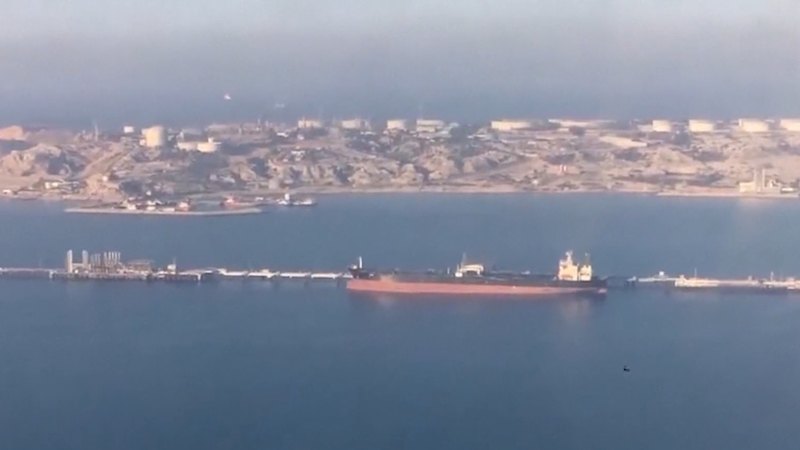
The Strait of Hormuz is the only lung Iran has. To close it would be an act of national suicide, not a tactical maneuver. Furthermore, the global energy map has been fundamentally redrawn. Between US shale production and the rapid diversification of energy sources in Europe, the "Oil Weapon" is more like an "Oil Paperweight."
- 1973 Logic: Any twitch in the Middle East causes a global cardiac arrest.
- 2026 Reality: The market has already priced in the regional instability. It’s a "beta" of the global energy market, not an "alpha" event.
If you want to understand where the real risk is, stop looking at the tankers and start looking at the cyber infrastructure. A missile hitting a refinery is a weekend of bad news. A logic bomb hitting the clearinghouse of a major global bank is a decade of depression. The headlines are focused on the 20th-century version of war because it’s easier to film.
The People Also Ask: Dismantling the Premise
Is the US going to war with Iran?
Wrong question. The US and Iran have been in a state of unconventional war for decades. Whether it's through Stuxnet-style cyber attacks, proxy militias in Iraq, or financial sanctions, the "war" is already happening. If you mean "boots on the ground" and "bombs over Tehran," the answer is no. Neither side can afford the bill, and neither side has a "win condition" that justifies the cost.
Why are sirens blaring in Israel if the defense is so good?
The sirens are a liability management tool. If a piece of shrapnel from a successful interception hits a civilian, the state is legally and politically protected because the warning was issued. Do not mistake the sound of a siren for the sound of a collapsing state. It’s the sound of a system operating exactly as designed.
Can the global economy survive a Middle East war?
The global economy has proven to be incredibly resilient to localized kinetic shocks. The real threat to the economy isn't a missile in the Levant; it's the domestic policy response—inflationary spending, trade protectionism, and the retreat from globalism. We are effectively "taxing" ourselves through fear-based policy.
The Hidden Cost of "Stable" Instability
The real tragedy isn't the threat of a "Big War" that never comes. It's the normalization of the "Small War."
We have entered an era where perpetual tension is a business model. Defense contractors, "security consultants," and 24-hour news networks all require a certain level of heat to stay profitable. If peace broke out tomorrow, billions in market cap would evaporate.
I’ve seen this play out in the private sector too. Companies keep "crisis management" firms on retainer for millions, and those firms have a vested interest in ensuring there is always a crisis to manage. The Middle East is the ultimate "crisis on retainer."
The "insider" truth is that the actors involved—the IRGC, the IDF, the White House—are all participants in a dance that looks chaotic to the untrained eye but is actually highly choreographed. They are moving in sync to ensure that nobody actually "wins," because winning ends the game, and the game is where the power resides.
Stop Reading the Map, Start Reading the Incentives
If you want to know what’s actually going to happen, ignore the "Breaking News" banners. Look at the flow of capital.
- Is insurance for shipping in the Gulf actually becoming unobtainable, or is it just getting a 5% "risk premium"? (Usually the latter).
- Are the children of the Iranian elite moving their money out of London and Dubai? (No).
- Is Israel slowing down its tech exports or its gas field developments? (No).
When the people with the most to lose start acting like there's a war, then you should worry. Right now, they are acting like there’s a negotiation.
The media wants you to believe we are on the precipice because fear sells subscriptions. The reality is far more cynical: we are in a permanent state of managed friction designed to consolidate power and test weapons systems in real-time environments.
Stop waiting for the "Big One." It’s not coming. The sirens are just background noise for a deal that’s already being brokered in silence, while the world watches the light show.
The next time you see a headline about "imminent escalation," ask yourself: who profits from my fear today? Then, go look at the bond yields. They’ll tell you more than a thousand "on-the-ground" reporters ever could.
The theater of war is open, but the tickets are far more expensive than the actual show.
Stop reacting to the noise. Start calculating the signal.