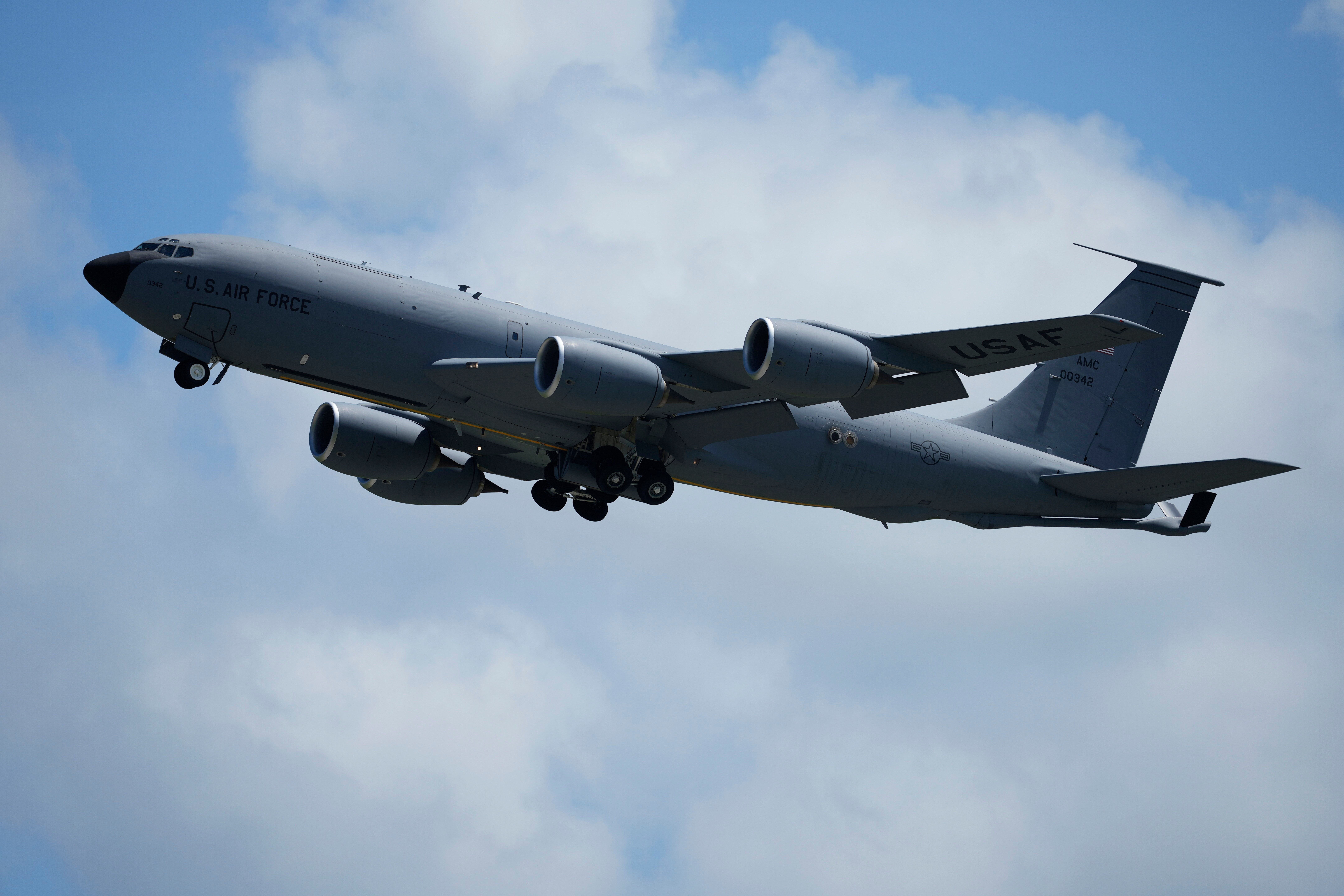
Six American service members are dead after their U.S. military aircraft went down in western Iraq. The crash, which occurred during a routine transport mission, marks one of the deadliest aviation incidents for U.S. forces in the region in recent years. While initial reports from the Department of Defense suggest no immediate signs of enemy fire, the loss of the entire crew points to a catastrophic mechanical failure or a high-energy impact that left no room for survival. This isn't just a tragic headline; it is a grim reminder of the mounting physical toll on an aging fleet operating in one of the most unforgiving environments on Earth.
The wreckage was located in a remote stretch of Al Anbar province. Recovery teams reached the site under heavy security, confirming what many feared when the bird dropped off the radar—there were no survivors. The names of the deceased are being withheld pending the standard twenty-four-hour window for next-of-kin notification, a somber protocol that has become far too familiar to the families of those stationed at Al-Asad Airbase.
The Mechanical Tax of Forever Wars
Military aviation in the Middle East is a constant battle against physics. When we talk about "routine missions," we ignore the reality that these aircraft are often decades old and pushed far beyond their original design specifications. The fine, talcum-like sand of the Iraqi desert is an apex predator for turbine engines. It finds its way into the most sealed components, acting as an abrasive that eats away at internal blades and clogs cooling passages.
Maintenance crews work around the clock in blistering heat to keep these machines flight-worthy. However, the operational tempo rarely slows down to match the needs of the hardware. When a plane goes down without a missile being fired, the investigation almost always circles back to "metal fatigue" or "maintenance oversight." It is rarely a single mistake. Usually, it is a chain of small, neglected issues that finally reach a breaking point at ten thousand feet.
The Limits of Automation
Modern cockpit technology is designed to reduce pilot workload, but it also introduces layers of complexity that can fail in spectacular ways. If a sensor suite provides conflicting data during a critical phase of flight, the pilots are forced to make split-second decisions based on flawed information. We have seen this in civilian aviation with the MCAS scandals, and the military isn't immune to the same pressures of software-driven flight controls.
In the desert, thermal inversions and sudden dust storms can trick even the most sophisticated radar and terrain-following systems. If this crew was flying low to avoid detection or simply following a standard corridor, a sudden loss of lift or an engine surge could have turned a routine transit into a death trap before the pilots could even transmit a Mayday.
Geopolitical Friction and the Safety Margin
The presence of U.S. forces in Iraq remains a flashpoint of political tension. While the official mission has shifted from combat to "advise and assist," the logistical footprint required to maintain that presence is massive. Every flight carries risk. Every sortie is a roll of the dice against hardware failure, human error, or a lucky shot from a ground-based insurgent cell.
The Pentagon is quick to rule out "hostile intent" in the early hours of such investigations to avoid a diplomatic or military escalation. It calms the public. It prevents immediate calls for retaliatory strikes. But for the analysts who track these incidents, the lack of enemy fire is almost more concerning. It suggests that the greatest threat to American aviators in the region might not be the enemy, but the very tools they are given to do the job.
The Cost of Readiness
Budget cycles often prioritize the "shiny" new toys—stealth fighters and carrier-borne drones—while the "workhorses" of the fleet, the transport planes and utility helicopters, are forced to make do with refurbished parts and extended service lives. We are asking crews to fly 1980s technology with 2026 expectations.
Consider the Herculean effort required to maintain a C-130 or a specialized transport variant in a combat zone. The supply chain for spare parts is a global labyrinth. If a specific seal or a flight control actuator is backordered, commanders face the impossible choice of grounding a mission-critical asset or signing a waiver to keep it in the air. Most of the time, the waiver gets signed.
The Investigation Ahead
A formal Safety Investigation Board (SIB) will now take over the crash site. They will sift through charred remains and flight data recorders, looking for the "smoking gun" in the wreckage. They will look at the maintenance logs. They will look at the sleep cycles of the crew. They will analyze the fuel quality at the last point of departure.
This process takes months, sometimes years. By the time the final report is issued, the public will have moved on to the next crisis. The families, however, will still be waiting for an answer that makes sense of why their loved ones never came home from a "routine" flight.
The reality of military service is that the environment is often as lethal as the adversary. In the vast, empty quarters of Iraq, the margin for error is zero. When the hardware fails, it doesn't just result in a canceled flight; it results in a ramp ceremony and six more folded flags.
The Pentagon needs to stop treating these incidents as isolated anomalies. They are symptoms of a systemic strain on an aerial fleet that has been running at redline for over two decades. Until there is a fundamental shift in how we maintain and cycle our overseas assets, we are simply waiting for the next set of coordinates to be called in from a crash site.
Go to the Department of Defense's official casualty release page tomorrow to see the faces behind these statistics and understand the true weight of the "routine" mission.