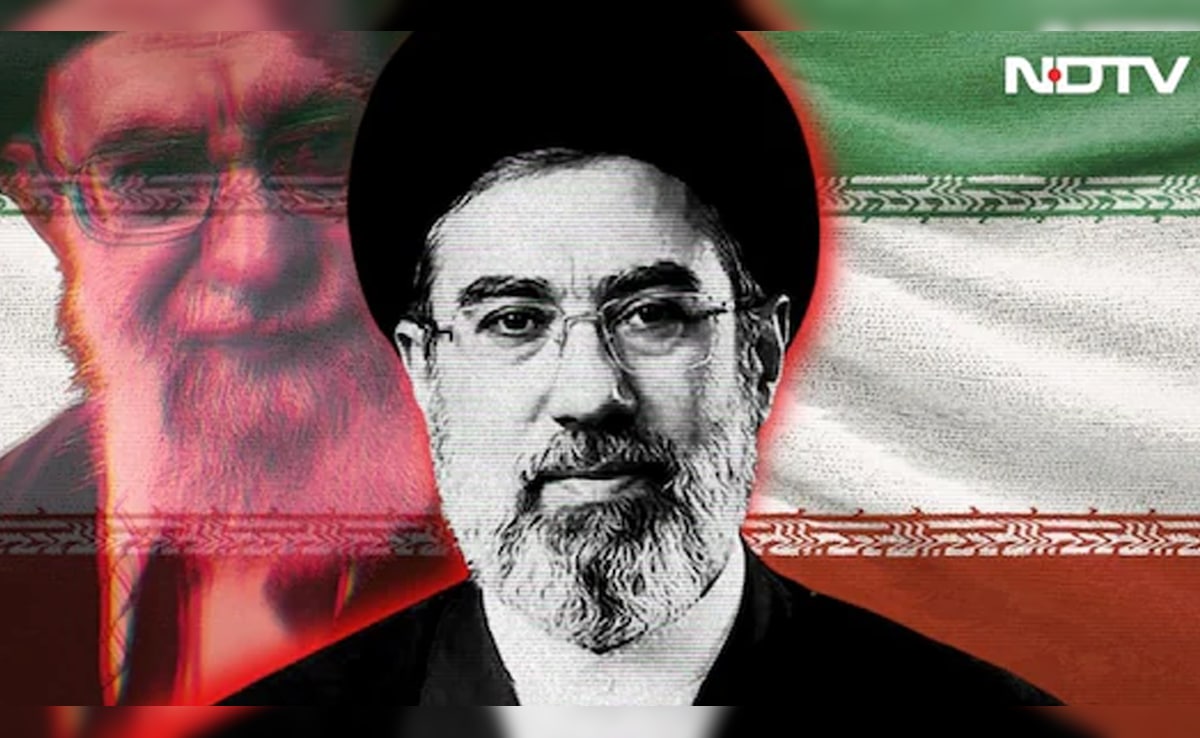
Military analysts love a good story about "leader-proof" machines. They see a decentralized command structure, a few thousand underground missile silos, and a swarm of cheap drones, and they immediately call it an "impenetrable fortress." They claim Iran has built a war machine designed to absorb every blow, suggesting that because it cannot be decapitated, it cannot be defeated.
They are wrong.
The "resilient" nature of Iran's military architecture isn't a sign of ultimate strength. It is a desperate adaptation to a fundamental, systemic weakness. By focusing on "absorbing blows," Tehran has built a military that is functionally a black hole for capital and innovation—a system that can survive a punch but can never actually win a fight. We are mistaking a hedgehog’s curl for an eagle’s talons.
The Decentralization Myth
The prevailing wisdom suggests that because the Islamic Revolutionary Guard Corps (IRGC) operates in autonomous cells, the "head" of the snake doesn't matter. The argument goes: kill a general, and ten colonels with local authority take his place.
In reality, extreme decentralization is a recipe for catastrophic friendly fire and strategic incoherence. I’ve watched defense contractors chase the "mesh network" dream for decades, only to realize that without a centralized cognitive layer, a distributed force is just a collection of confused actors. When communication goes dark, decentralized units don't magically coordinate; they hesitate. Or worse, they overreact.
Iran’s "leader-proof" design isn't about tactical efficiency. It’s about internal paranoia. The regime doesn't decentralize because it's better for winning wars; it decentralizes because it’s terrified of a domestic coup. A "leader-proof" military is, by definition, a military that cannot be steered. It is a rudderless ship that stays afloat but never reaches its destination.
The Low-Tech Trap
The world is currently obsessed with the Shahed drone. Because these "mopeds in the sky" are cheap and occasionally bypass sophisticated air defenses, pundits claim Iran has "hacked" modern warfare.
This is the "Quantity as Quality" fallacy.
Yes, a $20,000 drone hitting a million-dollar radar is a great headline. But it’s a tactical victory, not a strategic one. Iran has leaned so heavily into asymmetric, low-cost hardware that they have completely forfeited the ability to project power. They can harass. They can annoy. They can cause a spike in oil prices. But they cannot hold territory against a peer competitor, and they cannot stop a sustained, high-altitude systematic dismantling of their industrial base.
Imagine a scenario where a state-of-the-art electronic warfare suite—the kind currently being tested in the high-frequency ranges of the electromagnetic spectrum—is deployed at scale. Iran’s low-cost, off-the-shelf components lack the frequency-hopping sophistication of high-end Western or even Chinese systems. Their "resilient" drone swarm becomes a pile of falling plastic the moment the electronic environment gets "loud."
The Underground Sunk Cost
The "Cities of Missiles" buried deep beneath the Zagros Mountains are the ultimate symbol of this defensive obsession. Analysts point to these as proof that Iran is "strike-proof."
I call it the Maginot Line of the 21st century.
Building thousands of miles of tunnels is an astronomical drain on a sanctioned economy. This is capital that isn't going into semiconductor research, cyber-offensive capabilities, or satellite constellations. While Iran is busy digging holes, the rest of the world is moving toward space-based kinetic energy weapons and autonomous AI-driven interceptors.
By the time Iran’s "leader-proof" missiles leave their holes, the target has already moved, or the guidance system has been spoofed by a cyber-payload delivered months prior. You don't need to blow up a tunnel if you can rewrite the code of the missile sitting inside it.
The Human Factor: The Fragility of Zeal
The "absorb every blow" theory relies on the assumption of infinite human endurance and ideological purity. It assumes the IRGC rank-and-file will continue to operate their "resilient" cells even as the country’s economy collapses around them.
The data says otherwise. History shows that "resilient" defensive structures fail not from external kinetic force, but from internal rot. When a military is designed solely to "absorb," it eventually becomes a sponge saturated with its own blood. There is no glory in being a target.
We saw this in the Iran-Iraq war. Human waves and "unbreakable" resolve eventually hit a wall of cold, hard logistics and chemical reality. Modern Iran has simply digitized that human wave strategy with drones and missiles. It’s the same philosophy: throw enough "stuff" at the problem until the other side gets tired.
But the other side isn't getting tired. The other side is automating the response.
Why the "Leader-Proof" Concept is a Distraction
If you are a policymaker or an investor, do not be fooled by the "invincibility" of decentralized defense. The real question isn't "Can we kill the leader?" The question is "Can we make the system irrelevant?"
Iran’s war machine is designed to win a war that ended in 1990. It is designed for a slow, grinding, attritional conflict. It is utterly unprepared for a conflict defined by:
- Hyper-sonic delivery systems that render "absorptive" defenses moot.
- Quantum-resistant encryption (which Iran lacks) that protects command chains.
- Directed Energy Weapons (DEW) that make the "cheap drone" strategy economically non-viable for the attacker.
$Cost_{Defense} < Cost_{Attack}$
This simple inequality is what Iran relies on. But they are ignoring the shift in the curve. As laser interception costs drop to pennies per shot, the "cheap drone" math flips. Suddenly, the "resilient" swarm is just expensive target practice.
The Actionable Truth
Stop looking for the "center of gravity" in a decentralized military. You won't find one. Instead, look at the connective tissue.
A decentralized force is only as strong as its ability to synchronize. Don't attack the "nodes" (the missiles, the drones, the silos). Attack the "links" (the data protocols, the fuel supply chains, the ideological cohesion of the mid-level officers).
If you want to neutralize a "leader-proof" machine, you don't cut off the head. You poison the blood.
The Iranian military isn't a fortress. It's a bunker. And the problem with bunkers is that while they are very hard to get into, they are even harder to get out of. Tehran has buried its future in the sand, hoping the world will be too intimidated to keep digging.
Don't dig. Just seal the vents.