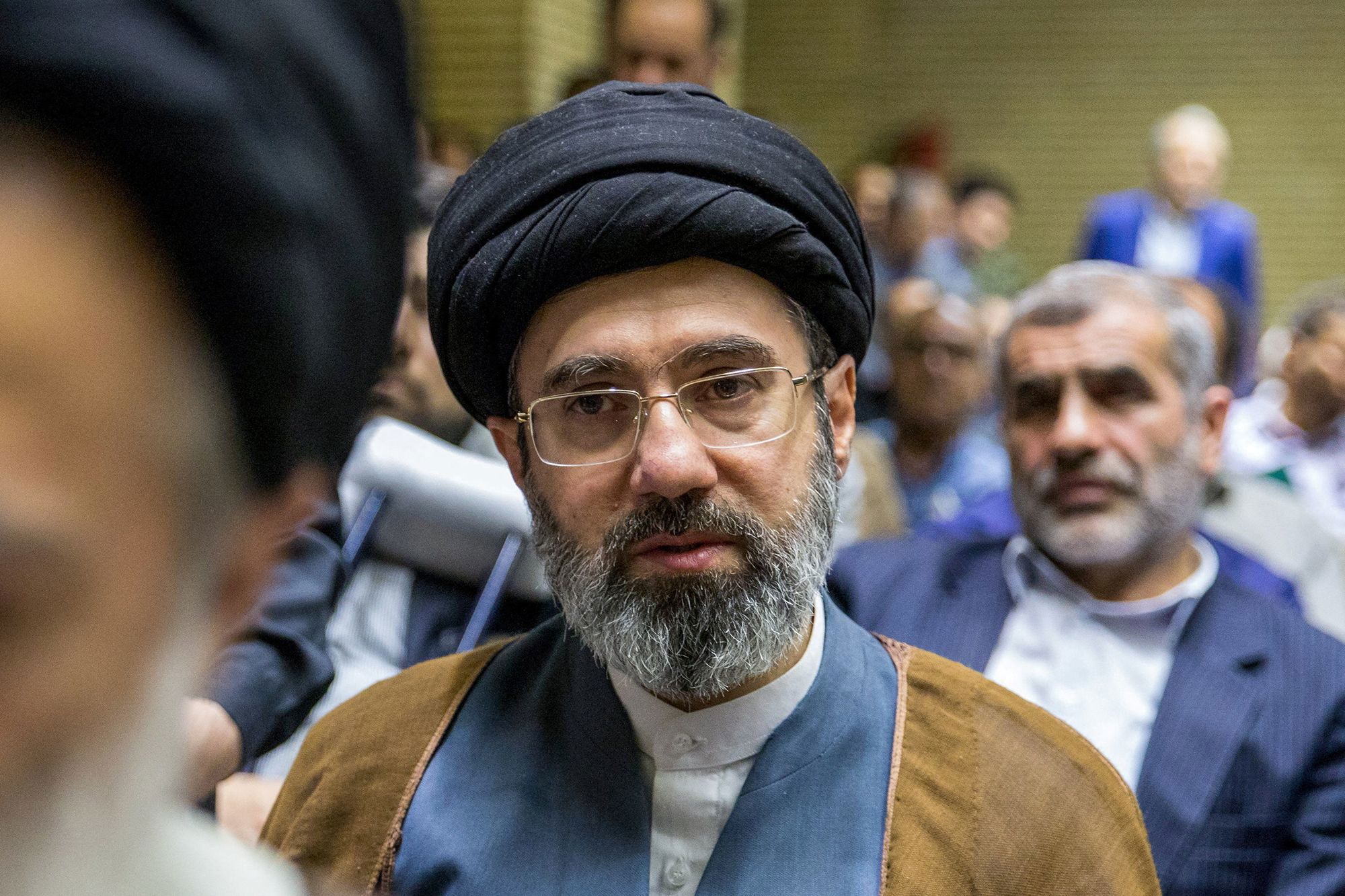
The headlines are screaming about a "big oil threat" from Tehran. They want you to panic. They want you to believe that a few sharp words from a newly inaugurated Iranian leader are enough to send Brent crude spiraling toward $150 and collapse the global economy.
It is a tired, predictable narrative. It is also fundamentally wrong.
Most analysts are stuck in 1973. They treat the Strait of Hormuz like a magical "off switch" for Western prosperity. I have sat in boardrooms where "geopolitical risk" is used as a convenient rug to sweep under-performance beneath. If the price of oil goes up, it’s "Iranian tension." If it goes down, it’s "Chinese slowdown." This lazy consensus ignores the mechanical reality of how energy markets actually function in 2026.
Iran’s "big oil threat" is not a weapon. It is a desperate marketing campaign for a regime that is increasingly irrelevant to the actual price at the pump.
The Paper Tiger of the Strait
The "lazy consensus" argues that Iran can shut down the Strait of Hormuz and starve the world of 20% of its oil consumption. Let’s dismantle that with logic.
Shutting the Strait is the geopolitical equivalent of a suicide vest. Iran’s own economy is on a ventilator, kept alive by "shadow fleet" exports mostly destined for China. If Tehran blocks the waterway, they aren't just blocking Exxon and Shell; they are blocking their own lifeblood. More importantly, they are blocking China’s supply.
Does anyone seriously believe Tehran will bite the only hand that feeds it?
Furthermore, the technical reality of "closing" a waterway in the age of satellite-guided munitions and carrier strike groups is a fantasy. It’s a temporary inconvenience, not a permanent blockade. The moment the first mine is dropped, the Iranian Navy ceases to exist as a cohesive force. The market knows this. Traders aren't pricing in a blockade; they are pricing in the fear of a blockade.
The $75 Floor
We have entered an era where oil prices are dictated by the Permian Basin and Brazilian offshore rigs, not the rhetoric of the Islamic Revolutionary Guard Corps.
When a leader in Tehran threatens to "disrupt" supply, they actually do the Western oil industry a massive favor. They provide a psychological floor for prices. Without these periodic outbursts of "geopolitical tension," the sheer volume of non-OPEC+ production would likely have driven prices into a sustained bear market years ago.
- US Production: Currently hitting record highs, regardless of who is in the White House.
- Efficiency Gains: The amount of oil required to produce one unit of GDP is cratering.
- The SPR: The Strategic Petroleum Reserve, while depleted, remains a potent psychological tool for stabilizing short-term spikes.
Iran’s threats aren't a danger to the West; they are a subsidy for American shale producers. Every time a "threat" hits the wire, it allows producers in Texas and North Dakota to hedge their production at higher prices, ensuring they stay in business longer.
The Myth of Iranian Market Leverage
The competitor’s article focuses on the "silence" being broken. It implies that silence was a sign of restraint.
Wrong. Silence was a sign of a lack of options.
Iran is currently pumping near its capacity—roughly 3.2 million barrels per day. They are already selling as much as they can through back channels to circumvent sanctions. They have no "spare capacity" to flood the market as a diplomatic carrot, and they have no economic cushion to withhold supply as a stick.
When you have no margin for error, your only remaining tool is volume. You shout because you cannot act.
The China-India Divergence
Common wisdom says Iran’s oil is essential for the East. The reality is that China and India have become masters at playing Russia against Iran.
- Discount Wars: Iranian crude has to compete with Urals. To sell a single barrel, Tehran has to offer steeper discounts than Moscow.
- Payment Friction: Dealing in Yuan or local currencies reduces the "petrodollar" power, but it also traps Iranian wealth in non-convertible assets.
- Refinery Specs: Global refineries have spent billions adapting to different grades. They aren't held hostage by Iranian heavy sour anymore.
The "People Also Ask" Delusion
If you look at what people are searching for, you see the same flawed premises: "Will gas prices hit $7 because of Iran?" or "How can I protect my portfolio from Middle East war?"
The brutal honesty? Your portfolio is more at risk from a 1% shift in Federal Reserve interest rate policy than it is from a dozen speeches in Tehran.
If you want to protect yourself, stop looking at the Strait of Hormuz and start looking at the copper-to-gold ratio or the global manufacturing PMI. The "oil threat" is a distraction for retail investors. The big money has already moved on to the reality that we are in a period of structural oversupply.
The Danger of Your Own Bias
I’ve seen traders lose fortunes betting on "the big one"—the conflict that finally sends oil to the moon. They forget that high prices are the best cure for high prices. The moment oil sustains a price above $100, demand destruction kicks in, EV adoption accelerates, and marginal wells in Canada suddenly become profitable.
The contrarian truth is that the Iranian leadership needs the world to believe they are dangerous. They need the "threat" to maintain domestic legitimacy and to keep their seat at the negotiating table.
If we actually ignored them, their leverage would vanish.
The Logistics of a Failed Threat
Imagine a scenario where Iran actually attempts a "big" move. They harass a tanker. They seize a ship.
In the old world, that meant a 10% jump in crude. In the current world, it means insurance premiums for tankers in the Gulf go up for forty-eight hours, and then the market realizes that there are millions of barrels of oil sitting in floating storage and onshore tanks in Asia.
The world is drenched in oil.
The transition to a multi-polar energy world means the "choke point" strategy is obsolete. We have pipelines bypassing the Strait. We have the Northern Sea Route opening up. We have a massive surge in renewable baseload power that reduces the "emergency" need for oil in power generation.
Stop Listening to the Noise
The next time you see a headline about an Iranian leader "breaking silence" with a threat, do the opposite of what the article suggests.
Don't buy the dip in oil stocks based on "war fever." Don't dump your transport shares.
Understand that you are witnessing a performance. It is a play written for an audience of one: the Iranian hardliners. The rest of the world is just the accidental witness to a dying strategy.
The real threat isn't that Iran will stop the oil. The real threat is that the market will realize it doesn't care if they do.
Iran is shouting into a storm of its own making, and the world has already put on its headphones.
Would you like me to analyze the specific impact of the latest Saudi-Russian production quotas on this Iranian dynamic?