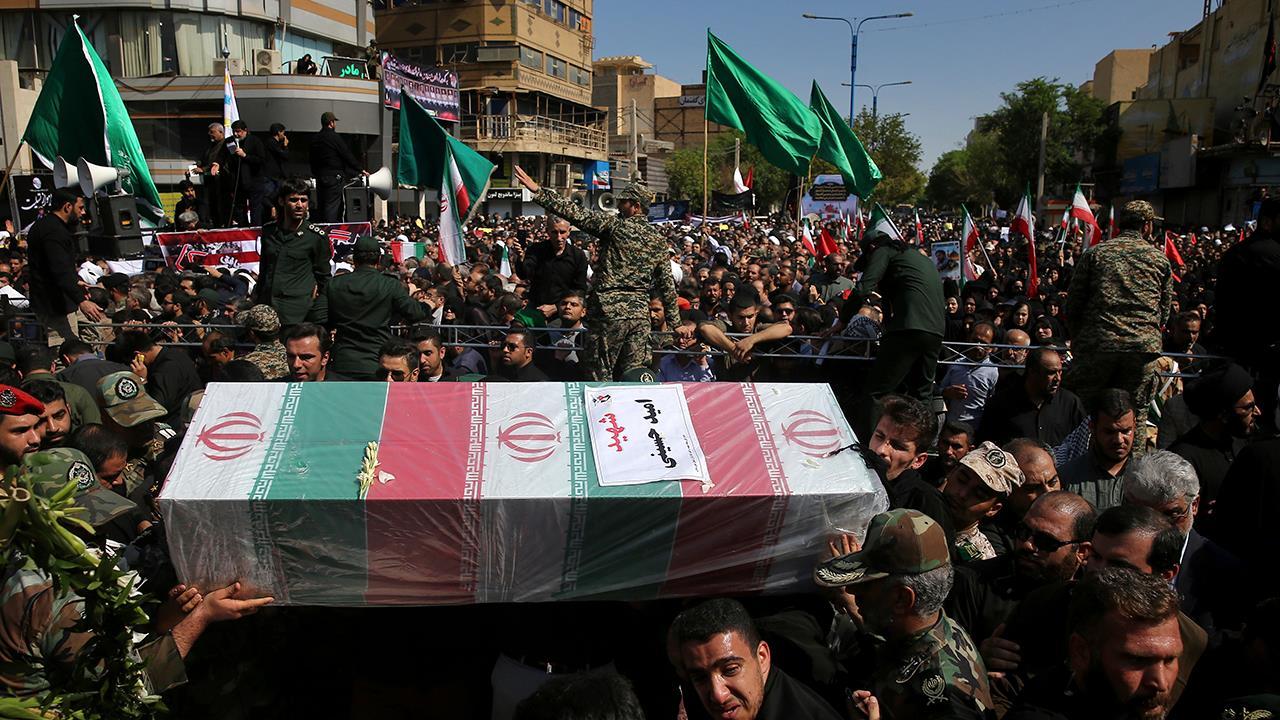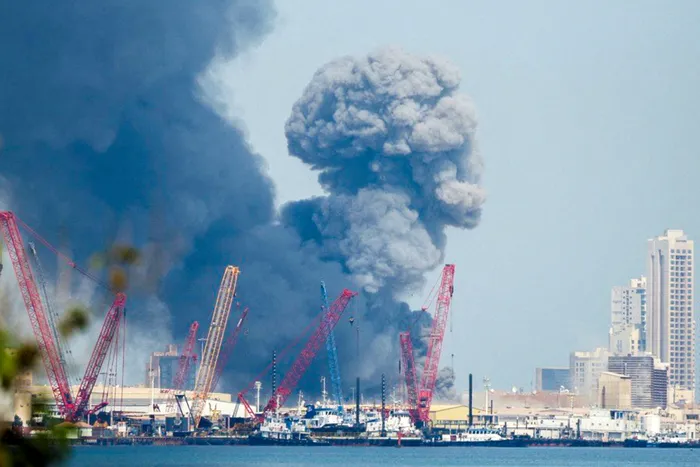
The reality on the ground in the Middle East shifted violently this weekend. Following a joint military campaign by the United States and Israel on February 28, 2026, Iran didn't just rattle its sabers. It launched a massive, multi-front wave of retaliatory strikes.
This isn't just another flare-up in a long-standing conflict. It's a fundamental break from the containment strategy that defined regional dynamics for years. When you look at the map of strikes—hitting targets in Bahrain, Kuwait, Qatar, Saudi Arabia, the UAE, and Jordan—you realize this wasn't a symbolic gesture. It was a direct attempt to overwhelm regional security architecture and bring the fight directly to US assets.
The Shift From Proxy Wars to Direct Confrontation
For years, we’ve talked about Iran’s "Axis of Resistance." It was a neat way to describe how Tehran projected power through proxies like Hezbollah or the Houthis while maintaining a degree of separation. That distinction is gone.
By targeting the US Fifth Fleet headquarters in Bahrain and major airbases like Al Udeid in Qatar, Iran has signaled a move toward a high-intensity, direct confrontation. The scale of the "Truthful Promise 4" operation, as Tehran calls it, involved hundreds of drones and ballistic missiles. They aren't hiding behind intermediaries anymore. They’re shooting directly at the superpower that just decimated their leadership structure, including the killing of Supreme Leader Ali Khamenei.
Why The Previous Security Assumptions Failed
If you’ve been following Middle East defense, you know the conventional wisdom. We always assumed that the US, along with its Gulf partners, had enough integrated air and missile defense—the Patriot systems, the THAAD batteries, and regional radar sharing—to keep the damage to a manageable level.
But this weekend showed something different. While many of the incoming munitions were intercepted, the sheer volume of attacks forced those systems to their limits. We’ve seen damage to civilian infrastructure, including airports in Dubai and Kuwait, and confirmation from US Central Command that three American service members have been killed in action.
This forces us to rethink everything about base vulnerability. These bases were designed to project power outward. Now, they are magnets for incoming fire from all directions. The "home front" of this war isn't just in Tehran; it's in every major city across the Persian Gulf.
The Economic and Geopolitical Fallout
This isn't happening in a vacuum. The region's stability was the bedrock of its massive investment in tourism and commerce. When you see smoke rising from luxury hotels on Dubai’s Palm Jumeirah or watch the closure of international airspace over Kuwait and Iraq, you’re watching the evaporation of that "safe haven" brand.
The oil markets are already reacting. OPEC Plus has announced an increase in production, trying to get ahead of the inevitable price shocks. But that’s a bandage on a gunshot wound. If the Strait of Hormuz becomes a primary combat zone—and the targeting of vessels near the UAE suggests that’s already starting—the global energy price environment will become incredibly volatile.
What You Need to Watch Next
Don't buy into the idea that this is just a short-term exchange. Both sides are fully committed. The US and Israeli objective is clear: they are pursuing a regime disruption campaign intended to topple the current Iranian government. They’ve spent months planning this, hitting deep into Iran’s geographic depth, from missile facilities in Qom to the IRGC headquarters in Tehran.
For the average observer, the immediate next steps are:
- Monitor the Strait of Hormuz. If commercial traffic stops, watch for rapid, sharp spikes in global commodity prices.
- Observe the Gulf States. Are they continuing to allow their territory to be used for US operations, or are they feeling too exposed? Saudi Arabia, Bahrain, and the UAE are in a precarious position, forced to balance their security dependence on the US against the existential risk of Iranian missile salvos.
- Track the "Decapitation" Campaign. The US and Israel are not stopping their strikes on Iranian military and internal security leadership. If the regime can't stabilize its own internal security apparatus, the vacuum will only lead to more unpredictable, desperate military moves from mid-level commanders.
The era of "managed" tensions is over. We’re in an active war, and the stakes for everyone involved—military and civilian alike—just hit a new ceiling. Keep your eyes on the operational reality, not just the official statements. The facts are written in the air defenses, the closed flight paths, and the movement of naval strike groups.