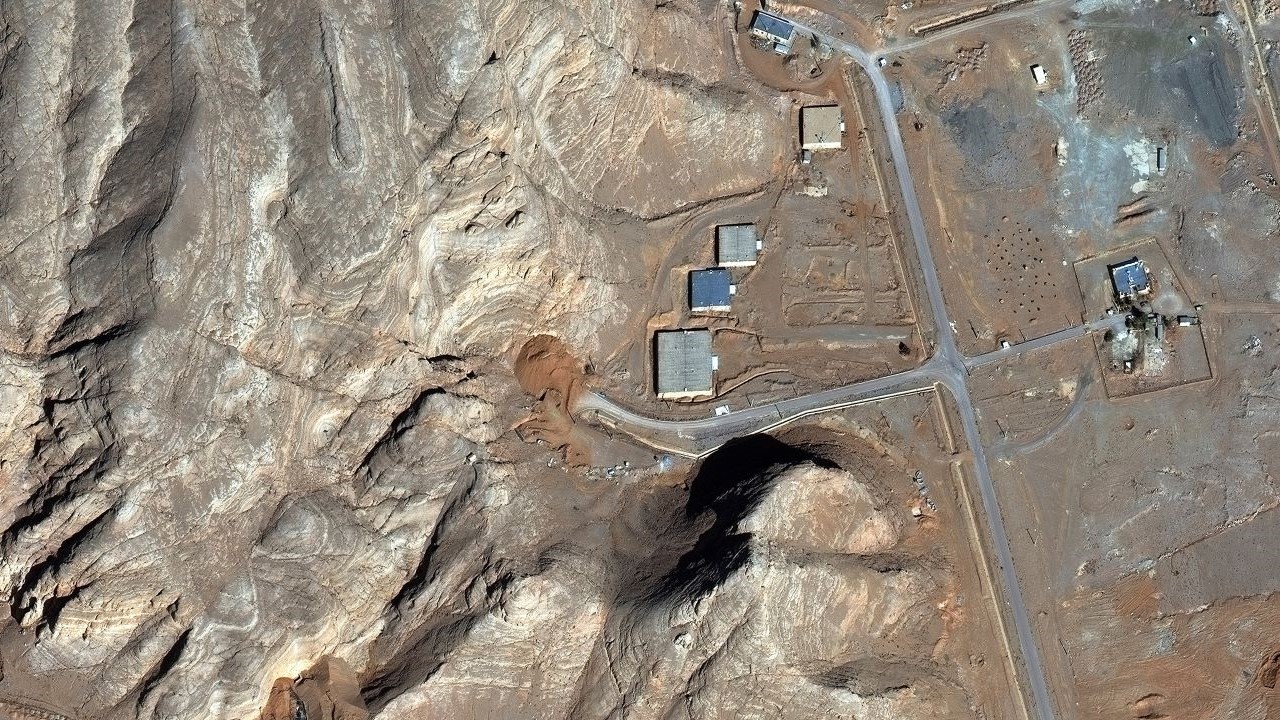
The operational reality of Iran’s ballistic missile program stands in stark contrast to the political rhetoric regarding its reach. While recent statements from the White House suggest that Tehran is on the precipice of possessing Intercontinental Ballistic Missile (ICBM) capabilities, the technical metrics, intelligence assessments, and physical constraints of rocket science paint a different picture.
To understand the threat, one must distinguish between theater-range systems and strategic global-reach platforms. Iran currently maintains the largest ballistic missile arsenal in the Middle East, yet its systems are designed for regional denial, not intercontinental strike.
The Taxonomy of Range
Ballistic missiles are categorized by their range, which dictates their strategic utility. The physics of flight determines that range is a function of thrust-to-weight ratio, fuel mass fraction, and payload mass.
- Short-Range Ballistic Missiles (SRBM): Up to 1,000 km. These are tactical assets, designed to strike forward-deployed forces or neighboring countries.
- Medium-Range Ballistic Missiles (MRBM): 1,000 to 3,000 km. Iran’s current operational arsenal, including the Shahab-3 and Sejjil, largely occupies this space. These assets hold Israel and U.S. regional bases at risk.
- Intermediate-Range Ballistic Missiles (IRBM): 3,000 to 5,500 km.
- Intercontinental Ballistic Missiles (ICBM): Exceeding 5,500 km. To reach the United States from Iran, a missile would require a range significantly exceeding 10,000 km.
The jump from MRBM to ICBM is not merely a matter of adding more fuel. It requires an exponential increase in engineering complexity, specifically in multi-stage separation, guidance at hypersonic speeds, and—critically—re-entry vehicle (RV) survivability.
The Re-Entry Vehicle Bottleneck
Iran’s state-aligned media often cites development of systems with ranges exceeding 10,000 km. These claims conflate rocket lofting with weaponized delivery.
A Space Launch Vehicle (SLV), which Iran has successfully used to orbit satellites, provides a dual-use foundation. Launching a satellite into orbit requires immense thrust, similar to an ICBM. However, an ICBM must perform a "combat delivery"—it must survive the extreme heat and mechanical stress of atmospheric re-entry while maintaining trajectory accuracy to strike a target. An SLV is designed to reach orbit, not return through the atmosphere. Iran lacks demonstrated, flight-tested re-entry vehicles capable of surviving the atmospheric re-entry associated with intercontinental strikes. Without this specific technology, a long-range rocket is a scientific experiment, not a weapon of war.
Intelligence Assessments and Timeline Divergence
The gap between executive branch claims and intelligence assessments is quantifiable. As of early 2026, the consensus within the U.S. Defense Intelligence Agency (DIA) remains consistent with 2025 reporting: Iran does not possess a militarily viable ICBM.
The DIA’s projection that Iran could theoretically achieve such a capability by 2035 is conditional—it assumes Iran prioritizes the diversion of resources toward an ICBM program over its current regional posture. Three factors constrain this timeline:
- Industrial Attrition: Previous strikes on Iranian infrastructure in 2025 significantly damaged key missile production sites. Reconstruction is currently the operational priority, not rapid scaling of new, untested long-range systems.
- Resource Allocation: Tehran currently focuses on rebuilding its regional deterrent (SRBMs/MRBMs) to secure its borders and influence, rather than investing the massive capital required for an ICBM program that would take nearly a decade to manifest.
- External Technology Dependencies: Development of sophisticated guidance and propulsion systems remains reliant on imported components. The supply chain for these specialized materials is monitored and contested by international sanctions.
The Strategic Signaling Logic
Why would the executive branch emphasize an imminent ICBM threat when intelligence data points to a multi-year gap? The answer lies in the mechanics of deterrence.
Naming a specific, existential threat allows for the framing of military buildup as a preventive necessity rather than an escalation. By shifting the conversation from "regional annoyance" to "global vulnerability," policy makers compress the strategic timeline. Tehran, conversely, benefits from the ambiguity of its own claims. By allowing speculation about 10,000 km missiles to circulate, Iran attempts to increase its perceived leverage in diplomatic negotiations without actually incurring the massive technical and economic costs of building an operational ICBM.
Both parties are utilizing a concept known as "threat inflation." In the context of national security, the threat of an ICBM serves as a powerful instrument to justify massive naval and aerial deployments in the Persian Gulf.
Operational Conclusion
The assertion that Iran will soon possess the capability to strike the U.S. mainland lacks empirical grounding in 2026. The technical requirements for an ICBM—specifically the successful development and testing of a re-entry vehicle—remain unaddressed by current Iranian research and development cycles.
For risk managers and analysts, the actionable intelligence is to differentiate between declaratory capability (what Iran claims) and operational capability (what the physics and intelligence assessments confirm). Strategic planning should proceed based on the high probability of continued regional escalation and the low probability of a direct intercontinental strike capability within the current five-year window. The primary threat remains Iran’s ability to project force against regional assets, not its capacity to reach the continental United States.