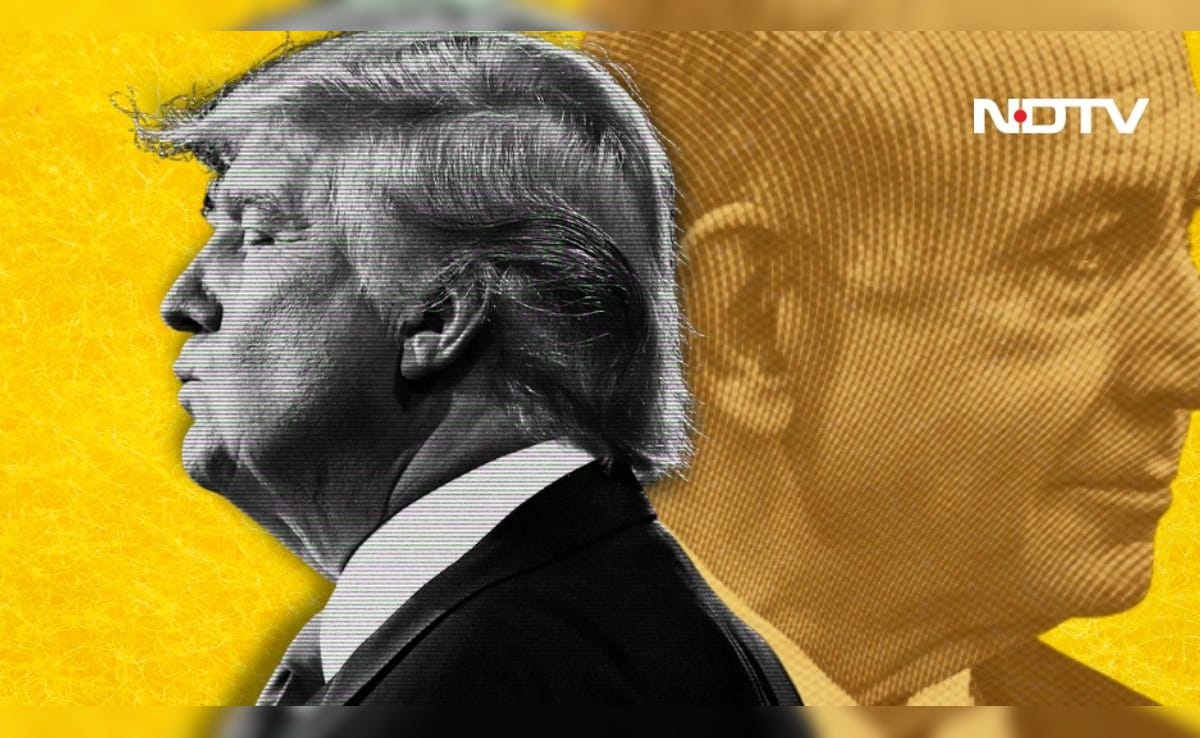
Donald Trump wants out. He’s made no secret of it. The campaign trail was a long loop of promises to "stop the madness" and end the "endless wars" that have drained American pockets and patience for decades. But there's a massive, turbaned obstacle standing in the way of that clean break. Tehran isn't interested in a "pause" that only benefits Washington.
If you think the Islamic Republic will just sit back and let the U.S. pivot to China or focus on domestic oil drilling while the Middle East remains a powder keg, you’re miscalculating. Deeply.
The reality on the ground in 2026 is messier than a campaign slogan. Trump’s "America First" 2.0 strategy faces an Iranian leadership that views a U.S. exit not as an opportunity for peace, but as a moment of maximum vulnerability. They’ve spent forty years building a "Ring of Fire" around Israel and American interests. They aren't about to extinguish it just because there’s a new—or old—face in the Oval Office.
The Illusion of the Easy Exit
Washington loves the word "de-escalation." It sounds professional. It sounds like a plan. In reality, it’s often just code for "we’re tired and want to go home." But the Middle East isn't a movie you can just walk out of when the plot gets boring.
Iran's strategy is built on staying power. While U.S. administrations flip-flop every four to eight years, the Supreme Leader’s office plays a game measured in generations. They saw how the 2020 "Maximum Pressure" campaign worked. It squeezed their economy, sure. It sent the rial into a tailspin. But it didn't break the regime. Instead, it pushed them closer to Moscow and Beijing, creating a tri-polar defiance that Trump didn't have to deal with in his first term.
Now, the leverage has shifted. Iran is closer to a nuclear breakout than ever. Their drone technology, tested and refined on Ukrainian battlefields via Russian exports, is no longer a DIY project. It’s a sophisticated threat that can swarm U.S. bases in Iraq and Syria at a moment's notice. Trump wants to "pause" the war? Iran wants to know what's in it for them. If the answer is "more sanctions," then the "pause" will be punctuated by ballistic missiles.
Proxies are Not a Dial You Can Turn Down
One of the biggest mistakes Western analysts make is treating groups like Hezbollah, the Houthis, and Kata’ib Hezbollah as simple remote-controlled toys. It’s more complicated. Tehran provides the kits, the cash, and the commands, but these groups have their own local survival instincts.
Take the Houthis in Yemen. They’ve effectively turned the Red Sea into a no-go zone for global shipping. They’ve proven they can withstand years of Saudi bombing and U.S.-led naval strikes. If Trump tries to negotiate a grand bargain with Tehran, he’s still left with "The Resistance" which thrives on conflict.
Peace is bad for their business.
For Iran, these proxies are a defensive depth. They are the insurance policy. If Trump moves to "pause" the friction, he’s asking Iran to disarm its most effective tools of regional influence without offering a seat at the table that acknowledges their dominance. That’s a non-starter for the IRGC. They don't want a pause; they want a surrender.
The Nuclear Clock is Ticking Faster
We have to talk about the uranium in the room. The JCPOA is a ghost. The "Snapback" sanctions are a memory. Today, Iran’s enrichment levels are so high that the leap to weapons-grade material is a matter of days, not months.
Trump’s previous approach was to tear up the deal and wait for a "better one." It never came. Now, he faces a version of Iran that has learned it can survive under the harshest Western limits by selling oil to China through "ghost fleets" and trading drones for Russian Su-35 fighter jets.
The leverage is gone.
If Trump tries to ignore the Middle East to focus on the border or trade wars with Europe, he risks waking up to a nuclear-armed Iran. That would trigger a regional arms race that makes the current instability look like a playground spat. Saudi Arabia won't sit idly by. Neither will the UAE. The "pause" Trump wants would instantly evaporate as the U.S. gets dragged back in to prevent a nuclear exchange.
The Abraham Accords vs The Iranian Reality
There’s a lot of talk about expanding the Abraham Accords as a way to "stabilize" the region so the U.S. can leave. It’s a solid idea on paper. Get the Saudis and Israelis to shake hands, build a regional air defense shield, and let them handle the "Iran problem."
But Iran knows this.
Their entire foreign policy right now is dedicated to sabotaging that normalization. The October 7th attacks and the subsequent regional fires weren't just about Gaza. They were a violent veto against a U.S.-led regional order. By keeping the fire burning in Lebanon, Yemen, and Iraq, Iran ensures that the "cost" of normalization remains too high for Arab capitals to pay.
You can't build a new Middle East architecture while the old one is still screaming. Trump’s team thinks they can resume where they left off in 2020. They can't. The scar tissue is too thick.
The Russia China Factor Changes Everything
In 2017, Iran was relatively isolated. In 2026, they are a key node in an anti-Western axis.
When Trump talks about "pausing" the war, he’s not just dealing with Ayatollah Khamenei. He’s dealing with a country that provides the literal wings for Russia’s war in Europe. He’s dealing with a country that China views as a vital energy source and a strategic thorn in the side of American hegemony.
Any move Trump makes against Iran now has ripples in the South China Sea and the Donbas. This isn't a regional theater anymore. It’s a global one. If Trump tries to squeeze Tehran, Putin has every incentive to give Iran the air defense systems (like the S-400) that would make a military "pause" impossible to enforce.
Why a "Grand Bargain" is a Pipe Dream
Some folks in the MAGA circle suggest Trump should just sit down with the Iranians and "do a deal." He’s a dealmaker, right?
The problem is trust. Not just moral trust, but functional trust. Iran saw the U.S. walk away from a signed, UN-verified agreement. They aren't going to sign anything with a man who might be replaced in four years by someone who will tear it up again.
On the flip side, Trump can’t give Iran what they really want: the total removal of U.S. forces from the region and a free hand in Iraq and Syria. The political cost at home would be suicide. He’d be accused of "handing the keys to the mullahs."
So we’re stuck.
A "pause" requires two people to stop moving. Iran is still sprinting. They see the finish line—a Middle East where the U.S. is a distant memory and Tehran is the undisputed heavyweight.
The Hard Truth About Staying Put
Trump might hate it. His base might hate it. But the "exit" is a door that Iran has barred from the other side.
The U.S. presence in the Middle East today isn't about nation-building or spreading democracy anymore. It’s about damage control. It’s about keeping the Straits of Hormuz open so the global economy doesn't collapse. It’s about ensuring ISIS doesn't use the chaos of a U.S. withdrawal to rebuild its caliphate.
If the U.S. pulls back, the vacuum won't be filled by "stability." It will be filled by IRGC Quds Force commanders and drone factories.
Practical Realities for the Next Four Years
If you're looking for a clean break, you won't find it here. The best the Trump administration can hope for isn't a "pause" but a managed friction.
First, the administration has to accept that the "Maximum Pressure" 1.0 tactics are outdated. You can't sanction a country that has already built a parallel economy with the world’s second-largest superpower. New strategies must involve breaking the Iran-Russia military link, which is easier said than done.
Second, the U.S. has to stop pretending the proxy war is separate from the nuclear issue. They are the same. Iran uses the proxies to buy time for the nukes, and uses the threat of nukes to protect the proxies. You can't solve one without the other.
Finally, realize that Iran’s internal politics are at a breaking point. The transition of power after Khamenei is looming. This creates a "danger zone" where the regime might become even more aggressive to project strength during a domestic crisis.
Trump wants to go home. Iran wants him to stay—just long enough to bleed.
The most important thing for any observer to track right now isn't the rhetoric coming out of Mar-a-Lago, but the enrichment levels in Natanz and the missile shipments to the Houthi-controlled ports. Those are the real metrics of whether a "pause" is even possible. Watch the frequency of drone attacks on U.S. logistics hubs in Jordan and Syria. If those numbers go up while Trump talks about peace, you know the "exit denied" sign is lit up in bright neon.
There is no shortcut. There is no easy deal. There is only the long, grinding reality of a regional power that refuses to let the superpower leave the room. Expect more "kinetic events" and less "pausing." That's the messy truth of the Middle East in 2026. Keep your eyes on the CentCom briefings, not the campaign tweets. The gap between the two is where the next crisis will live.