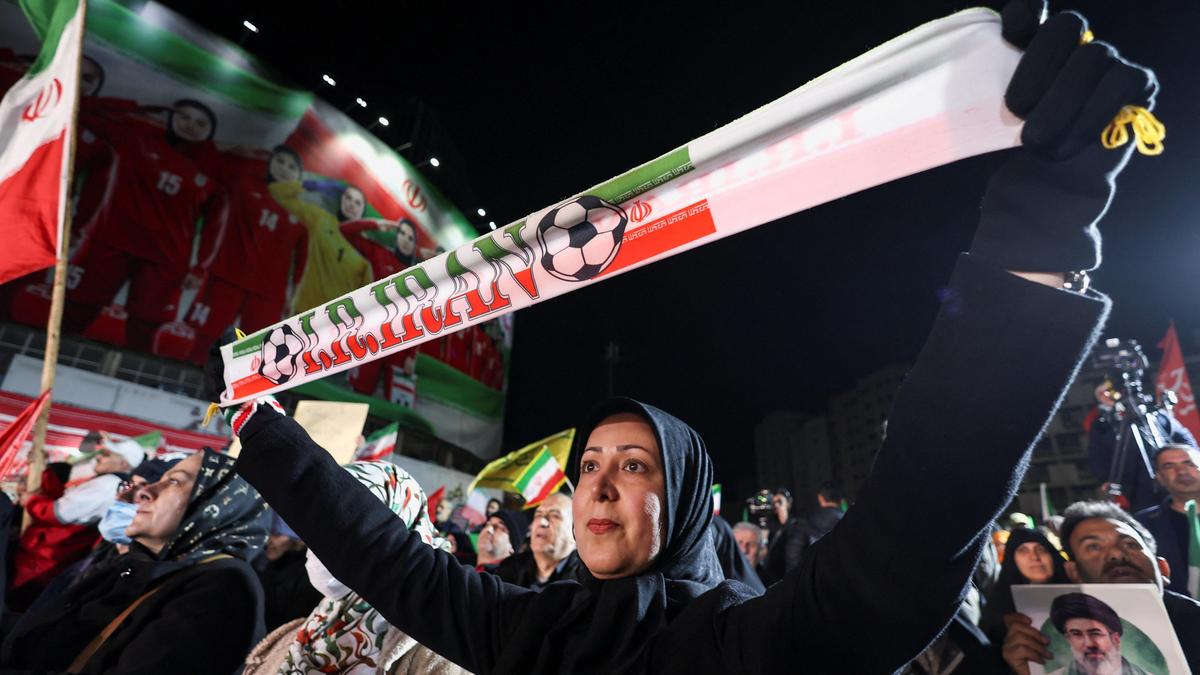
The sight of several thousand people packed into Tehran’s Valiasr Square on a Thursday evening usually signals a political rally or a religious milestone. This time, the focus was different. The Iran women’s soccer team, fresh from a tumultuous stint at the Women’s Asian Cup in Australia, stepped onto a stage that felt less like a sports gala and more like a high-stakes geopolitical statement.
It’s easy to look at the photos of players holding bouquets and signing mini-soccer balls and see a standard "welcome home" event. But look closer. You’re seeing a team that just navigated a psychological minefield. Between asylum bids, national anthem protests, and a literal war breaking out back home while they were on the pitch, this ceremony wasn't just about football. It was about a government trying to reclaim a narrative that had spiraled out of control.
The Australian standoff and the return to Tehran
The backdrop of this ceremony is a story that sounds more like a Cold War thriller than a sports report. While in Australia for the 2026 Women’s Asian Cup, six players and a staff member initially sought asylum. This wasn't a random decision. It followed a match against South Korea on March 2 where the team stood in stony silence during the national anthem.
In the hyper-political world of Iranian sports, silence is a scream. State media immediately labeled them traitors. When the team was knocked out of the tournament, the drama didn't end. Five of those who sought asylum eventually changed their minds, citing a desire to return to their "homeland."
When midfielder Fatemeh Shaban stood in Valiasr Square and told reporters she didn't expect such a massive crowd, she wasn't just being humble. She was likely relieved. The fear of "consequences"—a word often whispered by Iranian athletes abroad—was palpable. By throwing a hero's welcome, the Iranian authorities weren't just celebrating a team; they were signaling a "forgive and forget" policy, provided the athletes stay on script.
Why the government needed this ceremony
You have to understand the optics. The Iranian football federation president, Mehdi Taj, stood alongside the players and declared them "loyal to the homeland, flag, and leader." This is the core of the strategy. After weeks of international headlines about potential defections and "wartime traitors," the state needed a visual rebuttal.
- The Billboard Factor: A giant billboard in the square featured the players in their national kit and mandatory hijabs with the slogan "My Choice. My Homeland."
- The Safety Guarantee: Vice President Mohammad Reza Aref had already gone on record saying the government "welcomes its children with open arms."
- The Absence of Defectors: While the ceremony was loud, it was also incomplete. Fatemeh Pasandideh and Atefeh Ramezanizadeh remained in Australia, training with the Brisbane Roar. Their absence was the elephant in the square.
This wasn't just a sports celebration. It was a carefully choreographed effort to project stability during a period of intense domestic and international tension.
The Marziyeh Jafari era and tactical growth
If we push the politics aside for a second—though it's almost impossible—the actual football played by this team has improved. Under coach Marziyeh Jafari, the first Iranian woman to win AFC Coach of the Year, the "Persian Queens" have found a tactical identity.
Jafari didn't just inherit a team; she built a system that relies on mental toughness. This is a coach who has led Bam Khatoon to 11 league titles. She knows how to manage pressure. During the Asian Cup qualifiers, Iran didn't just scrape by; they topped their group by beating Jordan, Bhutan, and Singapore.
Key figures like captain Zahra Ghanbari and goalkeeper Raha Yazdani have become the spine of this squad. They aren't just playing against 11 opponents on the grass. They're playing against a lack of infrastructure, limited international friendlies, and the constant "emotional strain" of representing a nation in turmoil. When you see them at a ceremony in Tehran, you're seeing athletes who have mastered the art of compartmentalization.
The reality of women's sports in Iran
Don't let the Valiasr Square celebrations fool you into thinking the path is suddenly smooth. Iranian women are still barred from entering most stadiums as spectators. They still compete under strict dress codes that led to a three-year FIFA ban in the past.
The struggle is generational. The 2022 debut at the Asian Cup was a breakthrough, but 2026 has been a test of survival. The "SOS hand signals" reportedly seen from the team bus in Australia and the reports of families being pressured back home suggest that the "welcome ceremony" is only one side of the coin.
The players are caught in a pincer movement. On one side, they are symbols of resistance for activists. On the other, they are symbols of national pride for the state. Navigating that middle ground requires a level of poise that most professional athletes never have to develop.
What happens when the cameras turn off
The immediate goal for the Iranian football federation is to keep the remaining players in the fold. With the men's team facing potential issues ahead of their games in the United States, the women's team has become a litmus test for how the state handles "disloyal" athletes.
For the players who returned, the next few months will be about reintegration. They’ll likely return to their club teams—many to Bam Khatoon—and try to blend back into the domestic league. The government has promised security and "open arms," but the sports world is watching closely to see if that promise holds or if "multi-year bans" and "legal repercussions" start to leak out once the international spotlight dims.
If you want to support these athletes, keep watching their matches, not just their homecomings. The real story isn't the flowers in Tehran; it's the fact that despite everything, they keep showing up to the pitch.
Watch the AFC Women’s Champions League results for Bam Khatoon. That’s where you’ll see if the core of the national team is still being allowed to compete at the highest level. Keep an eye on the squad lists for the next international window in late 2026. If the stars who stood silent in Australia start disappearing from the roster, we'll have our answer about how "welcoming" that ceremony actually was.