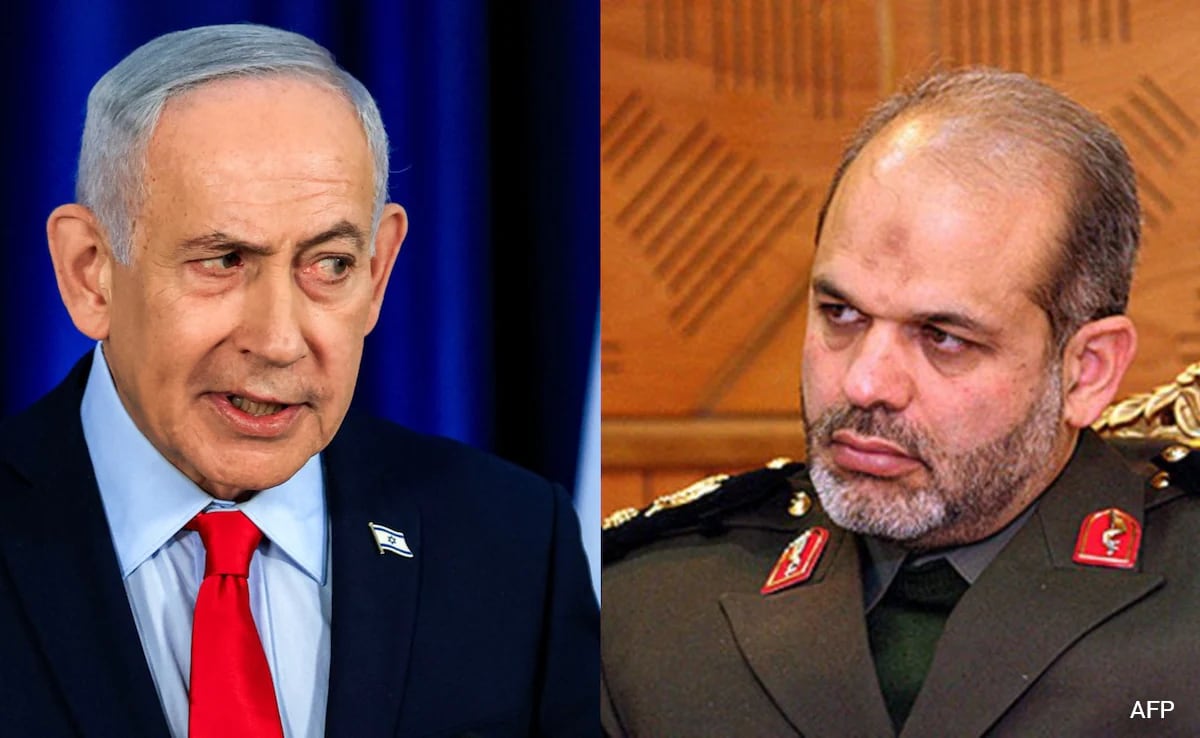
The red lines in the Middle East aren't just shifting; they're disappearing. Iran has issued its most direct threat yet, telling Israel that any continued targeting of civilians in Lebanon and Gaza will trigger "heavy" and "crushing" responses. This isn't just the usual rhetoric we've heard for decades. It's a fundamental change in how Tehran communicates its willingness to enter the fray directly rather than just through its network of regional allies.
When the Iranian leadership talks about "heavy" attacks, they aren't just referring to another volley of rockets from southern Lebanon. They're signaling a readiness to utilize the full weight of their ballistic missile arsenal and integrated drone tech. The message is clear. If the civilian death toll keeps climbing in Gaza and Beirut, the conflict won't stay local.
The Red Line Shift in Tehran
For years, Iran played a careful game of strategic patience. They'd fund, train, and arm the "Axis of Resistance" while keeping their own territory out of the direct line of fire. That's changing. The recent statements coming out of Tehran suggest that the Iranian leadership views the current Israeli operations as an existential threat to their regional influence.
Israel's military strategy has focused on "mowing the grass"—periodic strikes to degrade enemy capabilities. But the scale of the current civilian impact in Gaza and Lebanon has pushed Iran into a corner. If they don't act, they risk looking weak to their own proxies. If they do act, they risk a full-scale war with a nuclear-armed state backed by the U.S. Navy.
It's a high-stakes poker game where every card is on fire.
The Iranian military doctrine revolves around "deterrence through proxy." By threatening "heavy" attacks, they're trying to re-establish a balance of terror. They want the Israeli cabinet to look at the casualty counts in Gaza and realize that the cost of continuing might be a rain of missiles on Tel Aviv or Haifa. It’s a grisly calculation.
Why Gaza and Lebanon are Intertwined
You can't talk about one without the other anymore. The Iranian warning specifically links the fate of civilians in both territories. This tells us that Tehran views the northern and southern fronts as a single theater of war. From a strategic standpoint, this is a nightmare for Israeli defense planners.
- Shared Intelligence: Hezbollah and Hamas are increasingly sharing tactical data, often facilitated by Iranian advisors.
- Synchronized Escalation: When Israel pushes harder in Gaza, Hezbollah ramps up the pressure on the northern border.
- The Drone Factor: Iran's low-cost, high-impact suicide drones have changed the math for air defense systems like the Iron Dome.
The "heavy" attacks Iran mentions likely involve swarming tactics. We’ve seen this before. They use hundreds of cheap drones to saturate radar systems, followed by high-precision ballistic missiles. It’s a math problem. If you have 100 interceptors and I send 101 missiles, one gets through. In a dense city, one is enough.
The Civilian Cost as a Geopolitical Lever
Let’s be honest about the optics. Iran uses the "protection of civilians" as a diplomatic shield, but it's also a genuine pressure point. The images coming out of Gaza and Lebanon are fueling rage across the Islamic world. This rage gives Iran the political cover it needs to justify a direct intervention that would have been unthinkable five years ago.
Critics argue that Iran doesn't actually care about civilian lives, pointing to their involvement in the Syrian Civil War. While there's a lot of truth to that, in the context of the Israel-Palestine conflict, the civilian toll is the primary currency of international condemnation. Iran is simply cashing that check.
Israel, for its part, maintains that it takes every precaution to avoid non-combatants. They blame Hamas and Hezbollah for using human shields. Regardless of who you believe, the reality on the ground is a mounting body count that makes de-escalation almost impossible. Every funeral is a recruitment poster for the next generation of fighters.
Intelligence Failures and New Realities
The belief that Iran would always stay behind the curtain was a massive miscalculation. We saw this in April 2024 when Iran launched hundreds of drones and missiles directly from Iranian soil toward Israel. That event broke the seal. The "shadow war" is over. We’re in a period of "open hostility" where the rules of engagement are being written in real-time.
Iranian officials aren't just talking to Israel; they're talking to Washington. They know the U.S. doesn't want another forever war in the Middle East, especially during an election cycle or a period of economic uncertainty. By threatening "heavy" attacks, Iran is trying to force the U.S. to pull the leash on Israel.
What a Heavy Attack Actually Looks Like
If Tehran pulls the trigger, we aren't talking about a few skirmishes. We're talking about a multi-layered assault.
- Cyber Warfare: Expect massive disruptions to Israeli power grids, water systems, and financial institutions. Iran's cyber capabilities have grown exponentially.
- The "Ring of Fire": Simultaneous launches from Lebanon, Syria, Iraq, and Yemen. This forces Israel to defend on four different fronts at once.
- Direct Ballistic Strikes: The use of the Fattah hypersonic missile or similar long-range assets launched from central Iran.
This isn't just "war talk." The IRGC (Islamic Revolutionary Guard Corps) has been practicing these exact scenarios in the Great Prophet exercises for years. They've built "missile cities" underground to ensure their second-strike capability remains intact even if Israel hits back.
The Role of International Mediators
Qatar, Egypt, and even some European nations are scrambling. But how do you mediate between two sides that view each other's existence as a mistake? The Iranian warning basically tells mediators that the time for "quiet diplomacy" is running out.
The U.S. has moved carrier strike groups into the Mediterranean. That's a clear signal of "don't try it" to Tehran. But Iran's "heavy" attack threat suggests they might be willing to call the bluff. They're betting that the U.S. won't actually go to war for Israel if it means global oil prices hitting $150 a barrel and American soldiers coming home in boxes.
Preparing for the Unpredictable
The situation is volatile. If you're following this, stop looking for "victory" and start looking for "containment." There is no clean win here. There's only the hope that cooler heads—or at least more cynical heads—prevail before the "heavy" attacks become a reality.
Stay updated on the official movement of diplomatic staff and the issuance of "No Fly" zones over the Eastern Mediterranean. These are often the only real indicators that an escalation is minutes away rather than days. Watch the rhetoric from the Iranian Foreign Ministry. If the language shifts from "warning" to "imminent," the window for talk has officially closed.
Keep your eye on the civilian casualty reports from Lebanon. That seems to be the specific trigger Iran is watching. If a strike hits a high-occupancy residential building in Beirut, expect the "heavy" response to follow almost immediately. The cycle of violence is no longer a circle; it's a downward spiral.
Get your information from multiple sources. Don't rely on a single government's press release. The truth is usually buried somewhere between the propaganda of both sides. In a world of deepfakes and rapid-fire social media, wait for verification before reacting to "breaking news." The next few weeks will determine the map of the Middle East for the next decade.