You might think a conflict thousands of miles away in the Middle East only matters to oil traders and diplomats. It doesn't. If tensions between Iran and its neighbors or Western allies boil over into a full-scale war, the ripple effects will land right on your dinner table in India. We aren't just talking about a few paise added to petrol prices. We’re talking about the price of a cold beer after work and the bottled water you buy at the railway station.
The math is simple but brutal. India is one of the world's largest importers of crude oil. When things go south in the Persian Gulf, global oil prices don't just climb—they verticalize. Higher fuel costs mean every single truck moving glass bottles, malt, and plastic across Indian highways becomes more expensive to run. That cost doesn't just disappear. Companies pass it to you.
The hidden link between crude oil and your glass of beer
Most people forget that beer isn't just hops, water, and yeast. It's a massive logistics operation. Brewing companies in India, from United Breweries to the smaller craft labels, rely on a sprawling supply chain. When crude oil prices spike because of an Iran war, the cost of transportation for raw materials like barley and malt sky-roots.
Glass is another huge factor. Making beer bottles requires furnaces that run on intense heat, often powered by natural gas or fuel oil. If energy prices jump, the cost of the bottle itself rises. Then there’s the weight. Glass is heavy. Shipping thousands of crates of Kingfisher or Bira across states like Maharashtra or Karnataka requires massive amounts of diesel. When diesel prices go up, your local liquor store owner isn't going to eat that cost. They’ll hike the MRP.
It’s also about the packaging. Think about the plastic crates, the labels, and the shrink-wrap. Most of these are petrochemical derivatives. If oil prices stay high because of a blocked Strait of Hormuz, the base cost of producing anything plastic-related climbs. You’re paying for the war every time you pop a cap.
Bottled water and the plastic problem
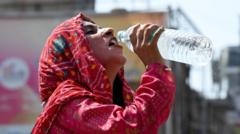
Bottled water is even more vulnerable than alcohol. Why? Because the "product" inside the bottle is incredibly cheap, meaning the packaging and transport make up the vast majority of what you pay. A bottle of Bisleri or Kinley is essentially a delivery mechanism for water.
The bottles are made from Polyethylene Terephthalate (PET). PET is a petroleum-based product. If the Middle East goes up in flames, the cost of raw plastic resins follows the price of oil. We've seen this before during previous supply shocks. Manufacturers see their margins evaporate overnight. To stay profitable, they have to raise prices by ₹2 or ₹5. That sounds small until you realize it’s a 10% or 20% jump for a basic necessity.
The Strait of Hormuz bottleneck
You've probably heard this name in the news. The Strait of Hormuz is a narrow waterway between Oman and Iran. It's the most important oil transit point in the world. About one-fifth of the world’s total oil consumption passes through here daily.
If Iran decides to shut down or even harass shipping in this strait, the global economy hits a wall. India gets a huge chunk of its crude from Iraq, Saudi Arabia, and the UAE. All that oil has to pass through that tiny gap. A war makes insurance premiums for these tankers skyrocket. Even if the oil keeps flowing, the "war risk" premium added by insurance companies makes every barrel more expensive before it even reaches an Indian refinery.
Why the Indian Rupee makes it worse for you
When global oil prices rise, India has to shell out more US Dollars to buy that oil. This puts immense pressure on the Indian Rupee. When the Rupee weakens against the Dollar, everything we import becomes pricier.
- Electronics and components
- Cooking oils (we import a lot of sunflower and palm oil)
- Fertilizer chemicals
This creates a secondary wave of inflation. Your beer gets pricier because of transport, but your snacks get pricier because the oil they’re fried in costs more to bring into the country. It’s a double whammy.
Lessons from history
Look at what happened during the initial months of the Russia-Ukraine conflict. While that was about wheat and gas, the immediate panic sent Brent crude toward $139 a barrel. India’s retail inflation breached the 7% mark shortly after. An Iran war is arguably more dangerous for India’s domestic prices because of our geographic proximity and our specific reliance on Persian Gulf stability.
The Indian government usually tries to cushion the blow by cutting excise duties on fuel, but there’s a limit to how much they can subsidize. If the conflict drags on, the fiscal deficit widens, and the government has less money to spend on infrastructure or welfare. Eventually, the consumer pays the price, either at the pump or at the grocery store.
The logistics of a thirsty nation
India’s beverage market is massive. We consume billions of liters of bottled water and soda every year. The sheer volume of movement is staggering. Most of this happens via road.
| Cost Factor | Impact of High Oil Prices |
|---|---|
| PET Resin (Plastic) | Direct increase in raw material cost |
| Glass Manufacturing | Higher energy costs for furnaces |
| Secondary Packaging | Increased cost for cardboard and plastic wraps |
| Last-Mile Delivery | Higher diesel costs for city distribution trucks |
Notice how every single step is tied to energy. It’s not just about the liquid inside. It's about the energy required to make the container, fill it, cool it, and move it 500 kilometers to your local kirana store.
How you can prep for the price hikes
You can't stop a war, but you can change your consumption habits before the prices hit the roof. If you see tensions escalating in the Middle East, expect a lag of about two to four weeks before it hits retail shelves.
- Check the labels. Large beverage companies often announce price hikes or "grammage" reductions (shrinkflation) when input costs rise. You might see the same price, but the bottle is suddenly 400ml instead of 500ml.
- Switch to bulk. For bottled water, buying 20-liter jars is significantly more cost-effective than individual 1-liter bottles. The "per liter" cost of packaging is much lower.
- Local over global. Local craft breweries might feel the sting slightly less if they source grain regionally, though they still can't escape the transport costs.
The reality is that India is tethered to the Middle East. Our energy security is their political stability. When that stability breaks, your wallet feels the heat. Don't wait for the news to tell you inflation is here. If you see tankers being seized or missiles flying in the Gulf, start budgeting for a more expensive lifestyle.
Stock up on non-perishables if you see the situation deteriorating. Keep an eye on the Brent Crude tickers on financial news sites. Once it crosses the $90 or $100 mark, the clock is ticking for Indian retail prices. It isn't just about geopolitics. It’s about the price of your next round of drinks.