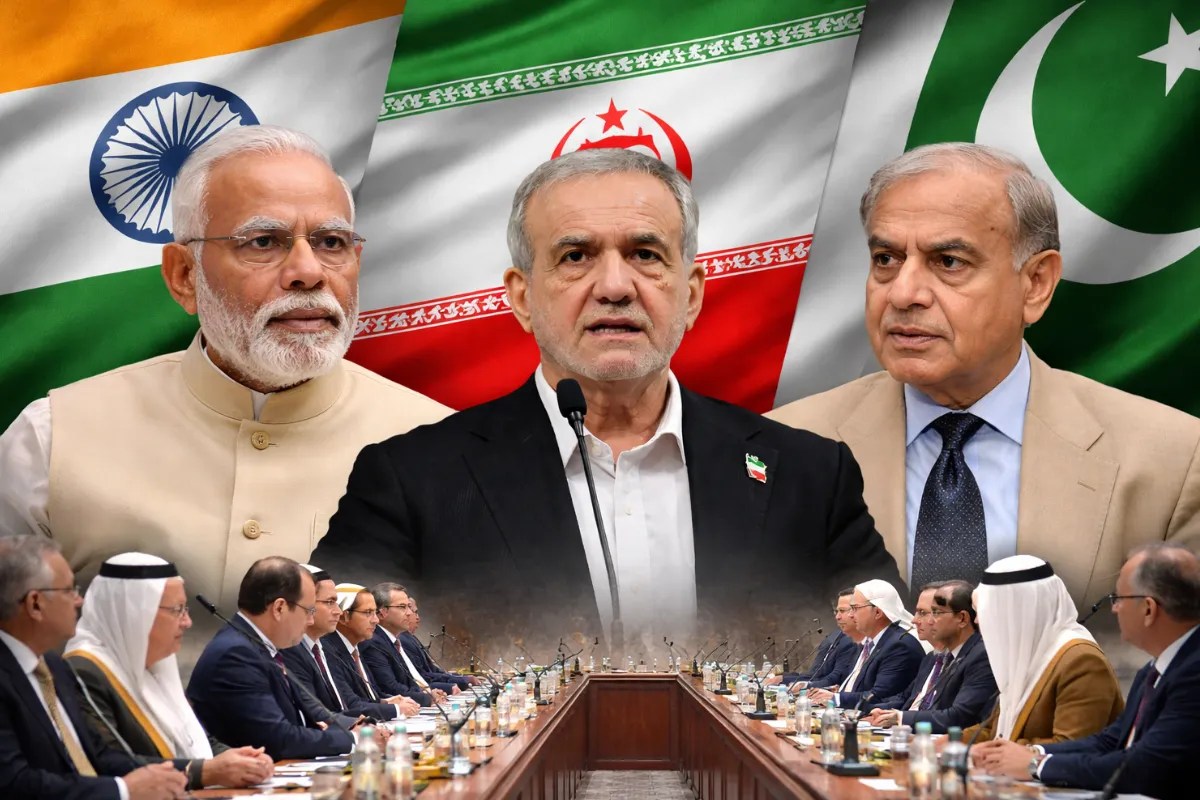
Geopolitics isn't about permanent friendships. It's about who you can trust when the bullets start flying or when the trade routes get choked. Right now, Tehran is sending a crystal clear message to the world. They're done playing second fiddle to Pakistan's internal instability and double-dealing. Instead, Iran is pivoting hard toward New Delhi. This isn't just a minor diplomatic shift. It's a massive realignment of power in the Middle East and South Asia that most analysts are still trying to wrap their heads around.
If you've been following the recent skirmishes and the tense "war-like" atmosphere between Iran and Pakistan, you know the vibe is off. Despite the public handshakes and the occasional joint statement, there’s a deep-seated rot in that relationship. Iran sees a Pakistan that is economically fragile and politically compromised. On the flip side, they see India as a stable, growing behemoth with the cash and the willpower to actually get things done.
The Trust Gap Between Tehran and Islamabad
Let's be real for a second. Iran has every reason to be skeptical of Pakistan. For years, the border between these two has been a hotbed for militant groups. While Pakistan claims it's doing its best to manage these factions, Tehran isn't buying it anymore. They see a pattern of negligence that feels a lot like tactical support for groups that destabilize the Iranian Sistan-Baluchestan province.
The recent exchange of missile strikes wasn't just a fluke. It was a boiling point. Iran decided to stop waiting for Islamabad's permission to handle threats on its doorstep. When you start launching missiles into a neighbor's territory, the "brotherly nation" narrative goes out the window. Pakistan's reliance on various international patrons—often those at odds with Iran—makes them a liability in Tehran's eyes. You can't be a reliable security partner if your foreign policy is constantly being dictated by whoever is signing your latest bailout check.
Then there's the economic side. Pakistan's economy is on life support. They've been struggling with inflation and debt for what feels like forever. Iran needs partners who can actually invest in infrastructure, not partners who are looking for a handout. The proposed gas pipeline between the two? It's been a ghost project for decades. Pakistan keeps stalling because they're afraid of US sanctions. Iran, meanwhile, has finished their side of the pipe and is tired of the excuses.
Why India Is the Only Logical Choice for Iran
India represents everything Pakistan currently lacks. Stability. Capital. A massive appetite for energy. But more importantly, India offers a way out of the geographical trap. For Iran, the Chabahar Port is the crown jewel of this relationship. It’s not just a dock; it's a middle finger to the traditional constraints of regional trade.
By partnering with India, Iran gets a direct line to one of the world's fastest-growing economies without having to go through the bottleneck of Karachi or Gwadar. For India, it's a shortcut to Central Asia and Russia, bypassing Pakistan entirely. This isn't just a win-win; it’s a strategic masterstroke that reshapes the International North-South Transport Corridor (INSTC).
The Chabahar Factor
You have to look at the numbers to see why this matters. India has committed millions to the development of Shahid Beheshti Terminal at Chabahar. We aren't talking about "maybe" money. We're talking about actual cranes on the ground and ships in the water.
- India has already supplied heavy-duty cranes and equipment to the port.
- Direct shipping lines are now operational between Indian ports like Mundra and Kandla to Chabahar.
- The transit time for goods heading to Europe via this route is nearly 40% shorter than the traditional Suez Canal route.
When Iran looks at India, they see a partner that follows through. Even when the US was piling on the "Maximum Pressure" campaign during previous administrations, India managed to secure a carve-out for Chabahar. That tells Tehran that New Delhi has the diplomatic weight to protect their shared interests. That’s a level of "clout" Pakistan simply doesn't possess on the global stage right now.
The War Pact and Regional Security
The "War Update" everyone is whispering about centers on a deeper security understanding. Iran knows that a conflict with Israel or further escalation in the Middle East requires a stable rear flank. If they can't trust Pakistan to keep the eastern border quiet, they have to find another way to balance the scales.
India’s policy of "strategic autonomy" fits perfectly here. India doesn't take orders from Washington or Riyadh blindly. They play their own game. Iran respects that. There are ongoing discussions about maritime security in the Arabian Sea and the Gulf of Oman. Iran wants to ensure that if a major conflict breaks out, its trade routes remain open. India, with its expanding navy, is the most capable non-Western power in the region to help ensure that.
Some people worry about India's close ties with Israel. They think it's a deal-breaker for Iran. It's not. In the world of high-stakes diplomacy, Iran understands that India can talk to everyone. If anything, India's relationship with Israel makes them a more valuable intermediary. If you want to de-escalate a situation, you don't go to the guy who only has one friend. You go to the guy who's invited to every party.
The Failure of the Islamic Block Narrative
For years, the idea of "Islamic Solidarity" was supposed to keep Iran and Pakistan in the same camp. That's dead. Religion doesn't pay the bills and it doesn't stop cross-border terrorism. Iran is a Shia-majority state; Pakistan is Suni-majority with a history of internal sectarian friction. These differences have been exploited by outside players for too long.
Iran's leadership is pragmatic. They’ve watched Pakistan's domestic chaos—the revolving door of prime ministers, the military's overreach, and the crumbling currency—and they've realized that betting on Islamabad is a losing game. They're looking for a state that functions like a modern power. India, despite its own internal challenges, is a secular democracy with a predictable foreign policy. That predictability is worth more than gold in the volatile Middle East.
What Happens Next on the Ground
Don't expect a formal "breakup" between Iran and Pakistan. That’s not how diplomacy works. They’ll still have meetings. They’ll still talk about the pipeline. But the energy and the resources are going to flow toward the East—toward India.
You should watch the rail link developments from Chabahar toward the Afghan border. That’s the real scoreboard. If India and Iran successfully connect that port to the Zaranj-Delaram highway, the geopolitical map changes forever. Pakistan’s leverage as the gatekeeper to Central Asia evaporates.
If you're an investor or a policy watcher, keep your eyes on the joint naval exercises. If we see Indian and Iranian vessels coordinating more closely in the North Arabian Sea, it's a signal that the security architecture has shifted. The era of Iran relying on its immediate neighbors for security is over. They’ve realized that sometimes, the best neighbor is the one a few thousand miles away who actually has their act together.
Get ready for more "security agreements" that look a lot like a slow-motion exclusion of Pakistan from the regional power grid. Tehran has made its choice. They're betting on the tiger, not the neighbor who can't keep his own house in order. Stop looking at the religious rhetoric and start looking at the port traffic and the defense contracts. That’s where the real story is written.