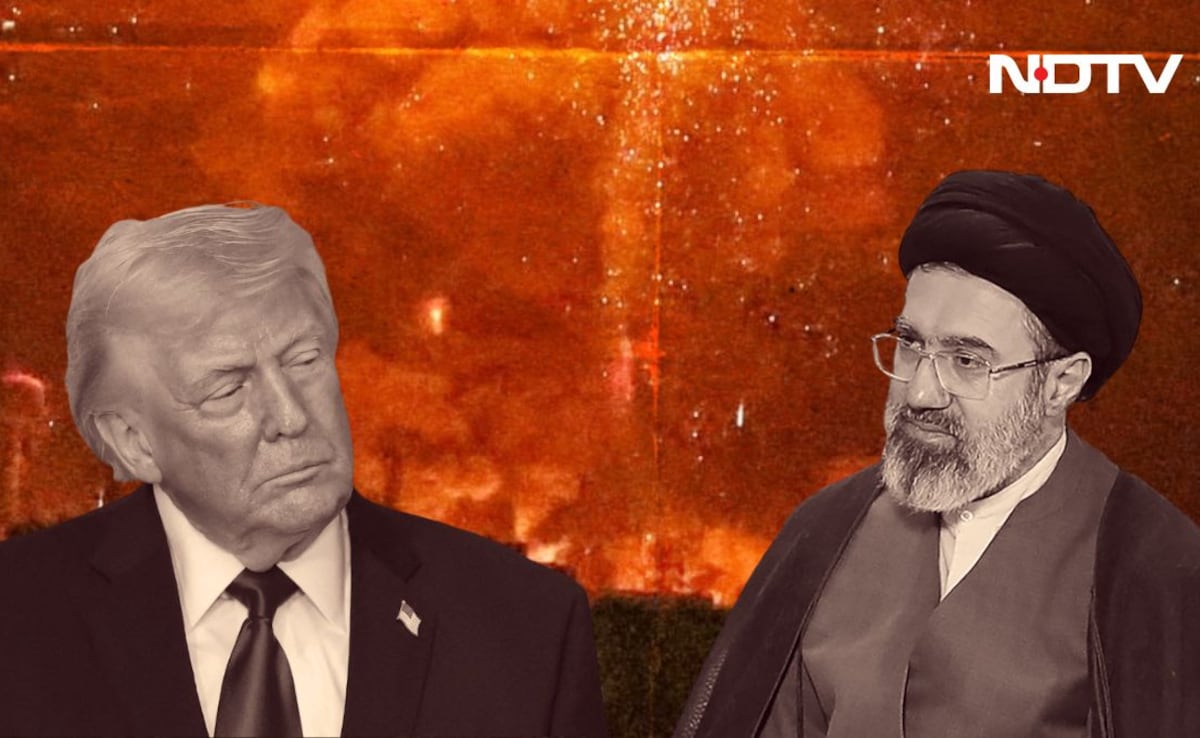
The media likes a simple story. Trump cancels a strike on Iran at the last minute; Iranian state-run outlets mock him as weak; the Western press pearls its collective necklace over a "humiliated" superpower. It is a neat, linear narrative that satisfies the craving for instant geopolitical karma.
It is also completely wrong. For a different perspective, check out: this related article.
When you see a headline claiming a nation "burst out laughing" at a tactical decision, you aren't looking at news. You are looking at a cope. In the brutal, high-stakes mathematics of escalation management, laughter is the sound of a regime that just realized it lost its most valuable asset: predictability.
The Fatal Flaw of Predictable Aggression
The "lazy consensus" among pundits is that a canceled strike represents a failure of nerve. They argue that if you draw a red line and don't immediately paint it in blood, your deterrence evaporates. This is 19th-century thinking applied to 21st-century hybrid warfare. Similar reporting on this trend has been provided by The Guardian.
In reality, the most dangerous thing a superpower can be is unpredictable.
For decades, the Iranian Revolutionary Guard Corps (IRGC) has operated on a specific set of assumptions about American behavior. They understood the "Playbook":
- An American asset is hit.
- The Pentagon presents a set of proportional responses.
- The President selects option B or C.
- A few warehouses in the desert explode.
When Trump pulled back, he didn't just save lives or "look weak." He shredded the IRGC's internal modeling. If the U.S. doesn't follow the expected script, the Iranian military leadership suddenly has to account for a massive range of unknown variables. They have to ask: Why didn't they hit us? What are they doing instead? Is there a cyber-payload currently migrating through our enrichment centrifuges that we haven't detected yet?
Laughter is a defense mechanism used to mask this kind of strategic anxiety. If you are IRGC leadership and you can't predict the next 24 hours of your adversary's behavior, the only way to save face with your base—and your regional proxies—is to mock. It's the "I meant to do that" of geopolitics.
The Mirage of Deterrence and the Cost of a Missile
Everyone talks about deterrence like it's a light switch. Flip it on, no one attacks; flip it off, and the world burns. This is a grade-school level understanding of power. Deterrence is a psychological tax.
When an American drone is downed or a tanker is seized, the immediate cry from the "experts" is for a kinetic response. But consider the ROI.
$C_{response} = M_{cost} + P_{escalation} + L_{intel}$
In this thought experiment, the total cost of a response ($C_{response}$) is the sum of the missile hardware ($M_{cost}$), the probability of uncontrolled escalation ($P_{escalation}$), and the loss of intelligence assets ($L_{intel}$).
A Tomahawk cruise missile costs roughly $2 million. A flight of F-35s costs tens of thousands per hour. If you launch a strike that merely destroys a radar station or a boat, you have traded a massive amount of physical and political capital for a temporary tactical setback for the enemy.
The IRGC doesn't care about their hardware. They are masters of the asymmetric. They want you to strike. They want the optics of the "arrogant power" bombing their "sovereign soil." It's their primary recruitment tool and the glue that holds their fractured domestic politics together.
By refusing the strike, the U.S. denied them the very fuel they needed. This isn't weakness. It's starvation.
The Real Power is Invisible
The media focuses on what they can see: smoke, fire, and angry speeches. But the real war is happening in the domain of bits and bank accounts.
While the Iranian press was busy "bursting out laughing," the U.S. Treasury was tightening the noose on their oil exports. We have moved from a world where power is measured by how many tons of TNT you can drop to a world where power is measured by how many terabytes of data you can manipulate and how many banking transactions you can block.
The true disruption of the "no-strike" decision is that it signaled a shift in theater. It forced Iran to defend against ghosts. When an F-22 is in the air, you know where it is. You can track it. You can prepare for it. But when the attack is an algorithm or a financial sanction, you are defenseless because you don't even know you're under fire until the lights go out.
I’ve seen this play out in corporate warfare a thousand times. The loudest company in the room, the one making the most noise about their "disruptive" new product, is usually the one with the weakest balance sheet. They are bluffing. They need the attention to survive.
The quiet company, the one that stays silent and keeps its powder dry while the competitor shouts, is the one that's actually winning. They are the ones who have already bought your supply chain while you were busy writing a press release.
Stop Asking if America is Weak
The premise of the question is flawed. We are obsessed with the idea of "resolve" as a physical attribute. It's not. It's a calculation.
People also ask: Does failing to strike embolden Iran? Only if you assume Iran is a rational, monolithic actor that only understands pain. But they aren't. They are a complex web of competing interests—the IRGC, the clerics, the suffering populace, and the technocrats. Each of these groups reacts differently to a "no-strike" decision.
For the IRGC, it's a PR win but a strategic nightmare. For the suffering populace, it's a sign that the "Great Satan" isn't the bloodthirsty monster the regime claims. For the technocrats, it's a terrifying signal that the economic pressure isn't going away, and there's no "easy" war to distract the people from their empty refrigerators.
The Actionable Truth
If you want to understand the modern geopolitical landscape, stop reading the front pages of state-run media.
Instead, look at:
- Oil Tanker Tracking Data: Are they actually moving product, or is the "laughter" just a sound to drown out the silence of empty ports?
- The Exchange Rate of the Rial: The currency doesn't lie. It doesn't care about "no-strike" decisions. It only cares about the long-term viability of the state.
- Cyber Attribution Reports: Watch for the surge in state-sponsored hacking. That is the real indicator of Iranian desperation.
The status quo is to view every military non-event as a loss. The contrarian view is to recognize that sometimes, the most devastating strike is the one you don't take. It's the one that leaves your enemy shadow-boxing in the dark, laughing at a ghost that's already moved behind them.
The Iranian media can laugh all they want. The loudest person in the room is rarely the one in control.
Control is the silence before the surge.
Control is the refusal to be baited into a fight you've already won on paper.
Next time you see a "humiliated" headline, remember that the most effective weapon in the 21st century isn't a missile. It's the ability to make your opponent look like a fool for preparing for one.
The joke isn't on the man who didn't pull the trigger.
The joke is on the man who was standing there, begging to be shot, so he could feel relevant for one more day.


