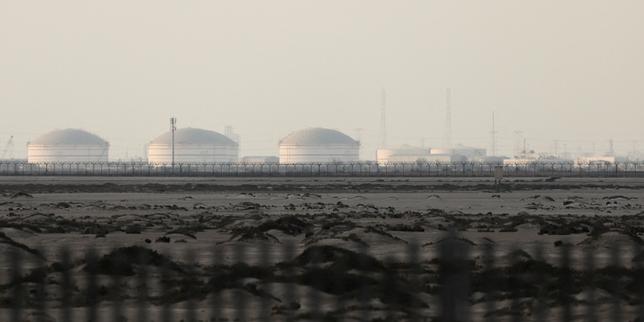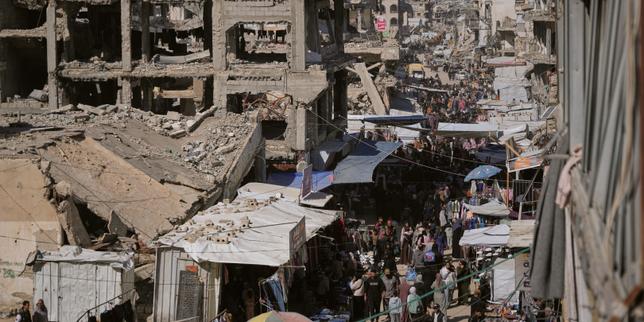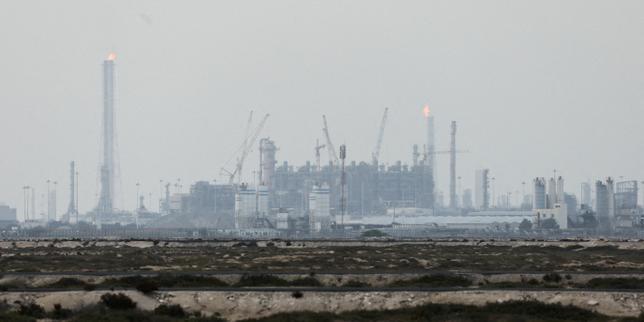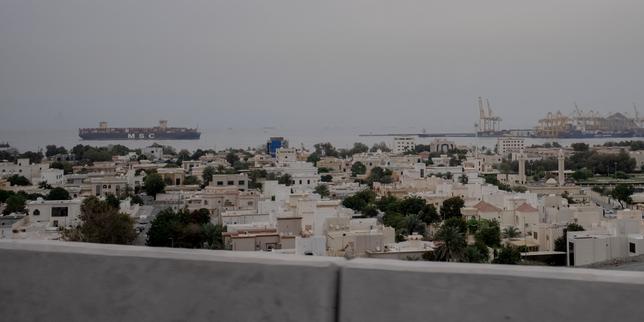
Imagine standing on a bridge over a highway where every single vehicle passing beneath you carries the lifeblood of a different city. If one truck stops, a hospital loses power. If ten stop, a food supply chain collapses. If the highway closes, the global economy begins to suffocate. Now, shrink that highway down to a strip of water only twenty-one miles wide at its narrowest point.
This is the Strait of Hormuz.
It is not just a geographical coordinate or a line on a naval chart. It is a jugular vein. Every day, roughly one-fifth of the world’s total oil consumption and a massive portion of its liquefied natural gas pass through this sun-drenched, salt-crusted corridor. But the story of Hormuz is no longer about the massive, lumbering tankers that look like floating steel islands. The real story is about what is small, fast, and remarkably difficult to see.
The David and Goliath of the Deep
A traditional naval officer from forty years ago would look at the modern Strait of Hormuz and feel a sense of vertigo. In the old world, power was measured by the displacement of a hull and the caliber of a deck gun. Today, that logic has been turned upside down. We are witnessing the maturation of asymmetric warfare, a fancy term for a very simple and terrifying concept: making it too expensive, too risky, and too chaotic for a giant to move.
Consider a hypothetical captain named Elias. He’s spent thirty years on the bridge of Very Large Crude Carriers (VLCCs). His current vessel is three football fields long and carries two million barrels of oil. To Elias, the Strait is a gauntlet. He isn't worried about an enemy destroyer appearing on the horizon to engage in a gentlemanly exchange of broadsides. He is worried about a "swarm."
A swarm is a collection of fast, small boats—often no more than modified speedboats—equipped with rocket launchers, heavy machine guns, or even just bags of naval mines. They move like hornets. One or two are easy to track. Fifty of them, weaving between commercial traffic and darting into rocky coves along the Iranian coastline, are a nightmare.
The math of this conflict is brutal. A billion-dollar destroyer uses a million-dollar missile to intercept a drone or a boat that cost less than a used sedan. You can win every single engagement and still go bankrupt by Tuesday.
The Ghost in the Machine
The asymmetry isn't just physical. It’s digital and psychological. In the heat of the Gulf, the air is thick with more than just humidity; it’s thick with signals. Electronic warfare has turned the Strait into a hall of mirrors.
GPS spoofing is the new "fog of war." There have been documented cases of merchant ships suddenly seeing their own positions jump by miles on their monitors, placing them in hostile territorial waters when they believed they were in international lanes. Imagine the panic on Elias’s bridge when his navigation system tells him he is drifting toward an IRGC naval base, while his eyes tell him he is in the middle of the channel.
This is intentional friction. It’s a way to raise insurance premiums, rattle nerves, and prove that the "policing" of the waves by Western powers is an aging illusion. When a ship is seized or a hull is limpet-mined, the goal isn't necessarily to sink the vessel. It’s to sink the certainty of the market.
The Hidden Stakes of Your Morning Coffee
We often treat these tensions as "over there" problems. We see the grainy footage of commandos rappelling onto decks and think of it as a localized dispute. That is a dangerous misunderstanding of how interconnected our lives have become.
The Strait of Hormuz is a pressure point for the "Just-in-Time" world. Our global economy doesn't keep much in the way of reserves. We live on a rolling wave of supply. If the Strait were to close for even a week, the shockwave wouldn't just hit the gas pump. It would hit the plastics industry, the pharmaceutical world, and the price of every consumer good that requires a ship to move.
The uncertainty in the Strait is a tax on the world. Every time a drone is launched or a tanker is harassed, the "risk premium" on oil ticks upward. You might never visit the Middle East, but you pay for the tension in the Strait of Hormuz every time you buy a gallon of milk or a new pair of shoes.
The Silent Minefields
Then there are the mines. Naval mines are perhaps the most "low-tech" high-impact weapons in existence. They are the "improvised explosive devices" of the sea. They don't need to be sophisticated to be effective. A "dumb" mine from the 1970s can still tear the bottom out of a modern cargo ship.
Clearing them is a slow, agonizing process. It’s like trying to find a needle in a haystack while someone is throwing more needles at you. In a narrow passage like Hormuz, the mere rumor of mines is enough to halt traffic. No insurance company will cover a vessel entering a suspected minefield.
This creates a paradox of power. The United States and its allies possess the most advanced naval technology in history. They have carrier strike groups that can project power across entire continents. Yet, they are frequently checked by a force that uses the maritime equivalent of guerrilla tactics.
Why the End is Never the End
The competition in the Strait isn't a game that ends with a trophy or a treaty. It is a permanent state of "gray zone" conflict. This is the space between peace and all-out war. In the gray zone, you push without shoving. You sting without killing. You keep the temperature just below the boiling point, making sure your opponent is always uncomfortable, always guessing, and always spending money.
The outcome is uncertain because the goals are shifting. For Iran, the Strait is a lever of survival and a tool of regional influence. For the West, it is a global utility that must remain open at all costs. When one side is fighting for its life and the other is fighting for a price point, the rules of engagement become very blurry.
We often look for a "solution" to the Hormuz problem. We want a diplomatic breakthrough or a decisive military victory. But the geography of the place dictates the reality. As long as the world runs on hydrocarbons and as long as those hydrocarbons must pass through a 21-mile-wide door, the door will be a place of friction.
Elias, our hypothetical captain, knows this better than any analyst in a Washington or Tehran office. He knows that when he enters the Strait, he is no longer just a sailor. He is a pawn in a high-stakes game of chicken where the birds are made of carbon fiber and explosives. He watches the radar, he watches the horizon, and he waits for the next ripple in the water.
The tension in the Strait of Hormuz is a reminder that for all our talk of a digital, borderless world, we are still tethered to the physical. We are tethered to narrow channels, heavy ships, and the volatile whims of those who sit on the shoreline, watching the tankers go by.
The next time you look at a map of the world, don't look at the continents. Look at the gaps between them. That’s where the real history is being written, one small boat at a time.
Would you like me to look into the specific technological advancements in autonomous underwater vehicles (UUVs) that are currently changing the surveillance landscape in the Persian Gulf?