The coffee in your mug traveled through a choke point you will likely never see. The fuel in your car, the semiconductors in your phone, and the grain in your pantry are all participants in a high-stakes game of maritime chicken. Most of the time, the ocean feels like an infinite, lawless blue. But in the Strait of Hormuz, the world shrinks to a narrow twenty-one-mile hallway.
Imagine a captain named Elias. He is fictional, but his pulse is very real. Elias stands on the bridge of a 300-meter crude carrier, watching the radar sweep. To his left lies the coast of Oman; to his right, the jagged, arid fingers of Iranian territory. In this corridor, a billion dollars of cargo is at the mercy of a single fast-attack craft or a stray "suicide" drone. For Elias, the geopolitical tension between Tehran and the West isn't a headline. It is the sweat on his palms as he realizes a GPS spoofing signal is slowly dragging his digital position three miles inland, toward jagged rocks that don't exist on his screen.
This is the reality of modern shipping. We treat the sea as a static background to global trade. It isn't. It is a volatile, pressurized environment where a single spark can send insurance premiums soaring and global markets into a tailspin.
The Ghost in the Machine
The threat today isn't just a torpedo or a boarding party. It is silent.
Iran has mastered the art of "gray zone" warfare—actions that sit uncomfortably between peace and open conflict. One of the most effective tools in this kit is Electronic Warfare (EW). By broadcasting fake satellite signals, shore-based stations can trick a ship’s navigation system into thinking it has drifted into Iranian territorial waters.
Once the ship "violates" these boundaries, the legal pretext for seizure is set.
Consider the sheer vulnerability of a massive vessel. A container ship cannot swerve. It cannot hide. It relies entirely on the integrity of its data. When that data is corrupted, the ship becomes a blind giant. To counter this, the industry is forced to look backward to move forward. Officers are being retrained in celestial navigation and the use of sextants—tools from the 18th century used to verify 21st-century positions. There is a profound irony in a navigator standing on a deck worth more than a small city, squinting at the sun to make sure a digital ghost hasn't led him astray.
The Cost of Staying Shielded
Protection is an expensive shadow. When the threat level rises, the first thing that changes isn't the weaponry; it's the math.
Insurance companies, the ultimate arbiters of risk, implement "War Risk" premiums. These aren't minor fees. They can add hundreds of thousands of dollars to a single voyage. If a shipping company decides the Strait of Hormuz is too hot, they must divert around the Cape of Good Hope. That adds two weeks of travel and thousands of tons of extra fuel consumption.
You feel this at the checkout counter.
To mitigate this, international coalitions like the International Maritime Security Construct (IMSC) have deployed a persistent naval presence. But a destroyer cannot be everywhere. The sea is too big. The solution has shifted toward "deterrence by detection." This involves a web of unmanned surface vessels—small, autonomous "eyes" that bob in the waves for months, sending real-time video and sensor data back to a central command.
If an Iranian patrol boat approaches a commercial tanker, the world knows in seconds. Sunlight is the best disinfectant, even at sea. By stripping away the anonymity of these encounters, the international community forces Iran to weigh the tactical gain of a seizure against the immediate diplomatic fallout of being caught on high-definition video.
Steel and Sovereignty
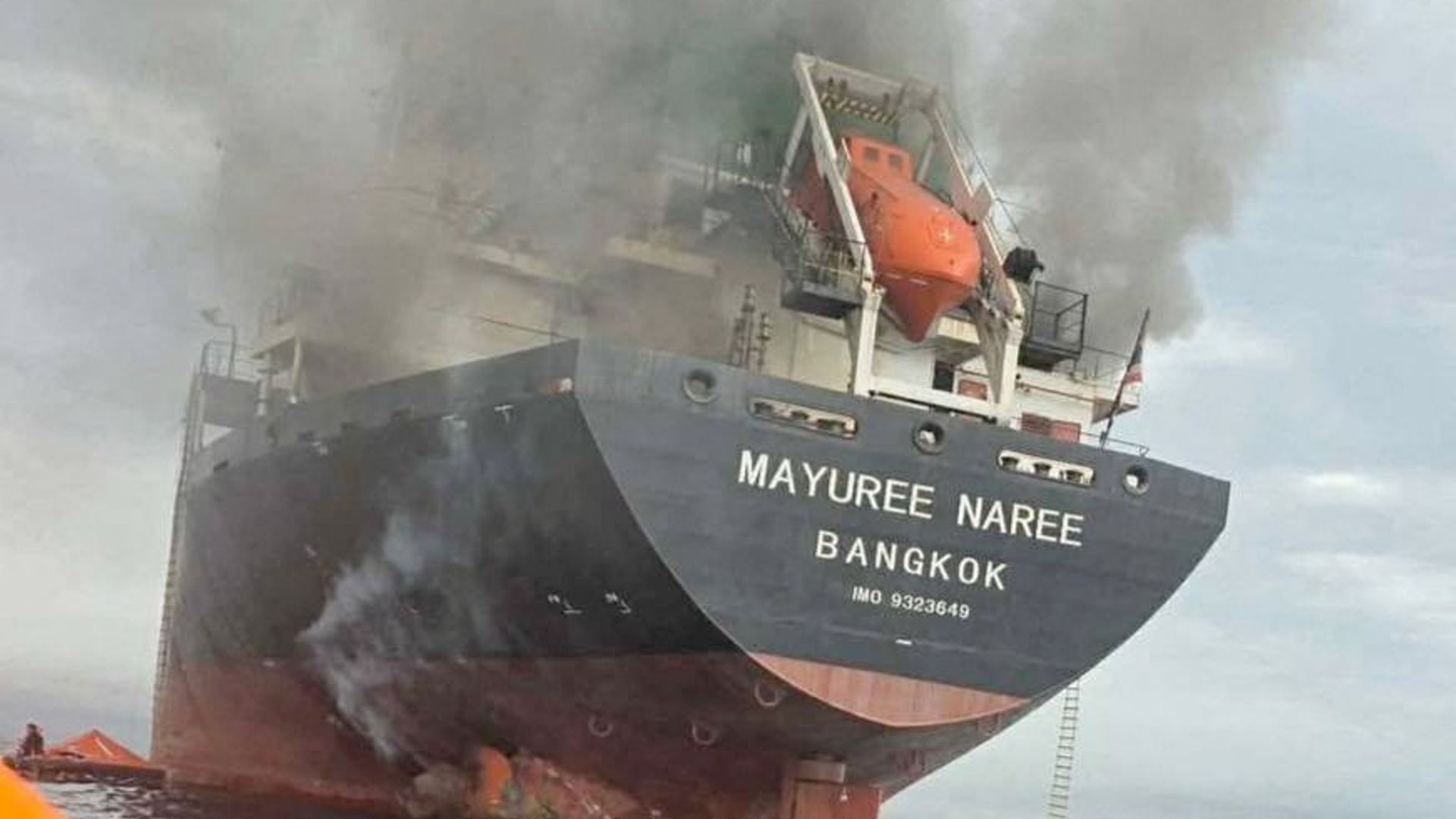
There is a human cost to this stalemate that rarely makes the evening news. When a ship like the St. Nikolas or the Advantage Sweet is seized, the crew becomes pawns. These are sailors from the Philippines, India, and Eastern Europe who signed up for a paycheck, not a political prison.
They sit in cabins for months while diplomats argue in rooms thousands of miles away. Their families wait. The shipping companies write off the vessel as a temporary loss, but the psychological toll on the mariners is permanent. They are the frontline of a war that hasn't been declared.
Hardening these ships requires more than just gray-painted escorts. It requires a fundamental shift in how we view maritime sovereignty. We often think of "freedom of navigation" as an abstract legal concept. In practice, it is the only thing keeping the global economy from fracturing into isolated blocks.
- Physical hardening: Installing "citadels"—reinforced safe rooms where the crew can retreat and maintain control of the engines even if the bridge is boarded.
- Cyber resilience: Encrypting AIS (Automatic Identification System) broadcasts to prevent spoofing and cloning.
- Private security: The controversial rise of armed guards on commercial decks, a practice once reserved for Somali pirates, now being considered for state-actor threats.
The Fragile Blue Line
The tension isn't going away. Iran views the Strait as its most potent lever against sanctions and Western pressure. As long as the leverage works, they will pull it.
But the defense is evolving. We are seeing the birth of a "transparent ocean." Between satellite clusters that can track ships through cloud cover and AI that can predict "abnormal" ship behavior (like a sudden, unexplained course change toward the Iranian coast), the window for clandestine harassment is closing.
Technology is building a digital shield where physical hulls are vulnerable.
But even with the best sensors, the most advanced drones, and the most vigilant destroyers, the Strait remains a place of profound uncertainty. It is a reminder that our modern, high-speed life rests on a very old and very fragile foundation. We are all linked by a chain of steel hulls stretching across the horizon.
Elias stands on his bridge, the sun setting over the Persian Gulf, casting long, orange shadows across the deck. He checks his sextant against his monitor. He watches the horizon for the white wake of a fast boat. He is a professional, a navigator, a father. He is the human heart of a machine that never sleeps, navigating a world where the line between a safe passage and a global crisis is as thin as a radio wave.
The ship moves forward. The water parts. The world waits for the next tide.
Would you like me to look into the specific technical specifications of the unmanned surface vessels currently patrolling the Persian Gulf?