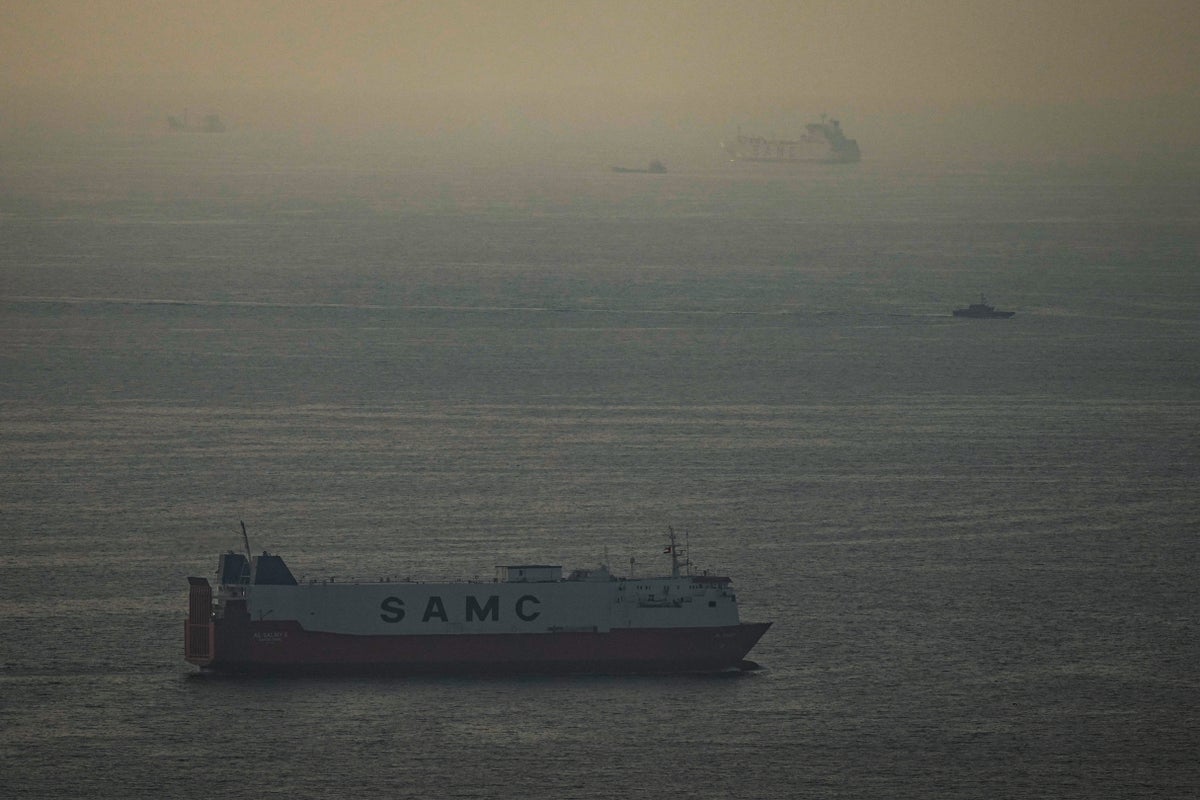
A rust-streaked tanker named the Blue Marigold sits low in the water, her belly full of two million barrels of crude oil. Below deck, the vibration of the massive diesel engines is a constant, bone-deep hum that the crew eventually stops hearing. For the captain, a seasoned mariner who has spent thirty years dodging storms and navigating bureaucratic red tape, the anxiety isn't the weather. It isn't even the mechanical reliability of his vessel. It is the twenty-one miles of water ahead of him.
The Strait of Hormuz is a geographic choke point that carries the literal lifeblood of the global economy. One-fifth of the world’s liquid petroleum passes through this narrow neck of water between Oman and Iran. For decades, it has been treated as an international highway—governed by the United Nations Convention on the Law of the Sea (UNCLOS) and the principle of "transit passage."
But the rules of the road are changing.
Tehran is currently moving to formalize what was once a series of sporadic harassments into a structured, legalistic "toll booth" regime. This isn't just about ships and sailors. It is about the price of the plastic in your hand, the cost of heating your home in winter, and the stability of every stock market from Tokyo to New York.
The Paper Fortress
Imagine a neighborhood where one homeowner decides that because the main road passes by his driveway, he has the right to install a gate, check every driver's ID, and charge a "maintenance fee." That is essentially the strategy being deployed. Iran’s parliament is drafting legislation that would require all commercial vessels passing through the Strait to pay a transit fee.
The justification? Environmental protection and security.
On paper, it sounds almost reasonable. Shipping is a dirty business. Protecting the delicate marine ecosystem of the Persian Gulf is a noble goal. However, international law is clear: the Strait of Hormuz is an international waterway. Under the transit passage rule, ships have the right to pass through as long as they do so continuously and expeditiously. They are not entering Iranian "territory" in the traditional sense; they are using a global corridor.
By introducing a formal toll, Iran is effectively attempting to rewrite the Law of the Sea through sheer persistence. It is a slow-motion annexation of a global common.
The Human Cost of High Stakes
Consider a hypothetical logistics manager in Rotterdam. Let’s call her Sarah. Sarah doesn't care about the geopolitics of the Middle East in her day-to-day life. She cares about "Just-In-Time" delivery. Her job is to ensure that a fleet of ships arrives at specific intervals to keep a chemical plant running.
When a "toll booth" regime begins, it isn't just the money that hurts. It is the friction.
If Iran demands the right to board ships to "verify" environmental compliance or to ensure the "toll" has been paid, Sarah’s schedule falls apart. A six-hour delay at the Strait cascades into a three-day delay at the Suez Canal. By the time the Blue Marigold reaches the North Sea, the refinery she was supposed to feed has had to scale back production. Prices spike.
This is the invisible tax of instability.
The crew on the ships feels it differently. For them, every interaction with a hostile navy or a "regulatory" boarding party is a moment of extreme tension. They aren't soldiers. They are merchant sailors. They are fathers and sons from the Philippines, India, and Ukraine, caught in the middle of a chess game played by people who will never set foot on a bridge.
The Mechanics of the Choke
How do you formalize a chokehold? You don't do it with a sudden blockade. A blockade is an act of war. It invites a massive, violent response from the world's navies. Instead, you do it with ink and stamps.
The proposed Iranian legislation focuses on several key pillars:
- Environmental Levies: Charging ships based on their tonnage and the perceived "risk" they pose to the Gulf’s waters.
- Information Disclosure: Requiring ships to provide detailed manifests and crew lists to Iranian authorities before entering the Strait.
- Security Inspections: Claiming the right to board and inspect vessels that "threaten" the regional security or environmental balance.
The genius—and the danger—of this approach is that it mimics the behavior of a legitimate maritime authority. It forces the international community into a dilemma. If you pay the toll, you acknowledge Iran’s sovereignty over the Strait. If you refuse to pay, you risk your ship being impounded, your crew being detained, and your insurance premiums skyrocketing to the point of bankruptcy.
Insurance is the hidden lever here. Lloyd's of London and other major insurers watch these developments with a cold, analytical eye. The moment the Strait of Hormuz is designated as a "contested" or "toll-regulated" zone, the "War Risk" premiums go up. Even if not a single shot is fired, the cost of doing business in the region increases by millions of dollars per week.
The Shadow of the Past
History shows us that once a nation successfully claims a "right" to a waterway, it is almost impossible to take it back without a fight. The 1956 Suez Crisis was sparked by Egypt’s nationalization of the canal. The world nearly went to war over a ditch in the sand because that ditch controlled the flow of commerce.
The Strait of Hormuz is far more vital and far more difficult to bypass. While there are pipelines across Saudi Arabia and the UAE that can move some oil to the Red Sea or the Gulf of Oman, they can only handle a fraction of the daily volume. The world needs the Strait.
The Iranian strategy is a masterclass in asymmetric pressure. They know they cannot win a conventional naval war against the United States or a coalition of Western powers. But they don't have to. They only need to make the Strait "expensive." If they make the passage annoying, risky, and costly enough, the world might eventually decide that paying the "toll" is easier than fighting the "regime."
A Fragile Equilibrium
We are currently living in a moment of extreme fragility. The global supply chain is already reeling from the lessons of the pandemic and the conflicts in Eastern Europe. We have learned, painfully, that the "global" part of our economy is only as strong as its narrowest points.
When you go to the gas station and see the price tick up by five cents, you aren't seeing the price of oil. You are seeing the price of risk. You are seeing the shadow of a "toll booth" being built three thousand miles away.
The captain of the Blue Marigold watches the radar screen. A small, fast-moving blip is approaching from the Iranian coast. Is it a routine patrol? An environmental inspector? Or something else? He doesn't know. He just knows that his "transit passage" is no longer the certain, protected right it used to be.
The ocean has always been a place of lawlessness, but for the last eighty years, we convinced ourselves we had tamed it with treaties and gold-leafed documents. We are now discovering that the law of the sea is only as strong as the will to enforce it. Without that will, the Strait becomes a private driveway, and the world becomes a much smaller, much more expensive place.
The rust-streaked tanker moves forward, crossing the invisible line into the narrowest part of the passage, where the water turns a deeper shade of blue and the horizon is crowded with the ghosts of a thousand future disputes.