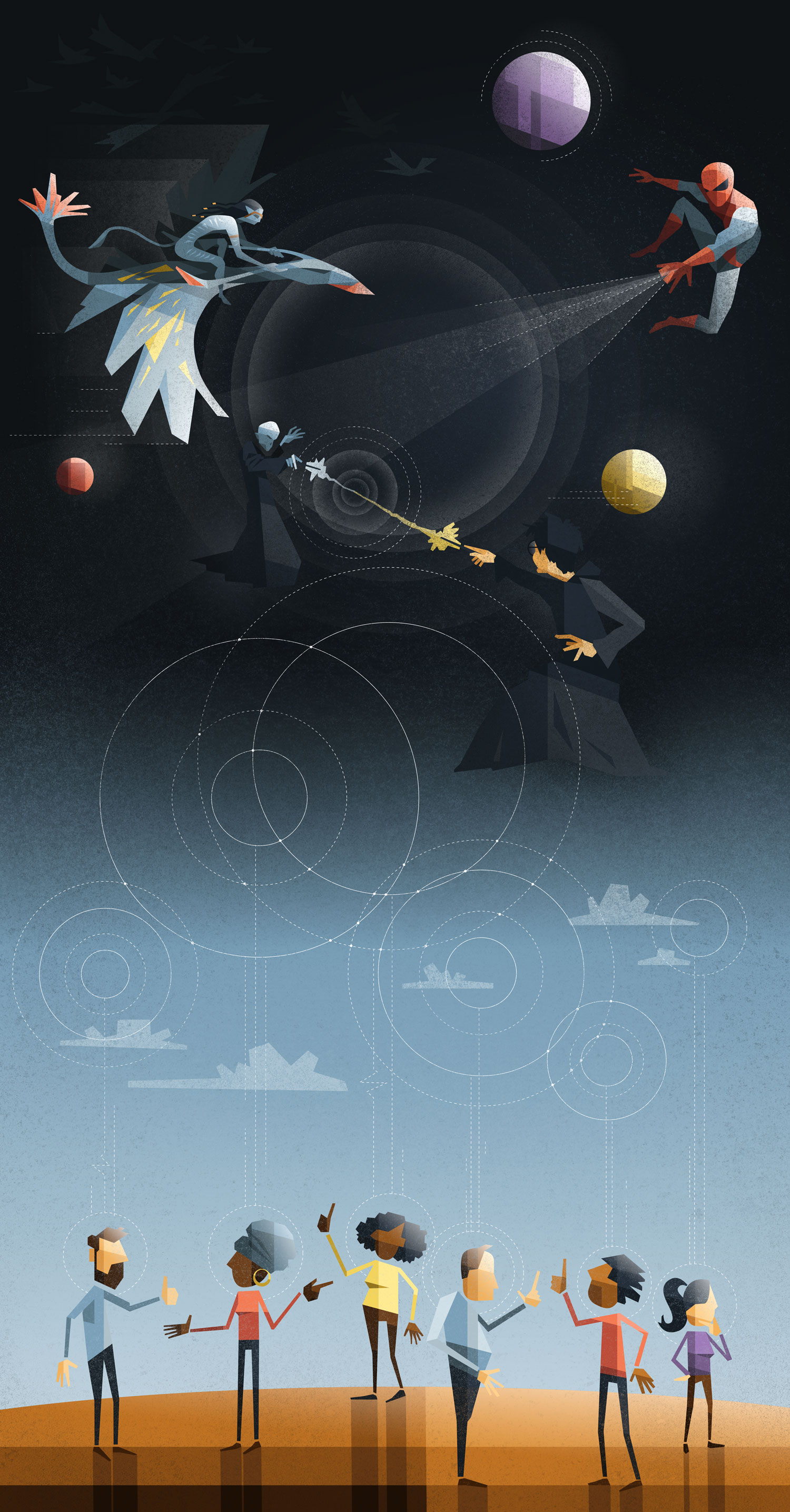
A single spark in the Middle East does not stay there. It travels. It moves through subsea cables, follows the wake of massive container ships, and eventually, it finds its way into the quiet corners of your daily life. It is in the price of the bread you bought this morning. It is in the flickering digits of your retirement account.
Most people look at a map of the Strait of Hormuz and see a narrow strip of blue water. Economists see a jugular vein. When geopolitical tension between Iran and its neighbors escalates into open conflict, that vein constricts. The world doesn't just watch the news; the world feels the pressure.
The Ghost in the Machine
Consider a woman named Elena. She lives four thousand miles away from the nearest drone strike. She doesn't follow foreign policy, and she couldn't point to Isfahan on a map. But Elena is currently staring at a spreadsheet in a small logistics firm, watching the shipping rates for grain climb by 15% in a single afternoon.
To her, the "shockwave" isn't a headline. It is a series of cascading failures.
When the risk of war in Iran spikes, insurance companies are the first to react. They hike the premiums for any vessel brave enough to traverse the Persian Gulf. This is the "war risk surcharge." It is an invisible tax on existence. Those costs are not absorbed by the shipping giants; they are passed down, hand to hand, until they reach the final consumer.
The global economy is often described as a machine, but it is more like an ecosystem. It is fragile. It is interconnected. When one of the world's primary energy arteries is threatened, the entire system enters a state of sympathetic resonance.
The Crude Reality of 21 Million Barrels
The math of a conflict with Iran is brutal and unforgiving. Roughly 20% of the world's total petroleum liquid consumption passes through that twenty-one-mile-wide choke point every single day.
If that flow stops, or even slows, the logic of supply and demand takes a backseat to the logic of fear. Markets hate uncertainty more than they hate bad news. Uncertainty breeds speculation. Speculation drives the price of a barrel of Brent crude toward the $100 mark, then $120, then beyond.
But oil isn't just about the gas in your car.
Think about the plastic in your phone. The fertilizer that grew your vegetables. The synthetic fibers in your clothing. We live in a world built on petroleum. When the base cost of that raw material surges, every derivative product follows suit. It is a slow-motion explosion that levels the purchasing power of the middle class.
The Inflationary Echo
Central banks have spent the last few years desperately trying to cool the fever of global inflation. They raised interest rates. They tightened their belts. They told us the worst was over.
Then, a missile launch changes the narrative.
Energy costs are the "input of inputs." If a factory in Germany has to pay double for its power because of a supply disruption in the Middle East, that factory has two choices: go bust or raise prices. Most choose the latter. This creates a secondary wave of inflation that central banks cannot control with interest rates. You cannot "interest rate" your way out of a closed shipping lane.
This is where the human element becomes most painful. For a family living on the edge, a 30% increase in home heating costs or a sudden jump in grocery bills isn't a statistic. It is a crisis. It means choosing between a doctor's visit and a full tank of gas.
The "shockwave" mentioned in the news reports is actually the sound of millions of individual household budgets snapping under the weight of a war they didn't start and cannot stop.
The Architecture of Fear
We often assume that modern technology has made us more resilient. We have renewables, we have fracking, we have diversified supply chains.
This is a comforting illusion.
While the United States has become a net exporter of energy, the global price is still set on a global market. A shortage in the East creates a vacuum that pulls prices up in the West. There is no escaping the gravity of the Persian Gulf.
Furthermore, the conflict isn't just about oil. It is about the stability of the petrodollar. It is about the confidence of investors who drive the venture capital that funds the next generation of medicine and technology. When the world feels like it is on the brink of a regional conflagration, capital retreats. It hides in "safe havens" like gold or government bonds.
Innovation slows down. Startups lose their funding. The future is put on hold because the present is too expensive to manage.
The Psychological Toll of the Red Line
There is a specific kind of exhaustion that comes with living through "unprecedented" times every few months. The economic impact of an Iran-centered conflict isn't just measured in dollars; it is measured in the erosion of public trust.
People look at their diminishing savings and feel a sense of profound powerlessness. They see that their financial security is tethered to the whims of a handful of people in bunkers halfway across the globe. This realization changes how people spend. It changes how they vote. It changes how they see their future.
The real shockwave isn't the immediate spike in oil prices. It is the long-term realization that our global prosperity is built on a foundation of glass.
We have optimized our world for efficiency, but not for resilience. We have created a "just-in-time" civilization that has no margin for error. We are running a high-performance engine with no spare parts and a fuel line that runs through a minefield.
The Weight of the Silence
In the quiet hours of the night, when the trading floors in New York are closed and the tankers are idling in the Arabian Sea, the cost of conflict is still being tallied. It isn't just the billions of dollars in lost trade or the trillions in evaporated market cap.
It is the cost of the things that didn't happen.
The small business that wasn't opened. The college tuition that couldn't be paid. The retirement that was pushed back another five years. These are the "invisible stakes" of the Iran conflict.
As the sun rises over the Gulf, the world waits for the next headline. We check the price of oil. We check the value of our currency. We look for signs of de-escalation, hoping for a return to a "normal" that feels increasingly like a memory.
But the thread remains. From the cockpit of a fighter jet over the desert to the checkout line at your local market, we are all connected by a system that is as brilliant as it is brittle.
The shockwave is still moving. It is just getting started.
Somewhere, in a small apartment, someone turns off a light to save a few cents on their utility bill, unaware that the shadow over their room was cast by a cloud of smoke rising from a refinery thousands of miles away.


