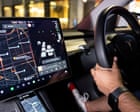
The blue glow of a smartphone screen is often the first light an Australian ride-share driver sees. It is 4:45 AM in a quiet suburb of Melbourne. David—a name we will use to represent the thousands of men and women behind the wheel—reaches for his phone. He checks the DiDi app, then he checks the price of fuel at the 7-Eleven down the road.
For months, those numbers on the bright LED boards at the petrol station have felt like a personal attack.
A few cents here. A nickel there. It doesn’t sound like much until you realize that for David, the car is not a luxury; it is his factory floor. Every kilometer driven is a calculated gamble against the rising cost of Brent Crude. When conflict erupts thousands of miles away in the Middle East, the shockwaves don't just move through geopolitical circles or stock market tickers. They travel through undersea pipes, across shipping lanes, and eventually settle right in the pit of David’s stomach as he watches the pump handle click at $120.
The news broke quietly, but its impact is loud. DiDi, the Chinese-owned giant that has become a staple of Australian transport, is raising its fares. The reason is simple, yet devastatingly complex: the world is on edge, and petrol is the price we pay for that instability.
The Math of Survival
To understand why a 5% or 6% increase in ride-share fares matters, you have to look past the passenger in the backseat. Most commuters see a ride-share as a convenience—a way to avoid parking or a rainy walk to the station. To the driver, it is a narrow margin.
Consider the arithmetic of a standard shift. A driver might gross $300 in a day. Once you peel away the platform’s commission, the insurance, the registration, and the inevitable wear on the tires, you are left with a modest sum. But fuel is the ghost that haunts the ledger. When petrol prices spike above $2.00 a litre, that $300 gross starts to look like a hobby rather than a livelihood.
DiDi’s decision to hike prices across Australia isn't a grab for record profits. It is a pressure valve. If the drivers can’t afford to keep the engine running, the entire ecosystem collapses. No drivers means longer wait times. Longer wait times mean frustrated passengers. Frustrated passengers go back to trains or, worse, their own aging cars, adding to the soul-crushing congestion of Sydney’s M4 or Brisbane’s Riverside Expressway.
Global Tremors and Local Aftershocks
We live in a world where a drone strike in a desert half a globe away dictates whether a student in Adelaide can afford to take a car to their late-night exam. This is the radical interconnectedness of our age. The conflict in the Middle East has tightened the throat of global oil supply.
Australia, despite our vast landscapes and resources, remains a price-taker on the world stage. We are at the end of a long, expensive straw. When the Middle East sneezes, the Australian motorist gets a fever.
It is easy to look at a corporate press release about "price adjustments" and roll your eyes. Another bill. Another subscription going up. Another reason to stay home. But for the driver, this adjustment is a lifeline. It is the difference between making rent and falling behind. It is the difference between a hot meal and a granola bar eaten in a supermarket parking lot between trips.
The Human Toll of the Algorithm
We often talk about "the algorithm" as if it is a god—a cold, calculating force that matches supply with demand. But the algorithm has no empathy. It doesn't know that David's daughter needs new shoes for school. It only knows that there are fewer cars on the road and the "Estimated Time of Arrival" is creeping upward.
By raising prices, DiDi is attempting to trick the algorithm back into balance. They are betting that you, the passenger, will be willing to pay an extra dollar or two so that David feels it is worth starting his engine at 4:45 AM.
Is it fair?
Fairness is a difficult concept in macroeconomics. It isn't fair that global conflicts drive up the cost of living for people who have never even seen an oil derrick. It isn't fair that wages often stagnate while the cost of movement—the very ability to get to work—skyrockets.
But the alternative is a ghost fleet. We have seen what happens when ride-share becomes unprofitable for the workers. The cars disappear. The "No Cars Available" message becomes a permanent fixture of our digital lives. We become stranded in our own suburbs, victims of a supply chain that broke before it even reached our shores.
The Ripple Effect
This isn't just about DiDi. In the corporate world, these moves are rarely isolated. When one major player adjusts for the reality of $2-plus petrol, the others watch closely. Uber and Ola are facing the same pressures. The entire gig economy is currently a giant experiment in how much stress a human being can take before they simply turn off the app.
We are witnessing the end of the era of "cheap" movement. For a decade, we were spoiled by venture-capital-subsidized rides that cost less than a sandwich. Those days are gone. The true cost of transport is finally catching up with us, and it is being driven by the brutal reality of energy physics and international warfare.
Think about the last time you sat in the back of a ride-share. You likely looked at your phone. You checked your emails or scrolled through social media. You were in a private bubble, insulated from the road.
Now, imagine the person in the front seat. They are listening to the sound of the engine. They are watching the fuel gauge drop with every red light and every traffic jam. To them, every minute spent idling is money evaporating into the atmosphere.
The Choice We Make
When you see that slightly higher total on your next trip, it is tempting to feel a flash of irritation. Everything is more expensive. Bread. Milk. Electricity. And now, the ride to the airport.
But that extra money is a bridge. It bridges the gap between a global crisis and a local survival. It ensures that when you need to get home safely at 2:00 AM, someone will be there to pick you up. It acknowledges that the person behind the wheel is breathing the same air and paying the same bills as you are.
The Middle East remains a cauldron of uncertainty. Supply lines remain fragile. As long as our world runs on the liquid remains of ancient forests, we will be held hostage by the geography of where that liquid is buried.
David finishes his coffee. He puts the thermos in the cup holder. He taps "Go Online."
The app chirps. A request comes in from three blocks away. He checks the estimated payout. It’s a little higher than it was last week. He sighs, shifts into gear, and pulls out into the grey light of the morning.
He is moving, for now.
The engine turns. The meter runs. The world keeps spinning, fueled by a resource that is getting harder to find and even harder to pay for, leaving us all wondering just how much further we can afford to go.