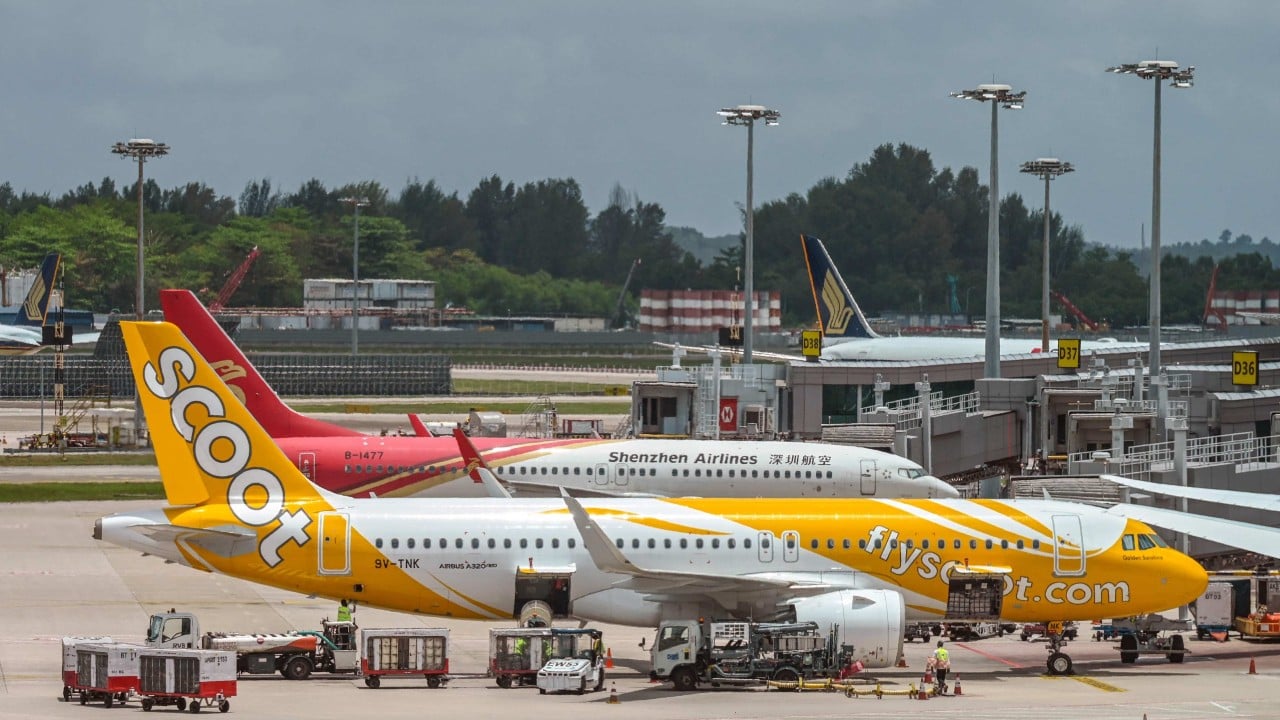
A young woman named Lin stands at a Changi Airport departure gate, clutching a passport that represents three years of saved bonuses. She is heading to London. Behind her, the kinetic rain sculpture pulses in a rhythmic, copper dance, a symbol of Singapore’s obsession with precision and fluid motion. Lin doesn’t see the sculpture. She is calculating the cost of a coffee in pounds sterling. She is the face of a million decisions made every day in the world’s most efficient transit hub.
But there is a ghost in the machine of her travel plans. It is a microscopic surcharge, a few dollars meant to scrub the carbon from the sky, and it has just been caught in the gears of a war thousands of miles away.
Singapore had a plan. By 2026, every traveler departing from its terminals was supposed to start paying a "green fuel levy." It was a bold, mathematical attempt to solve an existential problem: how to keep flying without boiling the planet. The money would buy Sustainable Aviation Fuel (SAF), a clear, viscous liquid made from waste fats and agricultural residues. It is the holy grail of the aerospace industry, capable of reducing emissions by up to 80%.
Then the missiles flew over Isfahan.
The Cost of a Fragile Peace
Geopolitics is a cruel accountant. When tensions between Israel and Iran escalated into direct strikes, the ripples didn’t just stay in the Middle East. They traveled through the oil pipelines, into the boardrooms of national carriers, and finally settled onto the desks of the Civil Aviation Authority of Singapore (CAAS).
The math changed overnight.
Energy markets are neurotic. At the first sign of a closed strait or a damaged refinery, the price of traditional jet fuel spikes. For an airline, fuel isn't just a line item; it is a heartbeat. When the cost of staying aloft becomes unpredictable, the appetite for expensive, nascent technologies like SAF vanishes. Singapore’s government looked at the volatility, looked at the struggling post-pandemic traveler, and blinked.
The levy has been delayed. The "green" future is on hold because the "grey" present is too dangerous.
Consider the physics of a jet engine. It requires an immense, violent release of energy to push 200 tons of metal into the stratosphere. For decades, we have relied on kerosene to do this. It is cheap, energy-dense, and deadly to the atmosphere. Sustainable Aviation Fuel is the sophisticated cousin, but it is currently three to five times more expensive than the dirty stuff.
Singapore’s strategy was to bridge that price gap by socializing the cost. If every passenger chips in the price of a sandwich, the industry can afford to buy the clean fuel in bulk, eventually driving the price down through sheer scale. It is a virtuous cycle. Or it was, until the supply chains for the raw materials—the cooking oils and plant fibers—became entangled in a world suddenly terrified of a wider war.
War demands immediate resources. It demands focus. And it inevitably pushes the "important but not urgent" goals of environmental stewardship to the bottom of the pile.
The Hidden Stakes of the Delay
We often talk about climate change as a series of graphs and melting ice caps. In Singapore, it is more intimate than that. This is an island nation where the sea is a constant neighbor, sometimes a threatening one. If the water rises, the city vanishes. For Singapore, decarbonizing aviation isn't a PR stunt; it is a survival strategy.
When the levy is delayed, it isn't just a policy shift. It is a lost year in the race against the clock.
Imagine the refineries that were waiting for that guaranteed demand. To produce SAF at scale, you need massive infrastructure. Investors need certainty. They need to know that when they build a billion-dollar facility to turn used frying oil into jet fuel, there will be a buyer on the other side. By pausing the levy, the signal to the market turns from a green light to a blinking amber.
The invisible stakes are the engineers who might now pivot to other industries, the venture capital that might flow toward less volatile sectors, and the carbon that will continue to dump into the upper atmosphere because the "clean" alternative stayed in the lab instead of the wing tank.
The Traveler’s Dilemma
Back at the gate, Lin represents the tension we all feel. We want the world to be saved, but we also want to see the world. We are told that our wanderlust is a toxin, yet the global economy is built on the bones of international trade and tourism.
The delay of the green levy feels like a reprieve for the wallet. In an era of "shrinkflation" and rising rents, no one wants another tax. We are already paying for seat assignments, for bags, for the privilege of not sitting in the middle. The idea of a "planet tax" feels like a bridge too far for a middle-class family just trying to get to a vacation.
But this is a deceptive comfort.
The cost isn't going away; it is just being moved to a different ledger. If we don't pay the levy now to transform the industry, we pay later in the form of carbon offsets that don't work, or flight paths that have to be rerouted around increasingly violent weather patterns, or the literal cost of raising the sea walls around the world’s coastal airports.
Singapore’s decision to delay is a concession to reality. You cannot force a green transition onto an industry that is currently bracing for the economic fallout of a potential regional war. It is an admission that, for all our technological prowess, we are still tethered to the volatile politics of the earth’s oil-rich crust.
The Rhythms of Progress and Regression
History doesn't move in a straight line. It stutters.
In the 1970s, the oil crisis spurred a massive move toward fuel efficiency. It gave us the modern, high-bypass turbofans that make flying today relatively affordable. We are in a similar moment now. The conflict in the Middle East is a reminder of our vulnerability. It underscores why we need SAF in the first place—not just for the carbon, but for energy security. If you can grow your fuel in a field or collect it from a kitchen, you are no longer a hostage to a distant dictator or a stray drone strike.
The tragedy of the delay is that the very event that makes the transition harder—global instability—is the exact reason the transition is necessary.
We are caught in a loop. We use old fuel because it’s cheaper. The old fuel makes us dependent on volatile regions. The volatility makes the new fuel too expensive to adopt. So we stay with the old fuel.
Singapore is trying to break this loop. They haven't cancelled the plan; they have simply waited for the smoke to clear. But the sky is rarely clear for long.
The Weight of the Air
There is a specific feeling when a plane rotates—that moment when the wheels leave the tarmac and the physics of the ground give way to the physics of the air. For a second, you feel weightless.
But air has weight. The carbon we leave behind has weight. And the political reality of our world has a crushing weight that can stop even the best-laid plans of a high-tech city-state.
The green fuel levy will eventually return. It has to. The alternative is a slow descent into a world where flight becomes a luxury of the ultra-rich or a memory of a more stable era. When the levy finally appears on Lin’s ticket in 2027 or 2028, it won't be a dry administrative fee. It will be the price of a ticket to a future that isn't on fire.
The delay isn't a victory for the consumer. It is a symptom of a world that is still learning how to balance the urgent need for peace with the desperate need for a planet that can sustain it.
As Lin’s flight lifts off, heading northwest toward the flickering lights of a troubled continent, the engines roar with the same old kerosene, burning through the temporary reprieve of a delayed tax while the atmosphere waits, with infinite patience and mounting heat, for us to finally pay what we owe.